Central AC For Home: Everything You Need to Know

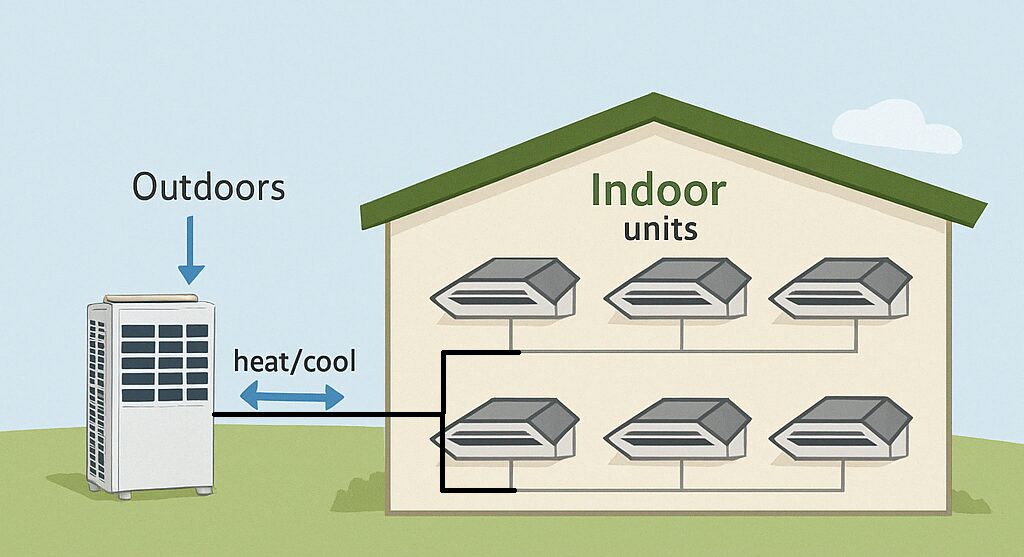
Diagram showing components of a central AC system.

When it comes to cooling your home efficiently, a central AC for home is often the go-to solution. This system not only ensures uniform cooling across all rooms but also enhances indoor air quality by filtering out dust and allergens. Whether you live in a bustling city like Mumbai or a quieter suburban area, understanding how a central AC works and its benefits can help you make an informed decision. Let’s dive into everything you need to know about central AC systems for homes.

How Does a Central AC For Home Works?

A central AC for home operates by circulating cool air through a network of ducts installed within your house. The process begins with the compressor, which pressurizes the refrigerant and sends it to the evaporator coil located inside the air handler. Here, warm air from your home passes over the cold coil, cooling it down before it’s distributed back into the rooms via vents.

Unlike window units or split systems, central AC provides consistent cooling without creating hot and cold spots. For instance, a homeowner in Hyderabad reported a 25% improvement in comfort after switching to a central AC system, thanks to its ability to maintain stable temperatures throughout the day.

Benefits of Installing a Central AC For Home

Enhanced Comfort Levels

One of the standout advantages of a central AC for home is its ability to deliver even cooling. Unlike portable units that may struggle to reach certain areas, central AC ensures every corner of your house stays comfortable during peak summer months.

Energy Efficiency

Modern central AC systems are designed with energy efficiency in mind. By integrating smart thermostats like these, you can program temperature settings based on your daily routine, reducing unnecessary energy consumption. According to ISHRAE guidelines, this approach can save up to ₹10,000 annually on electricity bills.

Improved Air Quality

Central AC systems come equipped with advanced filtration mechanisms that trap pollutants such as pollen, pet dander, and smoke particles. This feature is particularly beneficial for families with members suffering from allergies or respiratory issues.

Key Considerations Before Buying a Central AC For Home

Before investing in a central AC for home, there are several factors to consider. First, evaluate the size of your property and calculate the required cooling capacity using BTU metrics. You can refer to our detailed guide on heat load calculations here for more insights.

Additionally, ensure your home has adequate ductwork to support the installation. If not, retrofitting might be necessary, which could add to the overall cost. A case study from Pune highlights how proper planning reduced installation expenses by nearly 15%.

Maintenance Tips for Longevity

Proper maintenance plays a crucial role in extending the lifespan of your central AC system. Regular servicing—such as cleaning filters, checking refrigerant levels, and inspecting ducts—can prevent costly repairs. For example, a family in Chennai avoided a ₹50,000 repair bill simply by scheduling annual check-ups.

To learn more about maintaining your air conditioning unit, check out our comprehensive article on AC service near me.

Emerging Trends in Central AC Technology

The HVAC industry is witnessing rapid advancements, especially in residential cooling solutions. AI-driven optimization tools now allow homeowners to monitor and control their central AC systems remotely. Similarly, eco-friendly refrigerants compliant with international standards like ASHRAE and IGBC are becoming increasingly popular.

For those interested in sustainable options, integrating solar panels with your central AC can further reduce carbon footprints while cutting utility costs. Learn more about solar-powered AC units in our dedicated blog post here.

Challenges and Solutions

While central AC systems offer numerous benefits, they aren’t without challenges. High upfront costs and space requirements for ductwork installation are common concerns. However, modular designs and financing options have made these systems more accessible than ever.

Another challenge is ensuring optimal airflow in multi-story homes. To address this, experts recommend zoning techniques where different sections of the house operate independently. For deeper insights, explore our article on zoning strategies for HVAC.

Market Leaders in Central AC for Home: Top Brands and Their Offerings

When it comes to choosing the right air conditioning system for your home, several trusted brands stand out in the market, each offering unique features tailored to different needs.

Daikin

  • Inverter Technology: Known for its advanced inverter technology that ensures energy efficiency and consistent cooling.
  • Eco-Friendly Refrigerants: Uses refrigerants with low global warming potential (GWP) to reduce environmental impact.
  • Smart Features: Offers smart AC models with Wi-Fi connectivity for remote control via mobile apps.

Voltas

  • Adaptability to Indian Weather: Designs climate solutions tailored to handle diverse Indian weather conditions effectively.
  • Affordable Options: Provides budget-friendly models without compromising on performance or durability.
  • Wide Range of Products: Offers split, window, and portable air conditioners to suit various customer needs.

Blue Star

  • Sleek Design: Combines aesthetic appeal with robust functionality, making it a popular choice for modern homes.
  • Advanced Filtration: Equipped with multi-stage filtration systems to improve indoor air quality significantly.
  • Customizable Cooling: Allows users to adjust settings for personalized comfort levels.

LG

  • AI-Driven Optimization: Incorporates AI technology to enhance energy efficiency and user convenience.
  • Quiet Operation: Known for its ultra-quiet models, ideal for bedrooms and offices.
  • Durable Components: Builds ACs with high-quality materials to ensure long-term reliability.

Panasonic

  • Nanoe Technology: Features nanoe technology for advanced air purification and deodorization.
  • Energy Savings: Focuses on developing energy-efficient models to help reduce electricity bills.
  • Compact Models: Offers space-saving designs suitable for smaller rooms or apartments.

Carrier

  • Pioneering Legacy: A global leader in HVAC innovation with over a century of expertise.
  • Reliable Performance: Trusted for consistent cooling even in extreme temperatures.
  • Wide Service Network: Boasts an extensive after-sales service network across India and globally.

Case Study: Transforming Homes with Central AC Systems

In Bengaluru, a leading HVAC consultant helped a residential complex transition to a centralized cooling system. By implementing variable refrigerant flow (VRF) technology, they achieved a 30% reduction in energy usage while improving occupant satisfaction. Such innovations underscore the potential of modern central AC systems to revolutionize home comfort.

FAQs

1. What is the average lifespan of a central AC for home?
Most central AC systems last between 10 to 15 years with regular maintenance.

2. Can I install a central AC if my home doesn’t have ducts?
Yes, ductless mini-split systems serve as excellent alternatives.

3. How much does it cost to install a central AC in India?
Prices vary depending on the brand and size, ranging from ₹2 lakhs to ₹5 lakhs.

4. Are central AC systems noisy?
No, modern systems operate quietly, with noise levels below 40 decibels.

5. Is it possible to integrate smart features with a central AC?
Absolutely! Smart thermostats enable remote control and automation.

6. Do central AC systems improve indoor air quality?
Yes, they filter out airborne contaminants, enhancing overall air purity.

Disclaimer:

Some links in this article are affiliate links, such as those for Amazon products. These may generate a small commission at no extra cost to you, supporting our work. We never compromise editorial integrity for partnerships.

About the Author

Mr. Om Prakash, with over 18 years of hands-on experience in the HVAC industry, brings unmatched expertise in cleanroom, pharmaceutical, semiconductor, data center, commercial, and industrial HVAC systems. As the founder of HVAC Technocrat, he specializes in customized HVAC design, energy efficiency audits, retrofit planning, and turnkey consultancy services across India. His deep understanding of critical environments and complex building needs ensures every solution is efficient, reliable, and future-ready. Through his writings, he simplifies HVAC concepts and shares real-world insights to support professionals, facility managers, and decision-makers.

For any enquiries or project support, feel free to call or WhatsApp at +91 9908091942, email at hvactechnocrats@gmail.com, or visit www.hvactechnocrat.com.

Ventilation: How to Identify and Fix Problems in HVAC

HVAC ventilation system diagram showing different types of ventilation, NBC codes, and ACPH requirements.

Effective ventilation is crucial for maintaining a healthy and efficient HVAC system. Identifying and fixing problems can significantly enhance indoor air quality and overall system performance. This guide will explore common issues, different types systems, NBC codes, ACPH requirements, and the role of BMS and sensors in automated systems.

Understanding Ventilation Systems

Ventilation systems are designed to ensure the proper exchange of indoor and outdoor air. There are several types used in HVAC, each serving specific purposes:

  • Mechanical Ventilation: Uses fans and ductwork to supply fresh air and exhaust stale air. Common types include supply, exhaust, and balanced systems.
  • Natural Ventilation: It uses natural elements like wind and temperature variations to circulate fresh air through a building.
  • Hybrid Ventilation: Combines mechanical and natural methods to optimize air exchange based on environmental conditions.

Types of Ventilation Systems

Understanding the different types of ventilation systems can help you identify and address specific issues:

  • Toilet Ventilation: Ensures proper air exchange in bathrooms to remove moisture and odors. Common problems include insufficient airflow and duct blockages.
  • Click Here to view Toilet Exhaust Fans from Amazon India

  • Car Park Ventilation: Manages air quality in parking garages by removing vehicle emissions and preventing the buildup of harmful gases. Issues can arise from inadequate fan capacity or duct design.
  • Basement Ventilation: Addresses air quality and moisture control in basements. Problems often include dampness and poor airflow due to blocked or insufficient openings.
  • To know more about Basement Ventilation System What Are the Best Practices Click Here

  • Kitchen Exhaust Ventilation: Removes smoke, odors, and grease from kitchens. Common issues include grease buildup in ducts and insufficient exhaust fan performance.
  • To know more about Kitchen Exhaust Systems in HVAC Design Operation and Benefits Click Here

    Click Here to view Kitchen Exhaust Fans from Amazon India

    Click Here to view Kitchen Chinmey for Home from Amazon India

  • Supply Ventilation: Brings outdoor air into the building and exhausts indoor air. Issues might include insufficient intake or poor filtration.
  • Exhaust Ventilation: Removes indoor air to the outside. Problems can arise from blocked vents or inefficient fans.
  • Balanced Ventilation: Uses both supply and exhaust systems to maintain air balance. Problems can include incorrect fan speeds or poor duct design.

NBC Codes and ACPH Requirements

Compliance with NBC (National Building Code) codes and ACPH (Air Changes Per Hour) requirements is crucial for effective ventilation in HVAC systems. These standards ensure that the systems operate efficiently and maintain indoor air quality. Here’s a detailed look at the relevant codes, standards, and ACPH values:

  • National Building Code (NBC) of India: The NBC provides guidelines for ventilation design and maintenance, including:
    • Section 6: HVAC Systems: Covers requirements for air handling, ventilation rates, and duct design.
    • Section 8: Building Services: Specifies standards for ventilation in residential and commercial buildings.
    • Section 12: Health and Safety: Includes guidelines for maintaining air quality to safeguard occupant health.
  • ACPH (Air Changes Per Hour) Values: These values indicate the number of times air within a room is replaced with fresh air every hour. Typical ACPH requirements include:
    • Residential Spaces: Generally require 0.35 to 0.5 ACPH to ensure adequate air exchange.
    • Commercial Offices: Typically need 4 to 6 ACPH to maintain a comfortable and healthy environment.
    • Hospitals and Laboratories: Require 10 to 15 ACPH to ensure high air quality standards, especially in areas with sensitive equipment or high occupancy.
    • Industrial Spaces: Depending on the nature of the work, ACPH can range from 6 to 12 to address specific contaminants and maintain air quality.
  • International Standards: In addition to NBC codes, adherence to international standards such as ASHRAE (American Society of Heating, Refrigerating and Air-Conditioning Engineers) guidelines can help ensure global best practices in ventilation. For example:
    • ASHRAE Standard 62.1: Specifies ventilation rates and indoor air quality for commercial and institutional buildings.
    • ASHRAE Standard 62.2: Provides guidelines for residential ventilation and indoor air quality.

The Role of Building Management Systems (BMS)

Building Management Systems (BMS) play a critical role in automating and optimizing ventilation systems:

  • Automation: BMS can control ventilation systems based on real-time data, improving efficiency and reducing energy consumption. Automation helps in adjusting airflow based on occupancy and environmental conditions.
  • Monitoring: BMS provides continuous monitoring and performance, allowing for early detection of problems and ensuring compliance with standards.
  • Integration: BMS can integrate with other building systems, such as lighting and HVAC, to create a cohesive and efficient environment.

Importance of Sensors in Ventilation Systems

Sensors are vital for maintaining optimal ventilation and identifying issues:

  • Air Quality Sensors: Measure indoor air quality parameters like CO2 levels, humidity, and particulate matter. They provide data for adjusting airflow rates and improving air quality.
  • Temperature Sensors: Monitor temperature differences and ensure consistent climate control across different areas.
  • Flow Sensors: Measure airflow rates to detect blockages or imbalances in the system.

Why Automating Ventilation Matters

Automating the systems brings several benefits:

  • Efficiency: Automated systems optimize air exchange rates, reducing energy consumption and operational costs.
  • Comfort: Automation ensures consistent indoor conditions, improving occupant comfort and satisfaction.
  • Maintenance: Automated systems can alert you to maintenance needs before they become significant issues, prolonging the life of the equipment.

FAQs

What is a ventilation problem?

A ventilation problem occurs when the system fails to provide adequate air exchange, leading to poor air quality, uncomfortable temperatures, or high humidity. Common issues include blocked ducts, malfunctioning fans, or improper system design.

How do I identify my HVAC vents?

To identify your HVAC vents, look for the grilles or registers in each room. These are usually located on floors, walls, or ceilings. Check the labels or markings on the vents, if available, or refer to the HVAC system’s blueprints for specific locations.

How to check if ventilation is working?

To check if your ventilation system is working, ensure that air is flowing from all vents, listen for any unusual noises, and check for consistent temperatures throughout the space. You can also use an airflow meter or a professional HVAC technician for a detailed assessment.

How to solve ventilation problems?

Solving ventilation problems involves diagnosing the issue, such as checking for blockages, leaks, or faulty components. Regular maintenance, cleaning ducts, and replacing filters can help. In more complex cases, consulting a professional HVAC technician may be necessary.

What is venting in HVAC?

Venting in HVAC refers to the process of directing air from the heating, cooling, or ventilation system to different parts of a building. Proper venting ensures that air circulates effectively, maintaining indoor comfort and air quality.

What is ventilation and its function?

Ventilation is the method of replacing indoor air with outdoor air to enhance air quality, control temperature, and reduce moisture. Its function is to ensure a healthy and comfortable indoor environment by providing fresh air and eliminating stale air.

What is the formula for ventilation in HVAC?

The formula for ventilation in HVAC often involves calculating the required airflow rate based on the room size and occupancy. A common formula is: Q = V × n, where Q is the airflow rate, V is the room volume, and n is the number of air changes per hour (ACPH).

What is vent mode in HVAC?

Vent mode in HVAC systems is a setting that allows the system to circulate air without heating or cooling it. This mode is useful for improving air quality and distributing fresh air throughout the building.

Ventilation in HVAC examples

Examples of ventilation in HVAC systems include exhaust fans in kitchens and bathrooms, fresh air intakes in commercial buildings, and balanced systems that combine supply and exhaust air to maintain indoor air quality.

Importance of ventilation in HVAC

It is crucial in HVAC systems for maintaining air quality, regulating temperature, and removing excess moisture. Proper ventilation ensures a healthy indoor environment, enhances comfort, and prevents issues such as mold growth and stale air.

Common HVAC problems and solutions

Common HVAC problems include poor airflow, inconsistent temperatures, and high energy bills. Solutions involve regular maintenance, checking for duct leaks, replacing filters, and ensuring that all components are functioning correctly. Professional inspections can also help identify and address underlying issues.

Conclusion

Good ventilation is key to a well-functioning HVAC system. It helps keep indoor air fresh and comfortable. Knowing how to spot and fix ventilation issues is crucial for keeping your system running smoothly.

Different areas like toilets, carparks, basements, and kitchens need specific types of system. Following NBC codes and ACPH standards ensures that these needs are met properly. Regular checks and using modern tools like BMS and sensors can make a big difference in how well your system works.

By staying up-to-date with standards and maintaining your system, you can avoid common problems and enjoy better air quality and comfort in your space.

About The Author

Omprakash Ramagiri; as the Founder of HVAC Technocrats, I bring over 18 years of experience as a Mechanical Engineer specializing in HVAC (Central Air-conditioning) for Commercial, Cleanrooms, Data centers, and Petrochemical industries. Throughout my career, I’ve held pivotal roles at companies like TATA Consulting Engineers, MW Zander (for Cleanroom solutions), Bluestar Malaysia, and ETA in Dubai. I’ve managed international HVAC projects and gained valuable exposure in dynamic markets like Dubai and Saudi Arabia. With a passion for excellence and a commitment to innovative solutions, I specialize in designing Class 10K & 100K Cleanrooms for various industries. Connect with me to explore collaborations in HVAC design, project sales, and consultancy. Click to visit the Author’s Linkedin page


Disclaimer: The content and images are for educational purposes and knowledge enhancement only. They may not depict actual products or situations. Outcomes may vary. Content is generated by AI and reviewed by industry experts, including Author.

Psychrometry: Unlocking the Secrets for HVAC Systems

Psychrometry guide for HVAC systems with a detailed analysis of air properties and processes.

In the world of HVAC (Heating, Ventilation, and Air Conditioning) systems, Psychrometry plays a crucial role. It involves the study of air properties and their interactions with moisture, which is fundamental in designing and operating HVAC systems efficiently. This article delves into the basics of Psychrometry, its role in HVAC, various Psychrometric processes, applications, specifications, and much more.

What are the Basics of Psychrometry in HVAC?

Psychrometry, a branch of science dealing with the properties of air-water vapor mixtures, plays a critical role in HVAC (Heating, Ventilation, and Air Conditioning) systems. Understanding psychrometry helps engineers and technicians design, analyze, and optimize HVAC systems to ensure efficient and effective climate control. The fundamental elements of psychrometry include parameters such as temperature, humidity, enthalpy, and dew point, which collectively describe the thermodynamic properties of moist air. In HVAC applications, psychrometry allows for precise control of air quality and comfort levels, which are essential for both residential and commercial environments.

What is the Role of Psychrometry in HVAC Systems?

The role of psychrometry in HVAC systems is multifaceted. It involves the measurement and Humidity Control and Temperature control to achieve desired indoor air conditions. By using psychrometric principles, HVAC professionals can predict how air will behave under various conditions, enabling them to design systems that maintain optimal indoor climates. This includes ensuring proper humidity levels to prevent mold growth, maintaining comfortable temperatures, and ensuring efficient energy use. Psychrometry also helps in diagnosing system issues and optimizing performance by analyzing air properties and their changes through HVAC processes.

What Types of Psychrometric Processes are Used in HVAC?

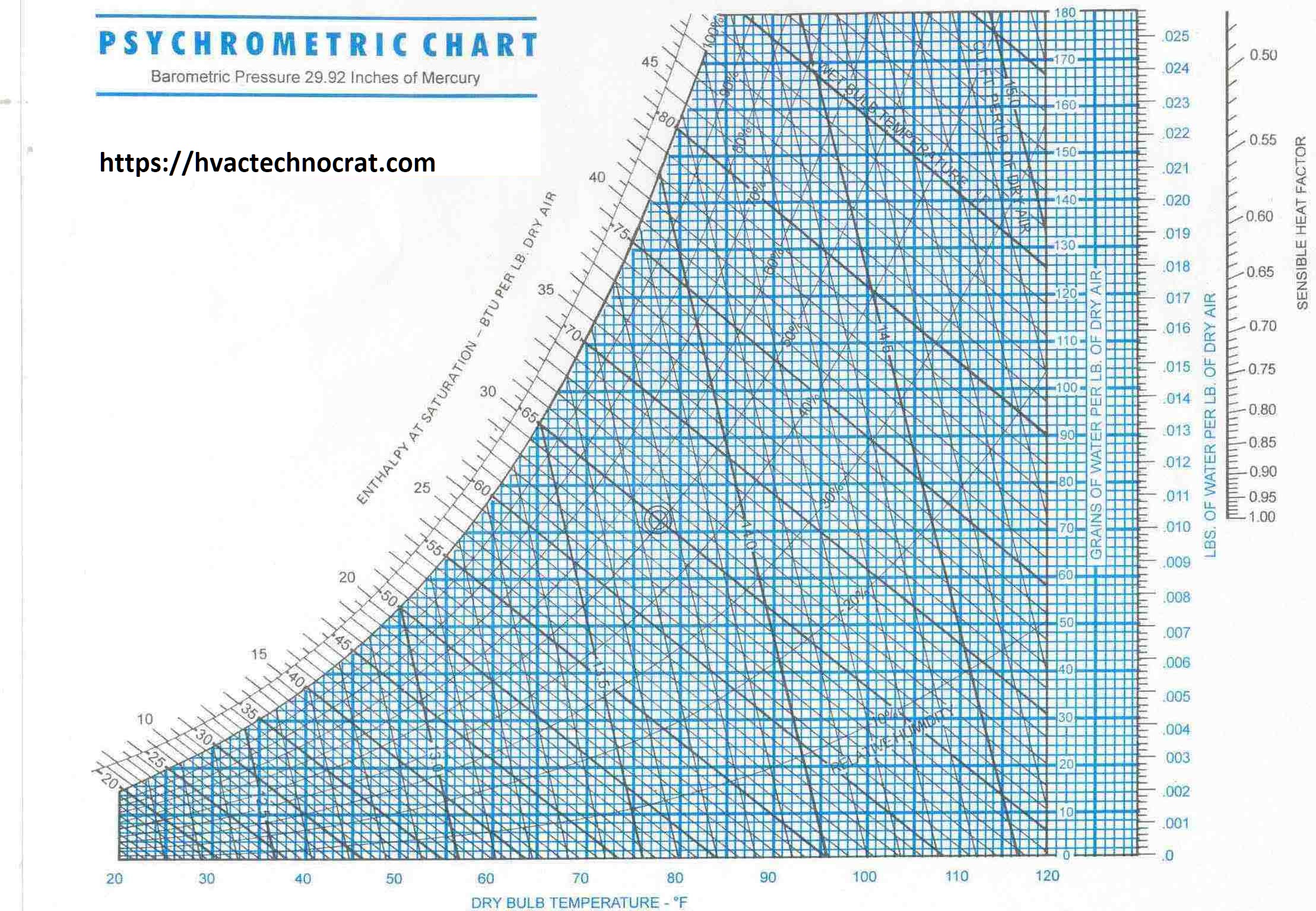
Several psychrometric processes are integral to HVAC systems. These include sensible heating and cooling, where the air temperature is changed without altering its moisture content. Latent heating and cooling involve changes in the moisture content of the air without affecting its temperature. Other processes include humidification, dehumidification, mixing of air streams, and adiabatic cooling. Each process can be plotted and analyzed on a psychrometric chart, providing a visual representation of the air’s condition and helping to determine the necessary changes to achieve desired outcomes in HVAC systems.

Why psychrometry chart in used in HVAC?

The psychrometric chart is essential in HVAC engineering for several reasons:

Understanding Air Properties: It graphically represents thermodynamic properties of moist air, including dry bulb temperature, wet bulb temperature, relative humidity, specific humidity, dew point temperature, and enthalpy. This visualization helps professionals analyze and predict air behavior in various conditions.
Design and Analysis of HVAC Systems: The chart is crucial for designing and analyzing HVAC systems. It allows engineers to determine the conditions for air treatment processes like cooling, heating, humidification, and dehumidification. This aids in accurately assessing air property changes and selecting the right equipment and settings for optimal indoor air quality and thermal comfort.
Energy Efficiency and Optimization: Psychrometric charts help identify opportunities for energy efficiency. By understanding the interactions between temperature and humidity, professionals can optimize heat exchange and moisture control processes, reducing energy consumption and improving system performance.
In summary, the psychrometric chart is vital for visualizing air properties, designing HVAC systems, and enhancing energy efficiency.

What key processes can be marked on a psychrometric chart?

A psychrometric chart visually represents the thermodynamic properties of moist air and illustrates key processes. Sensible heating and cooling processes are depicted as horizontal lines, while humidification and dehumidification are shown as vertical lines. The chart also highlights processes like evaporative cooling and adiabatic mixing, helping engineers to analyze and design HVAC systems effectively. The key processes can be marked on a psychrometric chart, each representing different changes in the air properties. Here is a list of these processes:

  1. Sensible Heating
  2. Sensible Cooling
  3. Humidification
  4. Dehumidification
  5. Cooling and Dehumidification
  6. Heating and Humidification
  7. Adiabatic Mixing of Two Air Streams
  8. Evaporative Cooling
  9. Chemical Dehumidification
  10. Cooling with Air Washer
  11. Heating with Steam Injection
  12. Cooling with Dehumidifier
  13. Condensation
  14. Heating and Dehumidification
  15. Air Mixing (Mixing of Two Air Streams at Different Conditions)
These processes help in understanding and visualizing the changes in air properties such as temperature, humidity, and enthalpy during various HVAC operations.

What are the Applications of Psychrometry in HVAC Design?

Psychrometry has numerous applications in HVAC design. It is used to:

By understanding and applying psychrometric principles, HVAC engineers can create systems that are both efficient and effective, providing optimal indoor environments.

What are the Specifications for Psychrometric Analysis in HVAC?

Psychrometric analysis in HVAC involves several specifications, including:

  • Accurate measurement of air properties
  • Proper selection of psychrometric charts
  • Use of precise calculation methods
  • Consideration of environmental factors
  • Adherence to industry standards and guidelines

These specifications ensure that psychrometric analysis is reliable and effective, leading to well-designed HVAC systems that meet the desired performance criteria.

What are the Advantages and Disadvantages of Using Psychrometry in HVAC?

Psychrometry offers several advantages in HVAC, including:

  • Precise control of indoor climates
  • Improved energy efficiency
  • Enhanced occupant comfort
  • Better air quality management
  • Effective troubleshooting and system optimization

However, there are also some disadvantages, such as:

  • Complexity in understanding and applying psychrometric principles
  • Need for accurate measurements and calculations
  • Potential for errors if not properly executed

Despite these challenges, the benefits of using psychrometry in HVAC systems far outweigh the drawbacks, making it an essential aspect of modern HVAC design and operation.

What Information is Typically Included in a Psychrometric Chart?

A psychrometric chart typically includes information on:

  • Dry-bulb temperature
  • Wet-bulb temperature
  • Relative humidity
  • Specific humidity
  • Dew point temperature
  • Enthalpy
  • Volume of moist air

This information allows engineers to analyze air properties and make informed decisions about HVAC system design and operation.

What are the Main Parameters Involved in Psychrometric Processes?

The main parameters involved in psychrometric processes include:

  • Dry-bulb temperature
  • Wet-bulb temperature
  • Relative humidity
  • Specific humidity
  • Dew point temperature
  • Enthalpy

These parameters describe the thermodynamic properties of air and are essential for understanding and controlling HVAC systems.

What Inputs are Essential for Psychrometric Analysis in HVAC?

Essential inputs for psychrometric analysis in HVAC include:

  • Initial and desired air conditions
  • Environmental factors (e.g., outdoor temperature and humidity)
  • System specifications (e.g., airflow rates and equipment capacities)
  • Load requirements (e.g., heating and cooling loads)

These inputs help engineers accurately analyze and design HVAC systems to meet specific performance criteria.

What Design Considerations are Critical for Psychrometric Processes?

Critical design considerations for psychrometric processes include:

  • Accurate measurement of air properties
  • Proper selection of psychrometric charts and tools
  • Consideration of environmental and load factors
  • Adherence to industry standards and guidelines

These considerations ensure that psychrometric analysis is reliable and effective, leading to well-designed HVAC systems.

What Design Parameters are Influenced by Psychrometry?

Design parameters influenced by psychrometry include:

  • Heating and cooling loads
  • Ventilation rates
  • Humidity control requirements
  • Energy efficiency measures
  • Equipment selection and sizing

By understanding and applying psychrometric principles, HVAC engineers can optimize these parameters to achieve desired performance outcomes.

How are Unit Conversions Handled in Psychrometric Calculations?

Unit conversions in psychrometric calculations are typically handled using conversion factors and formulas. Engineers must ensure that all units are consistent and accurately converted to maintain the integrity of the analysis. Common conversions include temperature (Celsius to Fahrenheit), pressure (Pascals to psi), and energy (Joules to BTUs).

How is Capacity Calculation Performed Using Psychrometric Charts?

Capacity calculation using psychrometric charts involves determining the amount of heating or cooling required to achieve desired air conditions. This is done by plotting the initial and desired air states on the chart and analyzing the processes needed to transition between these states. The chart provides a visual representation of the energy changes involved, allowing engineers to calculate the necessary capacity for HVAC equipment.

What Codes and Standards Govern Psychrometric Analysis in HVAC?

Several codes and standards govern psychrometric analysis in HVAC, including:

  • ASHRAE (American Society of Heating, Refrigerating, and Air-Conditioning Engineers) standards
  • ISO (International Organization for Standardization) standards
  • Local and national building codes

These standards ensure that psychrometric analysis is conducted in a consistent and reliable manner, leading to safe and effective HVAC system design and operation.

What is Included in a Psychrometry Chart?

A psychrometry chart includes :

  • Dry-bulb temperature lines
  • Wet-bulb temperature lines
  • Relative humidity curves
  • Specific humidity lines
  • Dew point temperature lines
  • Enthalpy lines
  • Volume of moist air lines

This comprehensive representation of air properties helps engineers analyze and design HVAC systems.

How is a Psychrometric Chart Created?

A psychrometric chart is created by plotting the relationships between various air properties on a graph. This involves drawing lines for dry-bulb temperature, wet-bulb temperature, relative humidity, specific humidity, dew point temperature, enthalpy, and volume of moist air. The chart is typically developed using empirical data and mathematical models to accurately represent the thermodynamic properties of moist air.

What are the Leading Software Tools Available for Psychrometric Analysis?

Leading software tools for psychrometric analysis include:

  • ASHRAE’s Psychrometric Analysis Tool
  • Carrier’s HVAC System Design Software
  • Trane’s TRACE 700
  • Elite Software’s PsyChart

These tools provide advanced features for analyzing air properties, designing HVAC systems, and optimizing performance based on psychrometric principles.

What Should be Included in Design Checklists for Psychrometric Calculation?

Design checklists for psychrometric calculation should include:

  • Accurate measurement of air properties
  • Selection of appropriate psychrometric charts and tools
  • Consideration of environmental and load factors
  • Adherence to industry standards and guidelines
  • Documentation of all calculations and assumptions

These checklists ensure that psychrometric analysis is conducted accurately and reliably, leading to effective HVAC system design.

What Supporting Details are Necessary for Accurate Psychrometric Analysis?

Supporting details necessary for accurate psychrometric analysis include:

  • Accurate measurements of air properties
  • Detailed information on environmental conditions
  • Comprehensive data on system specifications and load requirements
  • Use of reliable psychrometric charts and tools

These details ensure that psychrometric analysis is precise and reliable, leading to effective HVAC system design and operation.

What Procedures are Recommended for Psychrometric Systems?

Recommended procedures for psychrometric systems include:

  • Regular calibration and maintenance of measurement instruments
  • Accurate measurement and documentation of air properties
  • Use of standardized psychrometric charts and tools
  • Adherence to industry standards and guidelines
  • Continuous monitoring and optimization of system performance

These procedures ensure that psychrometric systems operate efficiently and effectively, maintaining desired indoor climates and energy efficiency.

How is Performance Monitoring Carried Out in Systems Utilizing Psychrometry?

Performance monitoring in systems utilizing psychrometry involves:

  • Regular measurement of air properties
  • Continuous comparison of measured values with desired conditions
  • Use of sensors and data logging equipment
  • Analysis of system performance data
  • Implementation of corrective actions as needed

By monitoring performance, engineers can ensure that HVAC systems operate efficiently and effectively, maintaining optimal indoor climates.

How is Lifecycle Analysis Performed for Systems Involving Psychrometry?

Lifecycle analysis for systems involving psychrometry includes:

  • Evaluation of system performance over time
  • Assessment of energy consumption and efficiency
  • Analysis of maintenance and operational costs
  • Consideration of environmental impacts
  • Identification of opportunities for improvement

By conducting lifecycle analysis, engineers can optimize HVAC systems for long-term performance and sustainability.

What Energy Efficiency Measures are Relevant to Psychrometric Processes?

Energy efficiency measures relevant to psychrometric processes include:

  • Optimizing system design to reduce energy consumption
  • Implementing advanced control strategies
  • Regular maintenance and calibration of equipment
  • Use of energy-efficient components and materials
  • Monitoring and optimizing system performance

These measures help to reduce energy consumption and enhance the efficiency of HVAC systems, contributing to sustainability and cost savings.

How Can Systems be Upgraded or Retrofitted to Improve Psychrometric Performance?

Systems can be upgraded or retrofitted to improve psychrometric performance by:

  • Replacing outdated components with energy-efficient alternatives
  • Implementing advanced control strategies
  • Enhancing insulation and sealing to reduce energy losses
  • Regular maintenance and calibration of equipment
  • Monitoring and optimizing system performance

These upgrades and retrofits can significantly improve the efficiency and effectiveness of HVAC systems, ensuring optimal indoor climates and energy savings.

What is the Environmental Impact of Using Psychrometric Analysis in HVAC?

The environmental impact of using psychrometric analysis in HVAC includes:

By optimizing HVAC systems using psychrometric analysis, engineers can contribute to environmental sustainability and reduce the overall impact of building operations.

What Safety Factor Considerations are Necessary for Psychrometric Processes?

Safety factor considerations for psychrometric processes include:

  • Ensuring accurate measurement and calculation of air properties
  • Adherence to industry standards and guidelines
  • Regular maintenance and calibration of equipment
  • Monitoring system performance and implementing corrective actions as needed
  • Consideration of environmental and load factors

These considerations ensure that psychrometric processes are safe and reliable, leading to well-designed and effective HVAC systems.

FAQ

What do you mean by psychrometry?

Psychrometry is the study of the properties of air-water vapor mixtures, crucial for understanding and controlling indoor climates in HVAC systems. It involves parameters like temperature, humidity, enthalpy, and dew point.

What is the psychometric process?

The psychrometric process involves analyzing and manipulating the properties of air, such as temperature and humidity, to achieve desired indoor conditions. This includes processes like heating, cooling, humidification, and dehumidification.

What is the use of a psychrometer?

A psychrometer is an instrument used to measure the moisture content in the air, typically involving dry-bulb and wet-bulb thermometers. It helps determine relative humidity and other psychrometric properties.

What are the applications of psychrometry?

Applications of psychrometry include HVAC system design, environmental control in industrial processes, agricultural applications, and ensuring indoor air quality and comfort in residential and commercial buildings.

Psychrometry ppt

A psychrometry PowerPoint presentation typically includes an overview of psychrometric principles, applications in HVAC systems, and examples of psychrometric charts and processes. It serves as an educational tool for understanding psychrometry in HVAC design.

Psychrometric chart

A psychrometric chart is a graphical representation of the thermodynamic properties of moist air, used to analyze air conditioning processes. It includes parameters like temperature, humidity, and enthalpy, helping engineers design and optimize HVAC systems.

Psychrometry properties

Psychrometric properties include dry-bulb temperature, wet-bulb temperature, relative humidity, specific humidity, dew point temperature, and enthalpy. These properties describe the state of air-water vapor mixtures and are essential for HVAC analysis.

Psychrometric calculator

A psychrometric calculator is a tool, often software-based, that calculates the properties of air-water vapor mixtures. It helps engineers determine parameters like relative humidity, dew point, and enthalpy based on input conditions.

Psychrometry pronunciation

Psychrometry is pronounced as “sy-krom-i-tree,” with emphasis on the second syllable. It combines the Greek words “psyche” (air) and “metron” (measure).

Psychrometric chart meaning

The psychrometric chart represents the properties of moist air and their relationships . It helps visualize and analyze processes like heating, cooling, humidification, and dehumidification in HVAC systems.

Psychrometric chart metric

A psychrometric chart in metric units uses Celsius for temperature and grams of water per kilogram of dry air for specific humidity. It is used internationally for HVAC analysis and design.

Psychrometric chart download

Psychrometric charts can be downloaded from various sources, including HVAC software providers and industry organizations like ASHRAE. These charts are available in both metric and imperial units.

Psychrometric chart online

Online psychrometric charts are interactive tools available on websites and software platforms. They allow users to input conditions and visualize air properties and processes dynamically.

Printable Psychrometric chart

Printable psychrometric charts are static versions available for download and printing. They provide a handy reference for engineers and technicians working on HVAC systems, helping with on-site analysis and design.

Conclusion

Psychrometry is a fundamental aspect of HVAC system design and operation, providing essential insights into the properties of air-water vapor mixtures. By understanding and applying psychrometric principles, engineers can design efficient and effective HVAC systems that ensure optimal indoor climates, energy efficiency, and occupant comfort. The use of psychrometric charts, advanced software tools, and adherence to industry standards and guidelines are crucial for accurate psychrometric analysis. Despite the complexities involved, the benefits of psychrometry in HVAC far outweigh the challenges, making it an indispensable tool for modern climate control and environmental management.

About The Author

Omprakash Ramagiri; as the Founder of HVAC Technocrats, I bring over 18 years of experience as a Mechanical Engineer specializing in HVAC (Central Air-conditioning) for commercial, cleanrooms, data centers, and Petrochemical industries. Throughout my career, I’ve held pivotal roles at companies like TATA Consulting Engineers, MW Zander (for Cleanroom solutions), Bluestar Malaysia, and ETA in Dubai. I’ve managed international HVAC projects and gained valuable exposure in dynamic markets like Dubai and Saudi Arabia. With a passion for excellence and a commitment to innovative solutions, I specialize in designing Class 10K & 100K Cleanrooms for various industries. Connect with me to explore collaborations in HVAC design, project sales, and consultancy. Click to visit the Author’s Linkedin page


Disclaimer: The pictures used are for illustrative purposes only. They may not depict actual products or situations and are meant for educational purposes. Actual products, situations, or outcomes may differ.

AC Health Problems: The Hidden Risks of Chronic Air Conditioning

AC Health Problems - Impact on Respiratory Health and Skin Dryness

Air conditioning makes life more comfortable in hot climates. However, staying prolonged time may cause AC Health Problems in that environment and that to too long can have its drawbacks. Understanding these risks and knowing how to manage them is essential to maintaining your health and well-being.

AC Health Problems due to Dry Air Effect

One of the primary dangers of prolonged air conditioning use is dry air. Air conditioning systems often remove moisture from the air, which leads to dry eyes, skin, and airways. Staying hydrated and using moisturizers can help reduce these effects. Adequate hydration is critical in air-conditioned environments.

In addition, dry air aggravates respiratory problems. People with asthma or other respiratory conditions should be especially mindful of humidity levels in their homes or offices. Using a humidifier in conjunction with your air conditioning system can help maintain a healthy humidity level. Humidity Controller

Ventilation and Air Quality

Good indoor air quality relies heavily on adequate ventilation. Air conditioning systems can recirculate air, which can lead to a build-up of indoor pollutants. Making sure your air conditioning system provides adequate ventilation can prevent harmful carbon dioxide and other pollutants from accumulating.

Using an air conditioning unit with a high efficiency particulate air (HEPA) filter can significantly improve air quality. HEPA filters remove 99.97% of dust, pollen, mold, bacteria, and airborne particles of 0.3 microns. Regularly opening windows to let in fresh air can also improve indoor air quality. Technical Submittal Requirements for Air Handling Unit

Maintaining System to avoid AC Health Problems

The condition of your air conditioning system plays a vital role in maintaining air quality. Poorly maintained or outdated air conditioning systems can harbor mold and other pollutants. Regular maintenance, including cleaning and replacing filters, can prevent these problems and ensure your system is operating efficiently.

If your current unit is old, consider upgrading to newer, more efficient air conditioning systems. Modern systems are designed to be more energy-efficient and environmentally friendly, reducing your carbon footprint while providing better air quality. Air Conditioner Temperature Controller

To know more about Energy Efficient AC Unit How to Maintain to Run Efficiently During Hot Weather Click Here

Loss of Outdoor Benefits

Spending too much time indoors makes you miss out on the benefits of being outdoors. Exposure to sunlight is essential for the production of vitamin D, which supports bone health and immune function. Additionally, spending time in nature can reduce stress and improve mental well-being. Why Indoor Air Quality Matters in Commercial Spaces

Physical activity is another important factor. Being outdoors provides more opportunities for exercise, which is vital for maintaining overall health. Even in hot weather, finding ways to safely enjoy the outdoors balances the benefits of air conditioning with natural environmental benefits.

To know more about Why Indoor Air Quality Matters in Commercial Spaces Click Here

Pros and Cons

Pros:

  • Comfortable indoor temperatures
  • Reduces the risk of heat-related diseases
  • Indoor air quality improves with proper filtration
  • Low humidity reduces mold growth
  • Cons:

  • Dry air contributes to discomfort and can lead to health problems
  • Poor ventilation can lead to indoor pollution
  • Potential for mold and contaminants in poorly maintained systems
  • Less exposure to outdoor benefits
  • FAQ

    What are the dangers of dry air from air conditioning?

    Dry air dries the eyes, skin, and respiratory tract. It also aggravates respiratory problems. Staying hydrated and using moisturizers can help.

    How can I improve indoor air quality with air conditioning?

    Ensure proper ventilation and use HEPA filters in your air conditioning system. Regularly opening windows allows fresh air to circulate indoors. Why Pressure Differential is Key in Cleanroom HVAC Systems

    What kind of maintenance does my air conditioning system need?

    Clean and replace filters regularly and consider upgrading to newer systems for better efficiency and air quality. Filter for Split AC

    Why is spending time outdoors important?

    Time outdoors provides vitamin D from sunlight, reduces stress, and provides more opportunities for physical activity. How to Maintain an Energy-Efficient AC Unit

    What are the advantages and disadvantages of air conditioning?

    Comfort and improved air quality. Disadvantages are dry air, poor ventilation, and less outdoor exposure.

    What are common health problems caused by air conditioning?

    Common health issues caused by air conditioning include respiratory problems, such as asthma and allergies, due to poor air quality and dry air. Additionally, prolonged exposure can lead to skin dryness and dehydration. Proper maintenance and regular cleaning of AC units can help mitigate these problems.

    Can air conditioning cause or worsen allergies and other AC health problems?

    Yes, air conditioning can worsen allergies and other AC health problems by circulating dust, mold, and pollen if the filters are not cleaned regularly. Ensuring that your AC unit has a high-quality filter and is maintained properly can help reduce allergen levels in the air.

    How does air conditioning affect respiratory health and contribute to AC health problems?

    Air conditioning can affect respiratory health and contribute to AC health problems by circulating dry, cold air that may irritate the airways and exacerbate conditions like asthma or bronchitis. It’s essential to keep the AC unit well-maintained and use humidifiers if the air is too dry.

    Can air conditioning cause dry skin and dehydration, which are common AC health problems?

    Yes, the dry air produced by air conditioning can lead to dry skin and dehydration, which are common AC health problems. Using a humidifier or keeping skin moisturized can help counteract these effects.

    What steps can I take to minimize health problems related to air conditioning?

    To minimize health problems related to air conditioning, ensure regular maintenance of your AC unit, clean or replace filters frequently, and use a humidifier if needed. Additionally, maintaining a comfortable temperature and staying hydrated can help prevent issues.

    Can prolonged exposure to air conditioning lead to headaches and other AC health problems?

    Prolonged exposure to air conditioning can lead to headaches and other AC health problems due to cold, dry air, and changes in temperature. It’s important to regulate the temperature and maintain humidity levels to reduce this risk.

    How often should I clean or replace my AC filter to avoid health issues?

    It is recommended to clean or replace your AC filter every 1-3 months, depending on usage and the type of filter. Regular maintenance helps ensure good air quality and prevents AC health problems.

    Conclusion

    Although air conditioning offers significant benefits, it is important to be aware of the potential risks. These precautions include maintaining proper humidity, ensuring adequate ventilation, and maintaining your air conditioning system regularly.