Central AC For Home: Everything You Need to Know

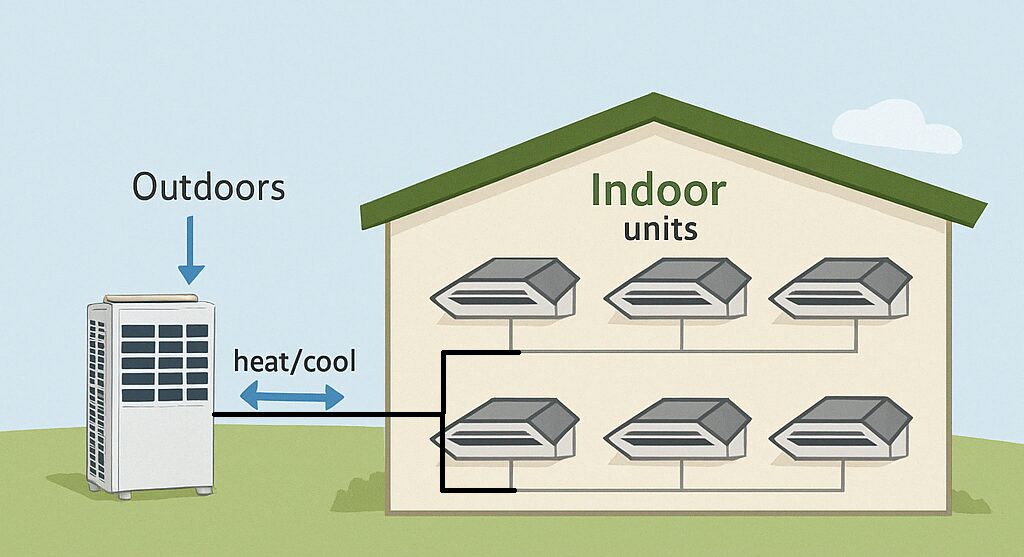
Diagram showing components of a central AC system.

When it comes to cooling your home efficiently, a central AC for home is often the go-to solution. This system not only ensures uniform cooling across all rooms but also enhances indoor air quality by filtering out dust and allergens. Whether you live in a bustling city like Mumbai or a quieter suburban area, understanding how a central AC works and its benefits can help you make an informed decision. Let’s dive into everything you need to know about central AC systems for homes.

How Does a Central AC For Home Works?

A central AC for home operates by circulating cool air through a network of ducts installed within your house. The process begins with the compressor, which pressurizes the refrigerant and sends it to the evaporator coil located inside the air handler. Here, warm air from your home passes over the cold coil, cooling it down before it’s distributed back into the rooms via vents.

Unlike window units or split systems, central AC provides consistent cooling without creating hot and cold spots. For instance, a homeowner in Hyderabad reported a 25% improvement in comfort after switching to a central AC system, thanks to its ability to maintain stable temperatures throughout the day.

Benefits of Installing a Central AC For Home

Enhanced Comfort Levels

One of the standout advantages of a central AC for home is its ability to deliver even cooling. Unlike portable units that may struggle to reach certain areas, central AC ensures every corner of your house stays comfortable during peak summer months.

Energy Efficiency

Modern central AC systems are designed with energy efficiency in mind. By integrating smart thermostats like these, you can program temperature settings based on your daily routine, reducing unnecessary energy consumption. According to ISHRAE guidelines, this approach can save up to ₹10,000 annually on electricity bills.

Improved Air Quality

Central AC systems come equipped with advanced filtration mechanisms that trap pollutants such as pollen, pet dander, and smoke particles. This feature is particularly beneficial for families with members suffering from allergies or respiratory issues.

Key Considerations Before Buying a Central AC For Home

Before investing in a central AC for home, there are several factors to consider. First, evaluate the size of your property and calculate the required cooling capacity using BTU metrics. You can refer to our detailed guide on heat load calculations here for more insights.

Additionally, ensure your home has adequate ductwork to support the installation. If not, retrofitting might be necessary, which could add to the overall cost. A case study from Pune highlights how proper planning reduced installation expenses by nearly 15%.

Maintenance Tips for Longevity

Proper maintenance plays a crucial role in extending the lifespan of your central AC system. Regular servicing—such as cleaning filters, checking refrigerant levels, and inspecting ducts—can prevent costly repairs. For example, a family in Chennai avoided a ₹50,000 repair bill simply by scheduling annual check-ups.

To learn more about maintaining your air conditioning unit, check out our comprehensive article on AC service near me.

Emerging Trends in Central AC Technology

The HVAC industry is witnessing rapid advancements, especially in residential cooling solutions. AI-driven optimization tools now allow homeowners to monitor and control their central AC systems remotely. Similarly, eco-friendly refrigerants compliant with international standards like ASHRAE and IGBC are becoming increasingly popular.

For those interested in sustainable options, integrating solar panels with your central AC can further reduce carbon footprints while cutting utility costs. Learn more about solar-powered AC units in our dedicated blog post here.

Challenges and Solutions

While central AC systems offer numerous benefits, they aren’t without challenges. High upfront costs and space requirements for ductwork installation are common concerns. However, modular designs and financing options have made these systems more accessible than ever.

Another challenge is ensuring optimal airflow in multi-story homes. To address this, experts recommend zoning techniques where different sections of the house operate independently. For deeper insights, explore our article on zoning strategies for HVAC.

Market Leaders in Central AC for Home: Top Brands and Their Offerings

When it comes to choosing the right air conditioning system for your home, several trusted brands stand out in the market, each offering unique features tailored to different needs.

Daikin

  • Inverter Technology: Known for its advanced inverter technology that ensures energy efficiency and consistent cooling.
  • Eco-Friendly Refrigerants: Uses refrigerants with low global warming potential (GWP) to reduce environmental impact.
  • Smart Features: Offers smart AC models with Wi-Fi connectivity for remote control via mobile apps.

Voltas

  • Adaptability to Indian Weather: Designs climate solutions tailored to handle diverse Indian weather conditions effectively.
  • Affordable Options: Provides budget-friendly models without compromising on performance or durability.
  • Wide Range of Products: Offers split, window, and portable air conditioners to suit various customer needs.

Blue Star

  • Sleek Design: Combines aesthetic appeal with robust functionality, making it a popular choice for modern homes.
  • Advanced Filtration: Equipped with multi-stage filtration systems to improve indoor air quality significantly.
  • Customizable Cooling: Allows users to adjust settings for personalized comfort levels.

LG

  • AI-Driven Optimization: Incorporates AI technology to enhance energy efficiency and user convenience.
  • Quiet Operation: Known for its ultra-quiet models, ideal for bedrooms and offices.
  • Durable Components: Builds ACs with high-quality materials to ensure long-term reliability.

Panasonic

  • Nanoe Technology: Features nanoe technology for advanced air purification and deodorization.
  • Energy Savings: Focuses on developing energy-efficient models to help reduce electricity bills.
  • Compact Models: Offers space-saving designs suitable for smaller rooms or apartments.

Carrier

  • Pioneering Legacy: A global leader in HVAC innovation with over a century of expertise.
  • Reliable Performance: Trusted for consistent cooling even in extreme temperatures.
  • Wide Service Network: Boasts an extensive after-sales service network across India and globally.

Case Study: Transforming Homes with Central AC Systems

In Bengaluru, a leading HVAC consultant helped a residential complex transition to a centralized cooling system. By implementing variable refrigerant flow (VRF) technology, they achieved a 30% reduction in energy usage while improving occupant satisfaction. Such innovations underscore the potential of modern central AC systems to revolutionize home comfort.

FAQs

1. What is the average lifespan of a central AC for home?
Most central AC systems last between 10 to 15 years with regular maintenance.

2. Can I install a central AC if my home doesn’t have ducts?
Yes, ductless mini-split systems serve as excellent alternatives.

3. How much does it cost to install a central AC in India?
Prices vary depending on the brand and size, ranging from ₹2 lakhs to ₹5 lakhs.

4. Are central AC systems noisy?
No, modern systems operate quietly, with noise levels below 40 decibels.

5. Is it possible to integrate smart features with a central AC?
Absolutely! Smart thermostats enable remote control and automation.

6. Do central AC systems improve indoor air quality?
Yes, they filter out airborne contaminants, enhancing overall air purity.

Disclaimer:

Some links in this article are affiliate links, such as those for Amazon products. These may generate a small commission at no extra cost to you, supporting our work. We never compromise editorial integrity for partnerships.

About the Author

Mr. Om Prakash, with over 18 years of hands-on experience in the HVAC industry, brings unmatched expertise in cleanroom, pharmaceutical, semiconductor, data center, commercial, and industrial HVAC systems. As the founder of HVAC Technocrat, he specializes in customized HVAC design, energy efficiency audits, retrofit planning, and turnkey consultancy services across India. His deep understanding of critical environments and complex building needs ensures every solution is efficient, reliable, and future-ready. Through his writings, he simplifies HVAC concepts and shares real-world insights to support professionals, facility managers, and decision-makers.

For any enquiries or project support, feel free to call or WhatsApp at +91 9908091942, email at hvactechnocrats@gmail.com, or visit www.hvactechnocrat.com.

Air Conditioning Service Near Me: How to Find the Reliable Expert

Technician performing air conditioning service at a residential location.

Finding the right air conditioning service near me can be a daunting task. With numerous options available, choosing a reliable and professional service can significantly impact the efficiency and longevity of your AC unit. This guide will walk you through the essential steps to evaluate and select the best AC service near to you, ensuring you receive quality support when you need it most.

Air Conditioning Service Near Me: Start with Thorough Online Research

Your search for an AC service provider should begin online. Utilize search engines and review platforms to compile a list of potential service providers in your area. Websites like JustDial, Sulekha, and Housejoy offer detailed listings of local AC service companies. By reading customer reviews and ratings, you can gauge the quality of service provided. Positive feedback and high ratings usually signify a dependable service provider. On the other hand, frequent complaints or low ratings can be a red flag. Analyzing these reviews helps you gain valuable insights into the company’s reliability and customer satisfaction levels.

Air Conditioning Service Near Me: Verify Licensing and Certifications

Make sure that the AC service providers you consider are properly licensed and certified. A licensed service provider adheres to industry standards and regulations, which is crucial for ensuring safe and effective service. Certifications from reputable organizations such as the Air Conditioning Contractors of India (ACCI) or the Bureau of Indian Standards (BIS) demonstrate the company’s commitment to quality. These credentials confirm that the technicians are trained and qualified to handle your air conditioning system effectively. By checking these certifications, you can avoid unqualified or amateur technicians.

Evaluate Technician Experience for Air Conditioning Service Near Me

The experience level of technicians is a key factor in determining the quality of service. Inquire about the experience of the technicians who will be working on your air conditioner. Technicians with extensive experience are generally better equipped to diagnose and resolve issues accurately. Additionally, ask about their familiarity with various air conditioner brands and models. Specialized experience with your specific type of AC unit can further enhance the quality of service. Experienced technicians are likely to provide more efficient and reliable repairs and maintenance.

Compare Quotes and Estimates for Air Conditioning Service Near Me

Before making a decision, obtain detailed quotes from multiple service providers. A transparent estimate should include a breakdown of parts, labor, and any additional charges. Comparing quotes helps you understand the market rate for the services you need and avoid unexpected costs. Although cost is a significant factor, it shouldn’t be the only criterion when selecting a service provider. Balance affordability with the quality of service to ensure you receive good value for your money. Be wary of unusually low quotes, as they may signal poor service or hidden fees.

Look for Warranties and Guarantees in AC Service Near Me

Reputable AC service providers often offer warranties or guarantees on their work. A warranty reflects the company’s confidence in their workmanship and offers peace of mind. It protects you against additional costs if issues recur shortly after the service. When reviewing warranty terms, pay attention to what is covered and the duration of coverage. Ensure that the warranty includes both parts and labor to fully protect yourself from potential future expenses.

Assess Customer Service and Communication for AC Service Near Me

Effective communication and excellent customer service are crucial for a positive service experience. Evaluate how the company interacts with you from the initial contact. Are they responsive, courteous, and open to answering your questions? Good customer service includes clear explanations of the work to be done, timely updates, and a willingness to address your concerns. A company that values its customers is more likely to provide a satisfactory service experience and build long-term relationships.

Check for Emergency Service Availability for AC Service Near Me

Air conditioner issues can arise unexpectedly, so it’s important to choose a service provider that offers emergency repair options. Verify if the company provides 24/7 support or after-hours service for urgent situations. Availability for emergency repairs ensures that you won’t be left without cooling during critical times and can receive prompt assistance when needed. This feature is especially important during peak seasons or extreme weather conditions when AC breakdowns can be more common.

Verify Insurance Coverage for AC Service Near Me

Ensure that the AC service provider carries adequate insurance coverage. This includes both liability insurance and workers’ compensation insurance. Liability insurance protects you in case of damage to your property during the service, while workers’ compensation insurance covers any injuries that might occur to the technicians while on the job. Confirming insurance coverage offers added peace of mind and protection against potential risks. It ensures that you are protected in case of accidents or damage during the service process.

Seek Recommendations and Referrals for AC Service Near Me

Personal referrals from friends, family, or neighbors can be incredibly valuable in finding a reliable AC service provider. Ask those you trust for recommendations based on their own experiences. Personal referrals often lead to discovering trustworthy companies with a proven track record of quality service. People you know can offer honest feedback and insights that you may not find through online reviews. This can be a great way to find reputable service providers who are already vetted by those you trust.

To know more about How to Get Quality Service from Air Conditioner Repair Service Near Me Click Here

Trust Your Instincts When Choosing AC Service Near Me

Finally, trust your instincts when selecting an AC service provider. If something doesn’t feel right or if you have concerns about the company’s reliability, consider exploring other options. Choose a provider that makes you feel confident in their ability to perform the necessary work efficiently and professionally. Your comfort and satisfaction are paramount, and trusting your gut can help ensure that you select a service provider that meets your expectations.

AC Repair Kit: Your Essential Toolset for Effective Repairs

If you’re considering handling air conditioner repairs independently, having the proper tools is crucial. An AC repair kit can be invaluable, providing all the necessary equipment to address common issues with accuracy and efficiency. A well-rounded repair kit generally includes key tools such as gauges, wrenches, and screwdrivers tailored specifically for HVAC systems. Equipped with these tools, you’ll be ready for both routine upkeep and unforeseen repairs. To explore high-quality AC repair kits that suit your needs, click here to browse options on Amazon India.

Top Air Conditioner Service Providers in India

  • Blue Star – A leading name in air conditioning services, offering installation, maintenance, and repair solutions across India.
    Click here to view the selection of Blue Star products and capacities available on Amazon India.
  • Voltas – Known for comprehensive AC services including repair, maintenance, and emergency support.
    Click here to explore the range of Voltas products and capacities available on Amazon India.
  • Haier India – Provides expert servicing for Haier air conditioners with a focus on customer satisfaction.
    Click here to explore the range of Haier products and capacities available on Amazon India.
  • LG Electronics – Offers a range of services including installation, repair, and maintenance for LG AC units.
    Click here to explore the range of LG Electronics products and capacities available on Amazon India.
  • Daikin – Specializes in air conditioning services with a strong reputation for quality and reliability.
    Click here to explore the range of Daikin products and capacities available on Amazon India.
  • Samsung India – Provides service for Samsung air conditioners, ensuring professional repair and maintenance.
    Click here to explore the range of Samsung India products and capacities available on Amazon India.
  • Mitsubishi Electric – Offers expert servicing for Mitsubishi air conditioning systems with a focus on technical excellence.
    Click here to explore the range of Mitsubishi Electric products and capacities available on Amazon India.
  • Panasonic India – Known for its efficient and reliable AC servicing solutions.
    Click here to explore the range of Panasonic India products and capacities available on Amazon India.
  • IFB Appliances – Provides specialized services for IFB air conditioning units.
    Click here to explore the range of IFB Appliances products and capacities available on Amazon India.
  • Hitachi – Offers a range of air conditioning services including repair and maintenance for Hitachi AC units.
    Click here to explore the range of Hitachi products and capacities available on Amazon India.

To know more about How to find the reliable experts for air conditioning service near me Click Here

FAQs

What are AC service charges?

AC service charges can vary based on the type of service, the brand of the air conditioner, and your location. Typically, service charges include fees for inspection, diagnostics, and any necessary repairs or replacements. On average, charges range from INR 300 to INR 1500, depending on the complexity of the service required.

What is the total cost of AC?

The total cost of an air conditioner includes the price of the unit itself, installation charges, and any additional accessories or modifications. Installation costs can vary based on the type of AC, the complexity of installation, and your location. The total cost can range from INR 25,000 to INR 70,000 or more for high-end models.

What are AC installation charges?

AC installation charges typically include fees for mounting the unit, connecting it to the power supply, and any necessary modifications to your home’s infrastructure. Installation charges can vary based on the type of AC (window, split, or central), the complexity of the installation, and your location. On average, installation charges range from INR 2000 to INR 5000.

What is the lowest price for AC installation?

The lowest price for AC installation generally starts around INR 2000 to INR 3000. However, this can vary depending on factors such as the type of air conditioner, the complexity of the installation, and any additional services required. It’s advisable to get multiple quotes to ensure you receive a competitive rate.

Air conditioning service near me home service

Many AC service providers offer home service options, allowing technicians to visit your location for repairs or maintenance. Home service can be convenient, as it eliminates the need to transport your unit to a service center. Look for providers that offer this option and ensure they have a good reputation for home service quality.

Split AC service near me

For split AC systems, seek service providers that specialize in split unit repairs and maintenance. Split AC service often involves handling both indoor and outdoor units, so choose a provider with experience in servicing these systems. Verify that they offer comprehensive services, including diagnostics, repairs, and routine maintenance.

Window air conditioning service near me

Window AC units require specialized service for issues related to their compact design. Look for service providers who are experienced in handling window air conditioners. They should be capable of performing repairs, maintenance, and any necessary component replacements specific to window units.

Cheap air conditioning service near me

While finding a cheap air conditioning service is important, prioritize quality to avoid subpar repairs that could lead to more significant issues. Look for providers that offer competitive pricing without compromising on service quality. Check reviews and ask for quotes to ensure you get a good deal.

Best air conditioning service near me

To find the best air conditioning service, look for providers with a strong reputation, positive customer reviews, and a history of reliable service. Consider factors such as technician experience, customer support, and warranty offerings. A well-regarded service provider should meet your needs and deliver excellent results.

Conclusion

Finding a reliable air conditioning service near you involves thorough research and careful consideration of several factors. By starting with online research, verifying licensing and certifications, and comparing quotes, you can make an informed decision. Prioritize companies that offer good customer service, emergency support, and insurance coverage. Seeking recommendations and trusting your instincts will also guide you in selecting a reputable provider. Following these steps will help you ensure that your air conditioning system receives the best possible care and maintenance.

To know more about A Comprehensive Guide to Quality Services from AC Service Near Me Click Here

About The Author

Omprakash Ramagiri; as the Founder of HVAC Technocrats, I bring over 18 years of experience as a Mechanical Engineer specializing in HVAC (Central Air-conditioning) for Commercial, Cleanrooms, Data centers, and Petrochemical industries. Throughout my career, I’ve held pivotal roles at companies like TATA Consulting Engineers, MW Zander (for Cleanroom solutions), Bluestar Malaysia, and ETA in Dubai. I’ve managed international HVAC projects and gained valuable exposure in dynamic markets like Dubai and Saudi Arabia. With a passion for excellence and a commitment to innovative solutions, I specialize in designing Class 10K & 100K Cleanrooms for various industries. Connect with me to explore collaborations in HVAC design, project sales, and consultancy. Click to visit the Author’s Linkedin page


Disclaimer: The content and images are for educational purposes and knowledge enhancement only. They may not depict actual products or situations. Outcomes may vary. Content is generated by AI and reviewed by industry experts, including Author.

AC Service Near Me: A Comprehensive Guide to Quality Services

Professional technician inspecting and repairing an air conditioning unit, emphasizing thorough service and expertise.

Finding the right air conditioner service provider near you can be a daunting task. With numerous options available, ensuring you choose a reliable and professional service can make a significant difference in maintaining the efficiency and longevity of your AC unit. This guide will walk you through the essential steps to evaluate and select the best AC service near me, ensuring you receive quality support when you need it most.

AC Service Near Me: Start with Thorough Online Research

Your search for an AC service provider should begin online. Utilize search engines and review platforms to compile a list of potential service providers in your area. Websites like JustDial, Sulekha, and Housejoy can offer detailed listings of local AC service companies. Pay attention to customer reviews and ratings to gauge the quality of service provided. Positive feedback and high ratings often indicate a reliable service provider. Conversely, frequent complaints or low ratings can be a red flag. By analyzing these reviews, you can gain valuable insights into the company’s reliability and customer satisfaction levels.

AC Service Near Me: Verify Licensing and Certifications

Ensure that the AC service providers you consider are properly licensed and certified. A licensed service provider adheres to industry standards and regulations, which is crucial for ensuring safe and effective service. Certifications from reputable organizations such as the Air Conditioning Contractors of India (ACCI) or the Bureau of Indian Standards (BIS) demonstrate the company’s commitment to quality. These credentials confirm that the technicians are trained and qualified to handle your air conditioning system effectively. Checking for these certifications will help you avoid unqualified or amateur technicians.

Evaluate Technician Experience for AC Service Near Me

The experience level of technicians is a key factor in determining the quality of service. Inquire about the experience of the technicians who will be working on your air conditioner. Technicians with extensive experience are generally better equipped to diagnose and resolve issues accurately. Ask about their familiarity with various air conditioner brands and models. Specialized experience with your specific type of AC unit can further enhance the quality of service. More experienced technicians are likely to provide more efficient and reliable repairs and maintenance.

Compare Quotes and Estimates for AC Service Near Me

Before making a decision, obtain detailed quotes from multiple service providers. A clear estimate should include a breakdown of parts, labor, and any additional charges. Comparing quotes will help you understand the market rate for the services you need and avoid unexpected costs. Although cost is an important consideration, it should not be the only factor when choosing a service provider. Weigh affordability against the quality of service to ensure you receive good value. Be wary of exceptionally low quotes, as they may be a sign of inadequate service or hidden charges.

Look for Warranties and Guarantees in AC Service Near Me

Reputable AC service providers often offer warranties or guarantees on their work. A warranty indicates the company’s assurance in their workmanship and offers you added security. It protects you against additional costs if issues recur shortly after the service. When reviewing warranty terms, focus on what is covered and the duration of coverage. Make sure the warranty includes both parts and labor to fully safeguard yourself from potential future expenses.

Assess Customer Service and Communication for AC Service Near Me

Effective communication and excellent customer service are crucial for a positive service experience. Assess how the company engages with you from your first interaction. Are they responsive, polite, and willing to address your questions? Good customer service should include clear explanations of the work to be done, timely updates, and a readiness to resolve your concerns. A company that values its customers is more likely to deliver a satisfactory service experience and build long-term relationships.

Check for Emergency Service Availability for AC Service Near Me

Air conditioner issues can arise unexpectedly, so it’s important to choose a service provider that offers emergency repair options. Verify if the company provides 24/7 support or after-hours service for urgent situations. Availability for emergency repairs ensures that you won’t be left without cooling during critical times and can get prompt assistance when needed. This feature is especially important during peak seasons or extreme weather conditions when AC breakdowns can be more common.

Verify Insurance Coverage for AC Service Near Me

Ensure that the AC service provider carries adequate insurance coverage. This includes both liability insurance and workers’ compensation insurance. Liability insurance protects you in case of damage to your property during the service, while workers’ compensation insurance covers any injuries that might occur to the technicians while on the job. Confirming insurance coverage provides additional peace of mind and safeguards against potential risks. It ensures that you are protected in case of accidents or damage during the service process.

Seek Recommendations and Referrals for AC Service Near Me

Personal referrals from friends, family, or neighbors can be incredibly valuable in finding a reliable AC service provider. Ask those you trust for recommendations based on their own experiences. Personal referrals often lead to discovering trustworthy companies with a proven track record of quality service. People you know can offer honest feedback and insights that you may not find through online reviews. This can be a great way to find reputable service providers who are already vetted by those you trust.

To know more about How to Get Quality Service from Air Conditioner Repair Service Near Me Click Here

Trust Your Instincts When Choosing AC Service Near Me

Finally, trust your instincts when selecting an AC service provider. If something doesn’t feel right or if you have concerns about the company’s reliability, consider exploring other options. Choose a provider that makes you feel confident in their ability to perform the necessary work efficiently and professionally. Your comfort and satisfaction are paramount, and trusting your gut can help ensure that you select a service provider that meets your expectations.

Top Air Conditioner Service Providers in India

  • Blue Star – A leading name in air conditioning services, offering installation, maintenance, and repair solutions across India.
    Click here to explore the range of Blue Star products and capacities available on Amazon India.
  • Voltas – Known for comprehensive AC services including repair, maintenance, and emergency support.
    Click here to explore the range of Voltas products and capacities available on Amazon India.
  • Haier India – Provides expert servicing for Haier air conditioners with a focus on customer satisfaction.
    Click here to explore the range of Haier products and capacities available on Amazon India.
  • LG Electronics – Offers a range of services including installation, repair, and maintenance for LG AC units.
    Click here to explore the range of LG Electronics products and capacities available on Amazon India.
  • Daikin – Specializes in air conditioning services with a strong reputation for quality and reliability.
    Click here to explore the range of Daikin products and capacities available on Amazon India.
  • Samsung India – Provides service for Samsung air conditioners, ensuring professional repair and maintenance.
    Click here to explore the range of Samsung India products and capacities available on Amazon India.
  • Mitsubishi Electric – Offers expert servicing for Mitsubishi air conditioning systems with a focus on technical excellence.
    Click here to explore the range of Mitsubishi Electric products and capacities available on Amazon India.
  • Panasonic India – Known for its efficient and reliable AC servicing solutions.
    Click here to explore the range of Panasonic India products and capacities available on Amazon India.
  • IFB Appliances – Provides specialized services for IFB air conditioning units.
    Click here to explore the range of IFB Appliances products and capacities available on Amazon India.
  • Hitachi – Offers a range of air conditioning services including repair and maintenance for Hitachi AC units.
    Click here to explore the range of Hitachi products and capacities available on Amazon India.

FAQ

What factors should I consider when choosing an AC service provider near me?

When choosing an AC service provider, consider factors such as online reviews, licensing, certifications, technician experience, and the availability of warranties. Also, compare quotes from different providers to ensure competitive pricing and check for emergency service availability and insurance coverage. Reliable customer service and recommendations from trusted sources can further guide your decision.

How important is it to check for licensing and certifications?

Checking for licensing and certifications is crucial as it ensures that the service provider meets industry standards and regulations. Licensed technicians are trained to handle your air conditioning system safely and effectively, providing you with quality service and peace of mind.

Why should I compare quotes from multiple service providers?

Comparing quotes helps you understand the market rate for AC services and avoid overpaying. It allows you to evaluate the cost of parts and labor from different providers, ensuring you get the best value for your money without hidden charges.

To know more about How to Evaluate Right Air Conditioner Service Near Me Professionals Click Here

What should I look for in a warranty offered by an AC service provider?

When evaluating a warranty, look for coverage that includes both parts and labor. The warranty should specify what is covered and for how long. A good warranty provides protection against additional costs if issues arise shortly after the service.

How can personal referrals help in finding a reliable AC service provider?

Personal referrals from friends, family, or neighbors can lead you to trusted service providers with a proven track record. Referrals offer firsthand experiences and honest feedback, helping you choose a reputable provider based on the recommendations of those you trust.

To know more about How to find the reliable experts for air conditioning service near me Click Here

What should I do if I have concerns about a service provider?

If you have concerns about a service provider, trust your instincts and consider exploring other options. Choose a provider that makes you feel confident in their ability to deliver efficient and professional service. Your comfort and satisfaction are key in making the right choice.

Conclusion

Selecting the right AC service provider is essential for maintaining the performance and longevity of your air conditioning system. By conducting thorough research, verifying credentials, comparing quotes, and considering customer feedback, you can make an informed decision. Ensure that the provider offers reliable customer service, emergency support, and appropriate insurance coverage. Following these guidelines will help you find a trustworthy AC service provider who meets your needs and ensures your air conditioner operates efficiently for years to come.

About The Author

Omprakash Ramagiri; as the Founder of HVAC Technocrats, I bring over 18 years of experience as a Mechanical Engineer specializing in HVAC (Central Air-conditioning) for Commercial, Cleanrooms, Data centers, and Petrochemical industries. Throughout my career, I’ve held pivotal roles at companies like TATA Consulting Engineers, MW Zander (for Cleanroom solutions), Bluestar Malaysia, and ETA in Dubai. I’ve managed international HVAC projects and gained valuable exposure in dynamic markets like Dubai and Saudi Arabia. With a passion for excellence and a commitment to innovative solutions, I specialize in designing Class 10K & 100K Cleanrooms for various industries. Connect with me to explore collaborations in HVAC design, project sales, and consultancy. Click to visit the Author’s Linkedin page


Disclaimer: The content and images are for educational purposes and knowledge enhancement only. They may not depict actual products or situations. Outcomes may vary. Content is generated by AI and reviewed by industry experts, including Author.

Air Cooler: How To Upgrade and Enhance Energy Efficiency?

Air cooler unit showing evaporative cooling pads and control panel.

Air cooler, also known as evaporative coolers, are increasingly popular alternatives to traditional air conditioning systems due to their energy efficiency and environmental benefits. They work by using the natural process of water evaporation to cool and humidify the air, making them ideal for dry and hot climates.

What Are the Basics of Air Cooler?

At its core, an air cooler operates on the principle of evaporative cooling. It draws warm air from the environment through water-soaked pads or filters. As the air passes through these pads, the water evaporates, absorbing heat and cooling the air, which is then circulated back into the room. This process is effective in increasing humidity levels, which can be beneficial in dry climates.

What Is the Role of Air Coolers in Modern HVAC Systems?

Air coolers play a crucial role in HVAC (Heating, Ventilation, and Air Conditioning) systems by providing sustainable cooling solutions. Unlike traditional air conditioners that use refrigerants and compressors, air coolers rely on water and a fan to cool the air. This makes them more energy-efficient and eco-friendly, contributing to lower electricity bills and reduced carbon footprint.

What Types of Air Coolers Are Available?

There are several types of air coolers designed to suit different needs:

  • Portable Air Coolers : These are compact units that can be moved from one room to another, offering flexibility in cooling specific areas.
  • Window-Mounted Air Coolers: Installed in windows, these coolers are more permanent fixtures and are effective in cooling larger spaces.
  • Ducted Air Coolers: These coolers are integrated into ductwork, distributing cooled air throughout a building or home.

Each type varies in size, cooling capacity, and installation requirements, catering to residential, commercial, and industrial applications.

What Are the Applications of Air Coolers in Different Industries?

Air coolers find diverse applications across various industries:

  • Residential Use: Ideal for cooling individual rooms or apartments, providing cost-effective cooling solutions compared to central air conditioning.
  • Commercial Use: Used in offices, retail spaces, and restaurants to maintain comfortable indoor environments for customers and employees.
  • Industrial Use: Employed in factories, warehouses, and manufacturing facilities to regulate temperatures and improve worker productivity.
  • Agricultural Use: Used in greenhouses to create optimal growing conditions for plants by Temperature Control and Humidity Control.

These applications demonstrate the versatility and efficiency of air coolers in various settings.

What Are the Key Specifications of Air Cooler?

When selecting an air cooler, consider the following specifications:

  • Airflow Capacity (CFM): Indicates the volume of air circulated by the cooler per minute, affecting its cooling efficiency.
  • Cooling Area: Specifies the size of the area the cooler can effectively cool, ensuring it matches the intended space.
  • Water Tank Capacity: Determines how long the cooler can operate before needing a refill, crucial for uninterrupted cooling.
  • Power Consumption: Indicates the energy efficiency of the cooler, with lower wattage units being more energy-efficient.
  • Noise Level: Measures the sound produced by the cooler, important for maintaining a peaceful environment.

These specifications help consumers choose a cooler that meets their specific cooling needs and efficiency expectations.

What Are the Advantages and Disadvantages of Using Air Cooler?

Advantages of air coolers include:

  • Energy Efficiency: They consume less electricity compared to traditional AC units, leading to lower operational costs.
  • Environmentally Friendly: Air coolers use natural evaporation processes and do not emit harmful chemicals, reducing their environmental impact.
  • Cost-Effective: Initial purchase and operational costs are generally lower than air conditioners, making them accessible to a broader range of consumers.

However, air coolers may have limitations:

  • Effectiveness in Humid Climates: They perform best in dry climates where humidity levels are low. In humid conditions, their cooling efficiency may decrease.
  • Regular Maintenance: Air coolers require periodic cleaning of water pads and filters to prevent mold and bacterial growth.

Understanding these pros and cons helps consumers make informed decisions when choosing between air coolers and other cooling options.

What Should Be Included in a Technical Data Sheet for Air Cooler?

A comprehensive technical data sheet for air coolers should include:

  • Detailed specifications such as dimensions, weight, and materials used
  • Performance data including airflow rate, cooling capacity, and energy efficiency rating
  • Installation guidelines and requirements
  • Maintenance instructions for filters, water pads, and other components
  • Safety precautions and operational tips

This information assists consumers and professionals in understanding the capabilities, limitations, and maintenance requirements of the cooler.

What Are the Main Components of Air Cooler?

The primary components of air coolers include:

  • Fan Assembly: Responsible for drawing air into the cooler and expelling cooled air into the environment.
  • Water Pump: Circulates water from the tank to the evaporative pads, facilitating the cooling process.
  • Evaporative Cooling Pads: Water-soaked pads through which warm air passes, causing water to evaporate and cool the air.
  • Control Panel: Allows users to adjust settings such as fan speed, cooling mode, and timer functions.
  • Housing: Encases and protects internal components while directing airflow efficiently.

Each component plays a vital role in the cooling process and overall functionality of the air cooler.

What Are the Key Subcomponents of Air Cooler?

Subcomponents of air coolers include:

  • Fan Motor: Powers the fan assembly to circulate air.
  • Float Valve: Regulates the water level in the cooler’s reservoir, ensuring optimal operation.
  • Drain Valve: Allows for easy drainage of excess water and maintenance of water quality.
  • Water Level Indicator: Alerts users when the water level in the tank is low, prompting refilling.
  • Filter Media: Filters impurities from water to prevent clogging and maintain cooling efficiency.

These subcomponents contribute to the proper functioning, efficiency, and longevity of the air cooler.

How Is the Design of Air Coolers Optimized?

The design of air coolers is optimized to enhance performance and efficiency:

  • Airflow Path: Ensures efficient circulation of air through the cooler for maximum cooling.
  • Material Selection: Uses corrosion-resistant materials to withstand exposure to water and environmental conditions.
  • Compact Design: Maximizes cooling capacity while minimizing space requirements for installation.
  • Energy-Efficient Components: Incorporates motors, pumps, and fans designed to minimize power consumption.

These design considerations ensure that air coolers deliver optimal cooling performance while maintaining durability and reliability.

What Are the Essential Design Parameters for Air Cooler?

Essential design parameters for air coolers include:

  • Cooling Capacity: Measured in BTUs (British Thermal Units) or CFM (Cubic Feet per Minute), indicates the amount of heat the cooler can remove from the air per unit of time.
  • Water Distribution System: Ensures uniform wetting of evaporative pads for efficient cooling across the entire surface area.
  • Noise Level: Specifies the sound produced during operation, influencing user comfort and indoor noise levels.
  • Environmental Impact: Considers the eco-friendliness of materials used and energy efficiency rating to minimize environmental footprint.

These parameters guide manufacturers in designing air coolers that meet performance standards and consumer expectations.

How Are Unit Conversions Relevant to Air Cooler Specifications?

Unit conversions play a crucial role in understanding and comparing air cooler specifications:

  • Converting airflow rates from CFM to cubic meters per hour (m³/h) for international standards and regional preferences.
  • Converting cooling capacities from BTUs to kilowatts (kW) for energy consumption and efficiency calculations.
  • Converting water tank capacities from liters to gallons for convenience in refilling and operational management.

These conversions facilitate global compatibility and ensure accurate interpretation of air cooler specifications across different markets.

How to Calculate the Capacity of an Air Cooler?

The capacity of an air cooler depends on several factors:

  • Room Size: Measure the dimensions of the room (length, width, height) to calculate the volume of air that needs to be cooled.
  • Cooling Efficiency: Consider the cooler’s airflow capacity (CFM) and cooling area coverage to determine its suitability for the room size.
  • Climate Conditions: Account for local climate conditions, including temperature and humidity levels, which affect cooling performance.

Using these factors, consumers can calculate the required cooling capacity to effectively cool their living or working space.

What Codes and Standards Govern Air Cooler?

Air coolers must adhere to various codes and standards:

  • ASHRAE Standards: Established by the American Society of Heating, Refrigerating and Air-Conditioning Engineers, providing guidelines for energy efficiency and indoor air quality.
  • IEC Standards: International Electrotechnical Commission standards ensure safety and performance compliance for electrical components used in air coolers.
  • NBC India Govern installation requirements and safety protocols to ensure proper integration of air coolers in buildings and structures.

Adhering to these standards ensures that air coolers meet safety, efficiency, and environmental requirements, providing reliable cooling solutions.

What Is a General Arrangement Drawing in Air Cooler Design?

A general arrangement drawing in air cooler design:

  • Provides an overview of the cooler’s layout, including dimensions, component locations, and assembly details.
  • Guides manufacturers, engineers, and installers in understanding spatial requirements and integration of components.
  • Ensures consistency in design and construction processes, facilitating efficient production and installation.

This drawing serves as a blueprint for manufacturing, installation, and maintenance activities related to air coolers.

What Is a Schematic Drawing for Air Cooler?

A schematic drawing for air coolers:

  • Illustrates the internal workings and connections of key components such as the fan, pump, water distribution system, and control panel.
  • Clarifies the flow of air and water within the cooler, aiding in troubleshooting, maintenance, and repair tasks.
  • Provides a visual representation of electrical circuits and controls, ensuring proper installation and operational functionality.

This drawing is essential for understanding the operational logic and maintenance requirements of air coolers.

What Is Included in the Electrical Scope of Works for Air Cooler?

The electrical scope of works for air coolers includes:

  • Installation of electrical wiring, switches, and outlets required for powering the cooler.
  • Integration of control panels, sensors, and safety devices to monitor and regulate cooler operation.
  • Testing and commissioning of electrical systems to ensure compliance with safety standards and operational reliability.

These tasks ensure safe and efficient electrical operation of air coolers, minimizing risks and maximizing performance.

Who Are the Leading Manufacturers of Air Cooler?

Some of the leading manufacturers of air coolers globally include:

  • Symphony Limited: Known for innovative designs and energy-efficient cooling solutions.
  • Havells India Limited: Offers a wide range of air coolers with advanced features for residential and commercial use.
  • Bajaj Electricals: Provides reliable and affordable air coolers suitable for various consumer needs.
  • Crompton Greaves: Offers high-performance air coolers designed for superior cooling efficiency.

These manufacturers are recognized for their quality, reliability, and innovation in air cooler technology, catering to diverse consumer preferences and market demands.

What Should Be Included in the Bill of Material for Air Cooler?

A comprehensive bill of material for air coolers should list:

  • All components and parts required for manufacturing the cooler, including materials, dimensions, and quantities.
  • Supplier information for each component to facilitate procurement and supply chain management.
  • Cost estimates and pricing details for budgeting and financial planning purposes.

This document ensures transparency, accuracy, and efficiency in the production and assembly of air coolers.

What Is a Shop Drawing for Air Cooler?

A shop drawing for air coolers:

  • Details the fabrication and assembly of components, including dimensions, materials, and manufacturing techniques.
  • Provides instructions for production processes, ensuring consistency and quality control in cooler manufacturing.
  • Guides fabricators, technicians, and assemblers in accurately constructing air coolers according to design specifications.

This drawing is essential for streamlining manufacturing processes and ensuring product conformity and reliability.

How to Install an Air Cooler Properly?

Proper installation of an air cooler involves:

  • Selecting an appropriate location with adequate ventilation and access to electrical outlets.
  • Assembling the cooler according to manufacturer instructions, ensuring all components are securely connected.
  • Positioning the cooler for optimal airflow and cooling efficiency, considering room layout and airflow patterns.
  • Connecting electrical wiring and water supply as per installation guidelines, ensuring safety and functionality.

Following these steps ensures effective installation and reliable operation of the air cooler, maximizing cooling performance and user satisfaction.

What Are the Installation Checklists for Air Cooler?

An installation checklist for air coolers includes:

  • Verification of all components and parts against the bill of material.
  • Pre-installation inspection to ensure site readiness and compliance with safety standards.
  • Assembly and placement of the cooler according to shop drawings and installation guidelines.
  • Testing of electrical and mechanical systems to confirm operational functionality and performance.
  • Documentation of installation procedures and final inspection for quality assurance.

Adhering to this checklist ensures systematic and efficient installation of air coolers, minimizing errors and ensuring compliance with specifications.

What Supporting Details Are Needed for Air Cooler Installation?

Supporting details for air cooler installation include:

  • Technical drawings and specifications for structural supports and mounting requirements.
  • Electrical wiring diagrams and schematics for proper connection and integration with existing systems.
  • Water supply and drainage plans to ensure adequate flow and management of water within the cooler.
  • Safety protocols and equipment for handling and installation to prevent accidents and ensure worker safety.

These details provide essential information and guidelines for safe and effective installation of air coolers in various environments and applications.

How to Conduct Testing, Adjusting & Balancing for Air Cooler?

Testing, adjusting, and balancing (TAB) procedures for air coolers involve:

  • Testing electrical systems and controls to ensure proper operation and compliance with safety standards.
  • Adjusting fan speed, water flow rate, and cooling settings for optimal performance and efficiency.
  • Balancing airflow distribution to maintain uniform cooling throughout the designated area or space.
  • Conducting performance tests to verify cooling capacity, noise levels, and energy consumption.

These procedures optimize air cooler performance, ensuring reliable operation and user satisfaction throughout its service life.

How to Control Noise & Vibration in Air Cooler?

Controlling noise and vibration in air coolers involves:

  • Isolating the cooler from structural elements and surfaces to minimize transmission of vibrations.
  • Using vibration-damping materials and mounting pads to absorb and reduce mechanical vibrations.
  • Installing sound-absorbing materials inside the cooler housing to dampen noise generated by fans and motors.
  • Optimizing fan blade design and motor operation to minimize noise without compromising cooling efficiency.

These techniques mitigate noise and vibration levels, creating a quieter and more comfortable indoor environment for users.

What Are the Maintenance Procedures for Air Cooler?

Regular maintenance of air coolers is essential for optimal performance and longevity:

  • Cleaning evaporative pads and filters periodically to prevent buildup of dirt, dust, and microbial growth.
  • Inspecting and lubricating fan motors, bearings, and moving parts to ensure smooth operation and extend component life.
  • Checking water levels and quality in the tank, refilling with fresh water and additives as recommended by the manufacturer.
  • Testing electrical systems and controls for proper function, replacing worn-out or damaged components as needed.

These maintenance procedures enhance cooling efficiency, prevent breakdowns, and prolong the service life of air coolers, ensuring continued performance and reliability.

How to Troubleshoot Common Issues with Air Cooler?

Common issues with air coolers and troubleshooting steps include:

  • Insufficient Cooling: Check airflow obstruction, clean or replace clogged filters, and adjust fan speed for increased cooling.
  • Water Leakage: Inspect water supply connections, tighten fittings, and replace damaged hoses or seals.
  • Noisy Operation: Lubricate fan bearings, tighten loose components, and adjust fan blade alignment for quieter operation.
  • Electrical Malfunction: Test electrical connections, check for blown fuses or tripped breakers, and replace defective components.

By identifying and addressing these issues promptly, users can restore air cooler performance and ensure uninterrupted cooling comfort.

Conclusion

Air coolers offer efficient and eco-friendly cooling solutions for residential, commercial, and industrial applications. By understanding their principles, types, applications, specifications, advantages, and maintenance requirements, consumers can make informed decisions when selecting and using air coolers. Regular maintenance and adherence to installation guidelines and safety standards maximize the performance, reliability, and longevity of air coolers, ensuring comfortable indoor environments and sustainable cooling solutions.

How to Choose the Right Geothermal HVAC System

Illustration of Geothermal HVAC System

Geothermal HVAC systems significantly reduce energy bills by harnessing the stable temperatures found underground. Unlike traditional systems that rely on fluctuating outdoor air temperatures, geothermal systems use the constant temperature of the earth as a heat source in the winter and a heat sink in the summer. This efficient transfer of heat reduces the need for electricity, leading to lower utility costs. Furthermore, geothermal systems have fewer mechanical components, resulting in less wear and tear and lower maintenance costs. The high efficiency of these systems translates to reduced energy consumption, contributing to overall energy efficiency. As energy prices continue to rise, the long-term savings from geothermal HVAC systems become even more significant, making them an attractive option for both residential and commercial applications.

How do geothermal HVAC systems reduce energy bills and contribute to energy efficiency?

Geothermal HVAC systems significantly reduce energy bills by harnessing the stable temperatures found underground. Unlike traditional systems that rely on fluctuating outdoor air temperatures, geothermal systems use the constant temperature of the earth as a heat source in the winter and a heat sink in the summer. This efficient transfer of heat reduces the need for electricity, leading to lower utility costs. Furthermore, geothermal systems have fewer mechanical components, resulting in less wear and tear and lower maintenance costs. The high efficiency of these systems translates to reduced energy consumption, contributing to overall energy efficiency. As energy prices continue to rise, the long-term savings from geothermal HVAC systems become even more significant, making them an attractive option for both residential and commercial applications.

What is the role of geothermal HVAC systems in reducing a building’s carbon footprint?

Geothermal HVAC systems play a crucial role in reducing a building’s carbon footprint by utilizing renewable energy from the earth. Unlike conventional heating and cooling systems that burn fossil fuels, geothermal systems rely on the earth’s natural heat, which is a sustainable and clean energy source. This drastically reduces greenhouse gas emissions associated with heating and cooling a building. Additionally, the energy efficiency of geothermal systems means less electricity is needed to achieve the same level of comfort, further reducing the reliance on fossil fuel-based power plants. By lowering the demand for fossil fuels and decreasing emissions, geothermal HVAC systems contribute to a more sustainable and environmentally friendly building operation. This makes them an ideal choice for those looking to minimize their environmental impact.

When should builders consider integrating geothermal HVAC systems in new construction projects?

Builders should consider integrating geothermal HVAC systems in new construction projects from the initial planning stages. Early integration allows for the design and layout to accommodate the specific requirements of geothermal systems, such as the placement of ground loops. Additionally, incorporating geothermal systems early in the design process can help optimize the overall energy efficiency of the building, as the system can be tailored to the building’s specific heating and cooling loads. The upfront costs of geothermal systems can be offset by the long-term savings on energy bills and potential tax incentives or rebates available for green building practices. Therefore, for projects aiming to achieve high energy efficiency and sustainability standards, geothermal HVAC systems are a valuable consideration from the outset.

Where are geothermal HVAC systems most beneficial, in residential or commercial buildings?

Geothermal HVAC systems offer significant benefits for both residential and commercial buildings, but their advantages can be more pronounced in certain contexts. In residential settings, homeowners can experience substantial reductions in energy bills and maintenance costs. The consistent and efficient heating and cooling provided by geothermal systems enhance comfort while reducing reliance on fossil fuels. In commercial buildings, the larger scale of heating and cooling needs can amplify the energy savings and environmental benefits of geothermal systems. Commercial properties often have more space available for installing ground loops, making it easier to implement these systems effectively. Additionally, businesses can benefit from improved indoor air quality and a greener corporate image by adopting geothermal HVAC systems. Therefore, while both residential and commercial buildings can benefit, the scale and environmental impact may be more significant in commercial applications.

Who decides on incorporating geothermal HVAC systems into building designs, and what factors influence this decision?

The decision to incorporate geothermal HVAC systems into building designs typically involves architects, engineers, building owners, and sometimes environmental consultants. These stakeholders evaluate various factors, including the project’s budget, energy efficiency goals, and environmental impact. The location of the building site is crucial, as the feasibility of installing geothermal systems depends on the geological conditions and available space for ground loops. Additionally, long-term cost savings, potential incentives or rebates, and the desire to achieve green building certifications can influence the decision. Architects and engineers assess the technical aspects and design integration, while building owners consider the financial and environmental benefits. Collaboration among these parties ensures that the decision to implement geothermal HVAC systems aligns with the overall goals of the project.

Why are geothermal HVAC systems considered the ultimate sustainable heating and cooling solutions?

Geothermal HVAC systems are considered the ultimate sustainable heating and cooling solutions due to their unparalleled energy efficiency and minimal environmental impact. These systems utilize the stable temperatures of the earth to provide consistent heating and cooling, drastically reducing the need for fossil fuels and lowering greenhouse gas emissions. The renewable energy source used by geothermal systems ensures a sustainable and reliable solution for temperature control. Additionally, geothermal systems have a longer lifespan compared to traditional HVAC systems, further enhancing their sustainability. Their ability to significantly reduce energy consumption and environmental footprint makes them an ideal choice for those committed to sustainable building practices. The comprehensive benefits of geothermal HVAC systems make them a leading option for achieving energy efficiency and environmental stewardship.

How do geothermal HVAC systems contribute to long-term cost savings?

Geothermal HVAC systems contribute to long-term cost savings through their high energy efficiency and low maintenance requirements. By utilizing the earth’s stable temperatures, these systems operate more efficiently than traditional HVAC systems, resulting in lower energy consumption and reduced utility bills. The initial installation costs of geothermal systems can be higher, but the significant savings on energy bills typically offset these costs within a few years. Additionally, geothermal systems have fewer moving parts, leading to lower maintenance costs and longer system lifespan. Over time, the reduced operational and maintenance expenses contribute to substantial long-term cost savings. For property owners, the investment in geothermal HVAC systems can yield financial benefits through decreased energy expenses and increased property value.

What are the different types of geothermal HVAC systems, and what are their specific advantages?

There are several types of geothermal HVAC systems, each with its own advantages. The most common types include closed-loop and open-loop systems. Closed-loop systems, which can be further divided into horizontal, vertical, and pond/lake systems, use a continuous loop of piping filled with a heat transfer fluid. Horizontal systems are ideal for properties with ample land, while vertical systems are suitable for smaller plots or where ground conditions require deeper drilling. Pond/lake systems are efficient for properties with access to a water body. Open-loop systems, on the other hand, use groundwater from a well or surface water source, returning it to the ground after heat exchange. Each type offers specific benefits based on site conditions and project requirements, providing versatile solutions for various applications.

When is a closed-loop geothermal HVAC system preferable over an open-loop system, and why?

A closed-loop geothermal HVAC system is preferable over an open-loop system when groundwater availability is limited or the quality of groundwater is not suitable for direct use. Closed-loop systems do not rely on a continuous supply of water and are therefore more reliable in areas where water resources are scarce or regulated. Additionally, closed-loop systems are generally easier to maintain since the heat transfer fluid remains in a closed system, reducing the risk of contamination and mineral buildup that can occur in open-loop systems. Closed-loop systems are also more versatile in terms of installation, as they can be adapted to various site conditions, including horizontal or vertical configurations. This flexibility makes closed-loop systems a preferred choice for many installations, ensuring consistent performance and reliability.

Where are horizontal and vertical geothermal heat pump systems most effective?

Horizontal geothermal heat pump systems are most effective in areas with ample land space where excavation is feasible. These systems involve laying pipes horizontally in trenches, typically at a depth of four to six feet. They are ideal for residential properties with large yards or commercial sites with available open land. Vertical geothermal heat pump systems, on the other hand, are most effective in areas where land space is limited or where the soil conditions are unsuitable for horizontal trenching. These systems require drilling deep vertical boreholes, making them suitable for urban environments, small properties, or areas with rocky or compact soil. The choice between horizontal and vertical systems depends on land availability, soil conditions, and the specific heating and cooling needs of the building.

Who benefits the most from using hybrid geothermal HVAC systems in their buildings?

Hybrid geothermal HVAC systems offer the greatest benefits to buildings with diverse and variable heating and cooling loads. These systems combine geothermal technology with traditional HVAC equipment, optimizing energy efficiency by leveraging the strengths of both systems. Large commercial buildings, such as office complexes, hospitals, and schools, can benefit significantly from hybrid systems due to their varying occupancy and usage patterns. Hybrid systems can provide base load heating and cooling through geothermal means, while supplementary equipment can handle peak loads or extreme weather conditions. This approach maximizes energy savings and ensures consistent comfort levels throughout the year. Additionally, hybrid systems can reduce the size and cost of the geothermal installation, making them an attractive option for projects with budget constraints.

Why are direct exchange geothermal systems gaining popularity in the HVAC industry?

Direct exchange (DX) geothermal systems are gaining popularity in the HVAC industry due to their simplicity, efficiency, and cost-effectiveness. Unlike traditional geothermal systems that use a heat transfer fluid, DX systems circulate refrigerant directly through copper tubing buried in the ground. This direct heat exchange minimizes energy losses and increases system efficiency, resulting in lower operating costs and reduced environmental impact. DX systems are also easier to install and maintain compared to closed-loop systems, as they require fewer components and eliminate the need for a secondary heat exchanger. The compact design of DX systems makes them suitable for residential and light commercial applications where space and installation ease are priorities. As energy efficiency standards continue to evolve, DX geothermal systems offer a streamlined solution for achieving sustainable HVAC performance.

How do geothermal HVAC systems contribute to indoor air quality improvement?

Geothermal HVAC systems contribute to indoor air quality improvement by reducing the circulation of indoor pollutants and allergens. Unlike traditional HVAC systems that draw air from the outside, geothermal systems exchange heat with the ground, where the air is naturally cleaner and free of contaminants. This process eliminates the introduction of outdoor pollutants into the building’s ventilation system, leading to cleaner indoor air. Additionally, geothermal systems typically include air filtration and purification components as part of their design, further enhancing indoor air quality. By maintaining consistent humidity levels and reducing airborne particles, geothermal HVAC systems create a healthier indoor environment for occupants. Improved indoor air quality can benefit individuals with respiratory conditions or allergies, as well as contribute to overall comfort and well-being in residential and commercial settings.

Who can benefit from integrating geothermal HVAC systems in industrial facilities?

Industrial facilities can benefit greatly from integrating geothermal HVAC systems due to their high energy demands and need for reliable temperature control. Geothermal systems provide efficient and consistent heating and cooling, reducing energy consumption and operational costs. Industries that require precise temperature regulation, such as manufacturing, pharmaceuticals, and food processing, can benefit from the stable and efficient performance of geothermal systems. Additionally, the reduced environmental impact and lower greenhouse gas emissions associated with geothermal systems align with corporate sustainability goals. By adopting geothermal HVAC systems, industrial facilities can achieve significant energy savings, enhance operational efficiency, and contribute to environmental stewardship. The long-term cost benefits and environmental advantages make geothermal systems a valuable investment for industrial applications.

Why are geothermal HVAC systems preferred for maintaining consistent indoor temperatures throughout the year?

Geothermal HVAC systems are preferred for maintaining consistent indoor temperatures throughout the year due to their ability to leverage the stable temperatures of the earth. Unlike traditional systems that rely on fluctuating outdoor air temperatures, geothermal systems use the constant underground temperature to provide heating and cooling. This ensures a more stable and reliable indoor climate, regardless of seasonal variations. Geothermal systems can efficiently switch between heating and cooling modes, providing seamless comfort all year round. Additionally, the even distribution of heat and cooling through geothermal systems enhances overall comfort levels within the building. The ability to maintain consistent indoor temperatures with high efficiency and reliability makes geothermal HVAC systems a preferred choice for many property owners.

How do geothermal HVAC systems contribute to enhancing indoor air quality?

Geothermal HVAC systems contribute to enhancing indoor air quality by eliminating the need for combustion-based heating methods that can release pollutants into the indoor environment. Traditional heating systems, such as furnaces and boilers, can emit carbon monoxide, nitrogen oxides, and other harmful substances that degrade indoor air quality. Geothermal systems, on the other hand, use the earth’s natural heat, providing a clean and safe source of heating and cooling. Additionally, geothermal systems often include air purification and humidity control features, further improving indoor air quality. The consistent and efficient operation of geothermal systems ensures a healthier indoor environment, reducing the risk of respiratory issues and allergies. By providing clean and efficient heating and cooling, geothermal HVAC systems enhance overall indoor air quality.

What key specifications should be considered when designing a geothermal HVAC system?

When designing a geothermal HVAC system, several key specifications should be considered to ensure optimal performance and efficiency. These include the size and layout of the ground loop, the type of system (closed-loop or open-loop), and the capacity of the heat pump. The ground loop design must be tailored to the specific site conditions, including soil type, moisture content, and available space. The heat pump capacity should be appropriately matched to the building’s heating and cooling loads to ensure efficient operation. Additionally, the design should consider the integration of auxiliary systems, such as radiant floor heating or domestic hot water. Proper insulation and sealing of ductwork and piping are also crucial to minimize energy losses. By carefully considering these specifications, designers can create a geothermal HVAC system that delivers maximum efficiency and performance.

When should geothermal HVAC system specifications be customized for unique project needs?

Geothermal HVAC system specifications should be customized for unique project needs when the standard designs do not meet the specific requirements of the site or the building. Customization is necessary for projects with unique geological conditions, such as rocky or unstable soil, which may require specialized ground loop configurations. Additionally, buildings with unusual heating and cooling loads, such as those with large glass facades or high occupancy rates, may need tailored system capacities and designs. Custom specifications are also essential for integrating geothermal systems with other renewable energy sources, like solar panels, or with advanced building automation systems. By customizing the specifications, designers can ensure that the geothermal HVAC system meets the specific needs of the project, providing optimal performance and efficiency.

Where can builders find detailed specifications for geothermal HVAC equipment and components?

Builders can find detailed specifications for geothermal HVAC equipment and components through manufacturers’ catalogs, industry standards, and professional associations. Leading manufacturers of geothermal systems provide comprehensive technical documentation and design guides for their products. These resources include detailed specifications on heat pumps, ground loop materials, and installation practices. Industry standards, such as those from the American Society of Heating, Refrigerating and Air-Conditioning Engineers (ASHRAE), offer guidelines and best practices for designing and installing geothermal systems. Professional associations, such as the International Ground Source Heat Pump Association (IGSHPA), provide training and certification programs that include access to detailed specifications and design resources. By consulting these sources, builders can obtain the necessary specifications to ensure the successful implementation of geothermal HVAC systems.

Who sets the standards for geothermal HVAC system specifications and compliance?

The standards for geothermal HVAC system specifications and compliance are set by several organizations, including the American Society of Heating, Refrigerating and Air-Conditioning Engineers (ASHRAE), the International Ground Source Heat Pump Association (IGSHPA), and various national and local regulatory bodies. ASHRAE develops guidelines and standards for the design and installation of geothermal systems, ensuring safety, efficiency, and performance. IGSHPA provides training and certification programs that promote best practices and adherence to industry standards. Additionally, national and local regulatory bodies may have specific codes and regulations governing geothermal system installations to ensure compliance with environmental and safety requirements. These organizations work together to establish and maintain high standards for geothermal HVAC systems, ensuring their reliability and effectiveness.

Why is adherence to precise specifications crucial for optimizing the performance of geothermal HVAC systems?

Adherence to precise specifications is crucial for optimizing the performance of geothermal HVAC systems because it ensures that the system operates efficiently and effectively. Precise specifications ensure that the ground loop is properly sized and installed, the heat pump is appropriately matched to the building’s heating and cooling loads, and the overall system design is tailored to the specific site conditions. Deviations from these specifications can lead to suboptimal performance, increased energy consumption, and higher maintenance costs. Additionally, adherence to specifications ensures compliance with industry standards and regulations, promoting safety and reliability. By following precise specifications, designers and installers can maximize the efficiency and performance of geothermal HVAC systems, providing long-term benefits for property owners.

How do specific geothermal HVAC system specifications impact installation and operational efficiency?

Specific geothermal HVAC system specifications impact installation and operational efficiency by ensuring that each component of the system is properly designed and matched to the overall system requirements. Properly sized ground loops and heat pumps ensure that the system can efficiently transfer heat to and from the earth, minimizing energy consumption. Accurate specifications for ductwork and piping reduce energy losses and ensure consistent distribution of heating and cooling throughout the building. Additionally, specifications for insulation and sealing prevent heat loss and improve the overall efficiency of the system. By adhering to precise specifications, the installation process is streamlined, reducing the likelihood of errors and ensuring that the system operates at peak efficiency. This results in lower energy bills, reduced maintenance costs, and improved overall performance.

What are the advantages of using geothermal HVAC systems over traditional heating and cooling methods?

Geothermal HVAC systems offer several advantages over traditional heating and cooling methods. Firstly, they are highly energy efficient, using the stable temperatures of the earth to provide consistent heating and cooling with minimal energy consumption. This results in significant cost savings on energy bills. Secondly, geothermal systems are environmentally friendly, reducing greenhouse gas emissions and reliance on fossil fuels. They provide clean and renewable energy for heating and cooling. Additionally, geothermal systems have lower maintenance requirements and longer lifespans compared to traditional systems, further enhancing their cost-effectiveness. The ability to maintain consistent indoor temperatures and improve indoor air quality are additional benefits. Overall, geothermal HVAC systems offer a sustainable and efficient alternative to traditional heating and cooling methods.

When might the disadvantages of geothermal HVAC systems outweigh their benefits?

The disadvantages of geothermal HVAC systems might outweigh their benefits in certain situations. The high initial installation costs can be a significant barrier for some property owners, especially for smaller projects with limited budgets. Additionally, the installation process can be complex and require extensive excavation or drilling, which may not be feasible in urban areas or sites with restricted space. Geothermal systems also depend on specific geological conditions; areas with rocky or unstable soil might face increased installation challenges and costs. Furthermore, while geothermal systems are generally low-maintenance, they may require specialized expertise for repairs and maintenance, potentially leading to higher service costs. In cases where the site conditions are not ideal, or the budget constraints are too tight, the disadvantages of geothermal HVAC systems could outweigh their benefits.

Pros and Cons of Geothermal HVAC Systems

Pros:

  • High energy efficiency and lower energy bills
  • Environmentally friendly, reducing carbon footprint
  • Consistent indoor temperature control year-round
  • Lower maintenance requirements and longer lifespan
  • Potential for integration with other renewable energy systems
  • Enhanced indoor air quality

Cons:

  • High initial installation costs
  • Complex installation process requiring extensive excavation or drilling
  • Dependence on specific geological conditions
  • Potential for higher service costs for specialized repairs
  • Limitations in urban or densely populated areas

Codes and Standards for Geothermal HVAC Systems

Geothermal HVAC systems must adhere to various codes and standards to ensure safety, efficiency, and environmental compliance. Key standards include those developed by the American Society of Heating, Refrigerating and Air-Conditioning Engineers (ASHRAE), such as ASHRAE Standard 118 and ASHRAE Guideline 3. Additionally, the International Ground Source Heat Pump Association (IGSHPA) provides guidelines for the design, installation, and operation of geothermal systems. Local building codes and regulations may also apply, governing aspects such as ground loop design, heat pump efficiency, and environmental impact. Compliance with these codes and standards is essential to obtain permits, ensure system reliability, and protect public health and safety.

FAQ

What are geothermal HVAC systems?

Geothermal HVAC systems use the stable temperatures found underground to provide heating, cooling, and hot water for buildings. They consist of a ground loop and a heat pump. The ground loop exchanges heat with the earth, while the heat pump transfers this heat to and from the building, offering an efficient and sustainable way to control indoor climates.

Is geothermal HVAC worth it?

Geothermal HVAC systems are worth the investment for many property owners due to their high energy efficiency, reduced operational costs, and environmental benefits. While the initial installation cost is higher, the long-term savings on energy bills and lower maintenance costs can offset this over time, making them a financially sound choice for many.

What are the three types of geothermal systems?

The three main types of geothermal systems are:

  1. Closed-Loop Systems: These circulate a refrigerant or antifreeze solution through a closed network of pipes buried underground.
  2. Open-Loop Systems: These use groundwater or surface water as the heat exchange fluid, which is then returned to the source.
  3. Direct Exchange (DX) Systems: These circulate refrigerant directly through copper tubing buried in the ground, eliminating the need for a separate heat exchanger.

Does geothermal replace HVAC?

Yes, geothermal systems can replace traditional HVAC systems. They provide both heating and cooling, making them a comprehensive solution for climate control in buildings. They are more energy-efficient and environmentally friendly compared to conventional HVAC systems.

Geothermal air conditioning system in India

Geothermal air conditioning systems are gaining traction in India due to their efficiency and sustainability. They offer a reliable alternative to traditional air conditioning, particularly in areas with stable ground temperatures. The adoption of geothermal technology is supported by government initiatives promoting renewable energy sources.

Geothermal cooling system cost in India

The cost of installing a geothermal cooling system in India can vary based on factors such as the size of the installation, soil conditions, and the type of system used. Generally, the initial investment is higher than traditional systems, ranging from ₹2,00,000 to ₹5,00,000 for residential projects. However, the long-term savings on energy bills can make it a cost-effective option over time.

Geothermal HVAC cost

The cost of a geothermal HVAC system typically ranges from $10,000 to $30,000 for residential installations, depending on factors such as system size, type, and site conditions. While the upfront cost is higher than traditional HVAC systems, the long-term energy savings and lower maintenance costs can result in significant financial benefits over time.

Best geothermal HVAC systems

The best geothermal HVAC systems are those that offer high efficiency, reliability, and ease of maintenance. Leading brands in the industry include WaterFurnace, ClimateMaster, and Bosch. These systems are known for their advanced technology, robust construction, and excellent performance in various environmental conditions.

Geothermal systems for homes

Geothermal systems are ideal for homes as they provide efficient heating and cooling, reduce energy bills, and have a lower environmental impact. They are particularly beneficial in regions with extreme temperature variations. Homeowners can also benefit from incentives and rebates offered for renewable energy installations.

Geothermal energy

Geothermal energy harnesses the heat stored within the earth to generate electricity or provide direct heating and cooling. It is a renewable and sustainable energy source with minimal environmental impact. Geothermal energy is used worldwide for various applications, including power generation, district heating, and residential climate control.

Geothermal heat pump requirements

The requirements for a geothermal heat pump include a suitable site for installing the ground loop, stable underground temperatures, and proper system sizing to match the building’s heating and cooling loads. Professional installation and regular maintenance are essential to ensure the system operates efficiently and reliably.

Geothermal heating

Geothermal heating uses the earth’s natural heat to warm buildings. A geothermal heat pump transfers heat from the ground into the building during the winter. This method is highly efficient, providing consistent and cost-effective heating with minimal environmental impact. It is an ideal solution for sustainable and energy-efficient home heating.

Conclusion

Geothermal HVAC systems present a sustainable and efficient solution for heating and cooling needs, leveraging the earth’s stable temperatures to provide consistent and cost-effective climate control. While they offer significant benefits, including reduced energy bills, enhanced indoor air quality, and environmental sustainability, they also come with challenges such as high initial costs and complex installation requirements. By understanding the specific needs and conditions of each project, property owners can make informed decisions about integrating geothermal systems into their buildings. With the right design, installation, and maintenance, geothermal HVAC systems can deliver long-term benefits and contribute to a greener, more energy-efficient future.

About the Author

Omprakash Ramagiri; as the Founder of HVAC Technocrats, I bring over 18 years of experience as a Mechanical Engineer specializing in HVAC (Central Air-conditioning) for commercial, cleanrooms, data centers, and Petrochemical industries. Throughout my career, I’ve held pivotal roles at companies like TATA Consulting Engineers, MW Zander (for Cleanroom solutions), Bluestar Malaysia, and ETA in Dubai. I’ve managed international HVAC projects and gained valuable exposure in dynamic markets like Dubai and Saudi Arabia. With a passion for excellence and a commitment to innovative solutions, I specialize in designing Class 10K & 100K Cleanrooms for various industries. Connect with me to explore collaborations in HVAC design, project sales, and consultancy. Click to visit the Author’s Linkedin page


Disclaimer: The pictures used are for illustrative purposes only. They may not depict actual products or situations and are meant for educational purposes. Actual products, situations, or outcomes may differ.

Energy Savings with Multi Split AC: What You Need to Know

Multi-Split Condensing Units Overview

Efficient Multi Split AC Condensing Units provide advanced cooling solutions with multiple compressors and independent refrigerant circuits. Designed for various fan coil units, these units are factory-packaged for easy installation, featuring robust components like copper piping, brazed connections, and leak-tested refrigerant circuits. They include high-performance condenser coils, centrifugal blowers, and comprehensive safety controls for reliable operation. Ideal for diverse applications, they offer efficient cooling with minimal maintenance requirements.

Overview of Multi Split AC Condensing Units

The multi-split condensing units shall be with multiple compressors, each with its own independent refrigerant circuit couple with selected fan coil units (wall mounted, ceiling concealed, ceiling cassette or ceiling exposed type). Multi split units are completely factories packaged, wired and provided with shut off valves for convenient connection to the suitably selected direct expansion fan coil units. Each refrigerant circuit of this package shall be constructed using copper piping with brazed connections; joining compressor, condenser coil, filter drier, sight glass, thermo-expansion valve and evaporator cooling coil in a completely sealed loop. The refrigerant circuit shall also be factory leak tested, dehydrated, evacuated and pre-charged with R-22. The air-cooled condensing section shall consist of the compressor(s); condenser coil; centrifugal condenser fan(s) with motor and drive assembly, factory packaged switchboard, safety and operating controls.

The evaporator blower section shall consist of the direct driven centrifugal blower fan and motor assembly; direct expansion coil complete with thermo-expansion valve(s), remote controller and a filter frame for flat filters.

Air-Cooled Condensing Section

Casing

All steel parts shall be coated with epoxy-acrylic electro-deposition (ED) paint. Prior to ED coating, the part shall undergo a complete pre-treatment process, which involves de-greasing, phosphating and rinsing with de-ionized water.

Compressor(s)

Compressors shall be of sealed hermetic rotary, reciprocating or scroll type, with suction gas-cooled motor, internal suspension system to eliminate vibration, internal line or solid state protection and external crankcase heater. Unit shall have multiple compressors and each shall have its own independent refrigerant circuit and controls. Compressor shall also be pre-charged with oil.

Condenser Coil(s)

Each coil shall consist of staggered row of 3/8″ OD seamless copper tubes, mechanically expanded into die-formed corrugated hydrophilic coated aluminium fins. Each coil shall also be provided with integral sub cooling circuit. Coils shall be leak and pressure tested to 450 psig.

Condenser Blower(s)

The condenser fans shall be centrifugal types. Fan shall be statically and dynamically balanced and shall be mounted on a solid steel shaft running in self-aligning ball bearing, amply sized for quiet operation and long life. The condenser fan shall be driven directly by a resiliently mounted squirrel cage induction motor with adequate horsepower for the day.

Factory Packaged Switchboard

The multi-split condensing unit shall be completed with built-in factory wired starters for compressors, condenser fan motor, indicating lights, line fuses, isolator and interlocking points for fan motors of evaporator blower unit. Factory packaged starters for compressors shall be direct on line type.

Safety Controls

High pressure and low-pressure cutouts to guard against compressor damage due to high discharge head pressure and system leakage respectively shall be included. Crankcase heater for each compressor and anti-recycling timer shall also be provided.

Evaporator Blower Section

Evaporator Coil(s)

Each coil shall consist of staggered row of seamless copper tubes mechanically expanded into die-formed corrugated hydrophilic-coated alluminium fins, spaced 12 per inch. The direct expansion coil(s) shall have one or multiple independent refrigerant circuits each with its own thermo-expansion valve. Each coil shall be leak and pressure tested to 450 psig, evacuated and pre-charged with a small holding charge of R-22.

Blower

Centrifugal blower(s) of forward curved multi-blade type shall be fitted to the air conditioning unit. Blower shall be statically and dynamically balanced and shall be rust proofed. Blower shall be run on a common shaft mounted on self-aligning bearing. Bearings shall be sized for load imposed and shall be either permanently lubricated type or fitted with accessible greasing points.

Remote Controller

LCD wireless remote controller shell be operated in 3 operation modes (cool, dry and fan), fan speed control (Low/Med/High/Auto), 24 hours auto start/stop timer and clock, and on/off air swing control.

Pros & Cons

Pros:

Cons:

  • High initial cost
  • Potential coolant compatibility issues

FAQ

What types of fan coil units are suitable for multi-split condensing units?

Multi-split condensing units are suitable for wall-mounted, ceiling-concealed, ceiling cassette or ceiling exposed fan coil units.

How are refrigerant circuits of multi-split units constructed?

Refrigerant circuits are constructed using copper piping with brazed connections, including components such as compressors, condenser coils, filter driers, sight glasses, thermo-expansion valves, and evaporator cooling coils.

What safety features are included in multi-split condensing units?

They feature high-pressure and low-pressure cutouts, crankcase heaters and anti-recycling timers to ensure safe and efficient operation.

Conclusion

Efficient multi-split condensing units provide reliable cooling solutions for a wide variety of applications, combining advanced technology with robust construction. Despite their initial cost and potential challenges with refrigerant compatibility, they offer efficient performance and ease of installation, making them a preferred choice for a variety of refrigeration needs.