Central AC For Home: Everything You Need to Know

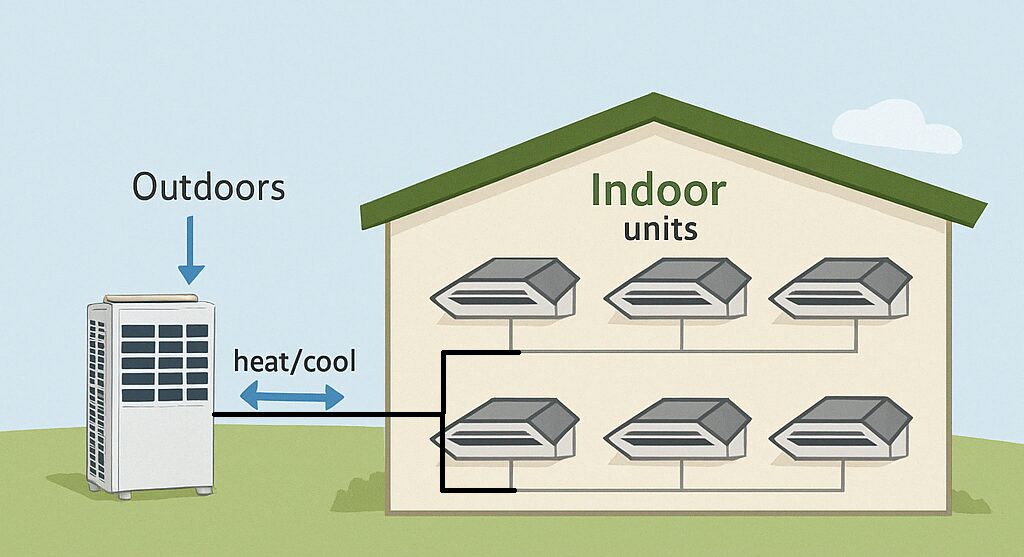
Diagram showing components of a central AC system.

When it comes to cooling your home efficiently, a central AC for home is often the go-to solution. This system not only ensures uniform cooling across all rooms but also enhances indoor air quality by filtering out dust and allergens. Whether you live in a bustling city like Mumbai or a quieter suburban area, understanding how a central AC works and its benefits can help you make an informed decision. Let’s dive into everything you need to know about central AC systems for homes.

How Does a Central AC For Home Works?

A central AC for home operates by circulating cool air through a network of ducts installed within your house. The process begins with the compressor, which pressurizes the refrigerant and sends it to the evaporator coil located inside the air handler. Here, warm air from your home passes over the cold coil, cooling it down before it’s distributed back into the rooms via vents.

Unlike window units or split systems, central AC provides consistent cooling without creating hot and cold spots. For instance, a homeowner in Hyderabad reported a 25% improvement in comfort after switching to a central AC system, thanks to its ability to maintain stable temperatures throughout the day.

Benefits of Installing a Central AC For Home

Enhanced Comfort Levels

One of the standout advantages of a central AC for home is its ability to deliver even cooling. Unlike portable units that may struggle to reach certain areas, central AC ensures every corner of your house stays comfortable during peak summer months.

Energy Efficiency

Modern central AC systems are designed with energy efficiency in mind. By integrating smart thermostats like these, you can program temperature settings based on your daily routine, reducing unnecessary energy consumption. According to ISHRAE guidelines, this approach can save up to ₹10,000 annually on electricity bills.

Improved Air Quality

Central AC systems come equipped with advanced filtration mechanisms that trap pollutants such as pollen, pet dander, and smoke particles. This feature is particularly beneficial for families with members suffering from allergies or respiratory issues.

Key Considerations Before Buying a Central AC For Home

Before investing in a central AC for home, there are several factors to consider. First, evaluate the size of your property and calculate the required cooling capacity using BTU metrics. You can refer to our detailed guide on heat load calculations here for more insights.

Additionally, ensure your home has adequate ductwork to support the installation. If not, retrofitting might be necessary, which could add to the overall cost. A case study from Pune highlights how proper planning reduced installation expenses by nearly 15%.

Maintenance Tips for Longevity

Proper maintenance plays a crucial role in extending the lifespan of your central AC system. Regular servicing—such as cleaning filters, checking refrigerant levels, and inspecting ducts—can prevent costly repairs. For example, a family in Chennai avoided a ₹50,000 repair bill simply by scheduling annual check-ups.

To learn more about maintaining your air conditioning unit, check out our comprehensive article on AC service near me.

Emerging Trends in Central AC Technology

The HVAC industry is witnessing rapid advancements, especially in residential cooling solutions. AI-driven optimization tools now allow homeowners to monitor and control their central AC systems remotely. Similarly, eco-friendly refrigerants compliant with international standards like ASHRAE and IGBC are becoming increasingly popular.

For those interested in sustainable options, integrating solar panels with your central AC can further reduce carbon footprints while cutting utility costs. Learn more about solar-powered AC units in our dedicated blog post here.

Challenges and Solutions

While central AC systems offer numerous benefits, they aren’t without challenges. High upfront costs and space requirements for ductwork installation are common concerns. However, modular designs and financing options have made these systems more accessible than ever.

Another challenge is ensuring optimal airflow in multi-story homes. To address this, experts recommend zoning techniques where different sections of the house operate independently. For deeper insights, explore our article on zoning strategies for HVAC.

Market Leaders in Central AC for Home: Top Brands and Their Offerings

When it comes to choosing the right air conditioning system for your home, several trusted brands stand out in the market, each offering unique features tailored to different needs.

Daikin

  • Inverter Technology: Known for its advanced inverter technology that ensures energy efficiency and consistent cooling.
  • Eco-Friendly Refrigerants: Uses refrigerants with low global warming potential (GWP) to reduce environmental impact.
  • Smart Features: Offers smart AC models with Wi-Fi connectivity for remote control via mobile apps.

Voltas

  • Adaptability to Indian Weather: Designs climate solutions tailored to handle diverse Indian weather conditions effectively.
  • Affordable Options: Provides budget-friendly models without compromising on performance or durability.
  • Wide Range of Products: Offers split, window, and portable air conditioners to suit various customer needs.

Blue Star

  • Sleek Design: Combines aesthetic appeal with robust functionality, making it a popular choice for modern homes.
  • Advanced Filtration: Equipped with multi-stage filtration systems to improve indoor air quality significantly.
  • Customizable Cooling: Allows users to adjust settings for personalized comfort levels.

LG

  • AI-Driven Optimization: Incorporates AI technology to enhance energy efficiency and user convenience.
  • Quiet Operation: Known for its ultra-quiet models, ideal for bedrooms and offices.
  • Durable Components: Builds ACs with high-quality materials to ensure long-term reliability.

Panasonic

  • Nanoe Technology: Features nanoe technology for advanced air purification and deodorization.
  • Energy Savings: Focuses on developing energy-efficient models to help reduce electricity bills.
  • Compact Models: Offers space-saving designs suitable for smaller rooms or apartments.

Carrier

  • Pioneering Legacy: A global leader in HVAC innovation with over a century of expertise.
  • Reliable Performance: Trusted for consistent cooling even in extreme temperatures.
  • Wide Service Network: Boasts an extensive after-sales service network across India and globally.

Case Study: Transforming Homes with Central AC Systems

In Bengaluru, a leading HVAC consultant helped a residential complex transition to a centralized cooling system. By implementing variable refrigerant flow (VRF) technology, they achieved a 30% reduction in energy usage while improving occupant satisfaction. Such innovations underscore the potential of modern central AC systems to revolutionize home comfort.

FAQs

1. What is the average lifespan of a central AC for home?
Most central AC systems last between 10 to 15 years with regular maintenance.

2. Can I install a central AC if my home doesn’t have ducts?
Yes, ductless mini-split systems serve as excellent alternatives.

3. How much does it cost to install a central AC in India?
Prices vary depending on the brand and size, ranging from ₹2 lakhs to ₹5 lakhs.

4. Are central AC systems noisy?
No, modern systems operate quietly, with noise levels below 40 decibels.

5. Is it possible to integrate smart features with a central AC?
Absolutely! Smart thermostats enable remote control and automation.

6. Do central AC systems improve indoor air quality?
Yes, they filter out airborne contaminants, enhancing overall air purity.

Disclaimer:

Some links in this article are affiliate links, such as those for Amazon products. These may generate a small commission at no extra cost to you, supporting our work. We never compromise editorial integrity for partnerships.

About the Author

Mr. Om Prakash, with over 18 years of hands-on experience in the HVAC industry, brings unmatched expertise in cleanroom, pharmaceutical, semiconductor, data center, commercial, and industrial HVAC systems. As the founder of HVAC Technocrat, he specializes in customized HVAC design, energy efficiency audits, retrofit planning, and turnkey consultancy services across India. His deep understanding of critical environments and complex building needs ensures every solution is efficient, reliable, and future-ready. Through his writings, he simplifies HVAC concepts and shares real-world insights to support professionals, facility managers, and decision-makers.

For any enquiries or project support, feel free to call or WhatsApp at +91 9908091942, email at hvactechnocrats@gmail.com, or visit www.hvactechnocrat.com.

School HVAC: Modernizing for Better IAQ

VRF HVAC system in a Hyderabad school with solar integration.

In India’s rapidly urbanizing landscape, schools face dual challenges: combating extreme heat and pollution while ensuring energy-efficient, healthy indoor environments. The pandemic underscored the urgency of HVAC modernization, not just for comfort but for student well-being. From Hyderabad to Hamburg, institutions are adopting innovative solutions tailored to local climates and budgets. This article explores strategies for upgrading school HVAC systems, blending Indian case studies with global best practices to guide professionals in creating sustainable, high-performance environments.

Why Indians Need School HVAC Upgrades Now

India’s diverse climate—from humid coastal regions to arid interiors—demands adaptable HVAC solutions. Many schools rely on outdated split ACs or natural ventilation, leading to inconsistent temperatures, poor air quality, and high energy costs. A 2023 study by the Indian Society of Heating, Refrigerating and Air Conditioning Engineers (ISHRAE) found that 65% of classrooms in metro cities exceed PM2.5 safety limits during peak pollution seasons.

For example, an international school in Hyderabad upgraded its HVAC system with variable refrigerant flow (VRF) technology, achieving a 32% reduction in power bills compared to traditional chilled water systems. The project’s cost-benefit analysis highlighted VRF’s zoning flexibility and lower maintenance, aligning with India’s Energy Conservation Building Code (ECBC). Such upgrades aren’t just about savings—they directly impact attendance and academic performance.

Balancing Cost and Performance in Retrofits

Indian schools often operate on tight budgets, making cost-effective retrofits critical. Pre-filters and fine filters (MERV 8–11) are gaining traction as they capture dust and pollen without straining existing infrastructure, unlike higher-grade MERV-13 or HEPA filters. A Chennai-based school reduced HVAC maintenance costs by 40% by installing washable pre-filters and upgrading duct insulation, complying with Bureau of Indian Standards (BIS) guidelines for indoor air quality.

Decentralized systems like ductless units or chilled beams are ideal for older buildings. A public school in Pune retrofitted 30 classrooms with inverter ACs and CO2 sensors, cutting energy use by 28% while maintaining thermal comfort as per National Building Code (NBC) standards.

Global Case Studies: Lessons for India

  1. Germany: A Berlin school integrated ground-source heat pumps with radiant cooling panels, achieving a 50% energy reduction. The €350,000 project was partly funded by EU green grants.
  2. Singapore: A high-rise school used displacement ventilation and solar chimneys to reduce cooling loads, adhering to Singapore’s Green Mark Certification.
  3. India: The Hyderabad international school project mentioned earlier serves as a benchmark for VRF adoption in high-ambient regions.

Smart Technologies for Indian Climates

IoT-enabled systems are revolutionizing HVAC management in India’s schools. For instance, a Bengaluru school deployed smart thermostats and AI-based load forecasting, reducing peak demand charges by 18%. Real-time air quality dashboards help staff monitor PM2.5 and CO2 levels, crucial during Delhi’s winter smog.

Humidity Control: Tackling Molds and Monsoons

In coastal cities like Mumbai, humidity fuels mold growth, exacerbating respiratory issues. A school in Kochi installed desiccant dehumidifiers paired with energy recovery ventilators (ERVs), maintaining 55% RH while cutting latent cooling loads by 35%. Such systems align with ASHRAE Standard 55 and ISHRAE’s climate-specific guidelines.

Funding and Local Incentives for School HVAC

India’s FAME-II scheme and state-level subsidies support energy-efficient upgrades. For example, a Jaipur school utilized Rajasthan’s Solar Energy Corporation subsidy to install solar-powered HVAC, achieving net-zero operations. Energy Service Company (ESCO) models allow schools to repay upgrades through saved utility bills, as seen in a Nagpur district school’s ₹2.1 crore retrofit.

Case Study: Hyderabad International School HVAC

Challenge: High energy costs from outdated chilled water systems.
Solution: VRF systems with zoning for classrooms, labs, and auditoriums.
Outcome:

  • 32% reduction in annual power bills (₹18 lakh saved).
  • Enhanced comfort with individual temperature control.
  • Compliance with ECBC and IGBC Green School standards.
    The client praised the project’s ROI analysis, which compared lifecycle costs of VRF vs. chilled water systems.

Future Trends: Adapting Global Innovations to India

  1. Hybrid Solar-VRF Systems: Combining solar PV with VRF to offset grid dependency.
  2. AI-Driven Predictive Maintenance: Minimizing downtime in resource-constrained schools.
  3. Low-GWP Refrigerants: Transitioning to R-32 or CO2-based systems under India’s HCFC phase-out plan.

FAQs: Addressing Indian HVAC Concerns

Q1: Are VRF systems suitable for North India’s extreme summers?
A: Yes! Inverter-driven VRF units maintain efficiency up to 48°C, ideal for Delhi or Rajasthan.

Q2: How do I handle HVAC costs in budget-constrained government schools?
A: Prioritize low-maintenance splits with BIS-certified filters. Explore ESCO models or MNRE subsidies.

Q3: What’s the ideal filter for dusty regions like Rajasthan?
A: Use pre-filters (MERV 8) paired with electrostatic filters—affordable and effective for coarse dust.

Q4: Can schools reuse wastewater for cooling towers?
A: Yes! A Coimbatore school reduced water use by 60% with treated greywater, following CPWD guidelines.

Q5: How to ensure HVAC hygiene in monsoon seasons?
A: Schedule biannual coil cleaning and install UV-C lights in drain pans to prevent microbial growth.

Q6: Is radiant cooling viable in Indian schools?
A: Yes, in dry climates. A Nashik school used radiant panels with desert coolers, cutting costs by 25%.

Disclosure: Some links in this article are affiliate links. These may generate a small commission at no extra cost to you, supporting our research. We never compromise editorial integrity for partnerships.

HVAC Challenges: Breaking Down for Practical Solutions in All Scenarios

Illustration of advanced HVAC systems across industries including commercial buildings, cleanrooms, data centers, and factories. Features smart thermostat, energy-efficient cooling technologies, AI-powered monitoring, solar panels, and wind turbines.

HVAC Challenges: Breaking Down for Practical Solutions in All Scenarios

HVAC systems are the backbone of comfort and safety across homes, offices, factories, and specialized facilities. Yet, professionals face a maze of challenges—from energy inefficiency in aging systems to maintaining sterile environments in labs. This article breaks down common HVAC hurdles and offers actionable solutions tailored to residential, commercial, and industrial scenarios. Whether you’re troubleshooting airflow imbalances or retrofitting systems for sustainability, this guide equips you with strategies to tackle problems head-on.

Understanding Common HVAC Challenges Across Industries

HVAC issues vary widely depending on the setting. In homes, uneven cooling and high utility bills dominate complaints. Offices struggle with balancing air quality across open floor plans, while factories face heat management near heavy machinery. High-stakes environments like labs and hospitals demand precision humidity control and contamination prevention. For example, a hospital in Southeast Asia reduced airborne infections by 22% after upgrading to HEPA filters with UV-C light integration.

Residential HVAC: Solving Everyday Comfort Issues

Uneven Temperature Distribution
Rooms feeling like different climates? Duct leaks or improper insulation are common culprits. Sealing gaps with mastic tape and adding attic insulation can balance airflow. Smart thermostats [like these] simplify zoning, allowing customized temperatures for each room.

High Energy Bills
Older systems guzzle energy. Solutions include replacing outdated units with ENERGY STAR-rated models (up to 20% savings), scheduling seasonal maintenance to clean coils and check refrigerant levels, and installing programmable thermostats to reduce runtime during off-peak hours. A retrofit project in Texas saw homeowners cut cooling costs by 35% after switching to a variable-speed heat pump.

Commercial HVAC: Balancing Air Quality and Efficiency

Open-plan offices, retail spaces, and restaurants need systems that handle high occupancy without spiking energy use. Challenges include meeting ASHRAE Standard 62.1 for indoor air quality (IAQ), using dampers to direct airflow to crowded areas, and addressing clogged filters that reduce efficiency by 15–20%. A café chain in Europe adopted demand-controlled ventilation (DCV), which adjusts airflow based on CO2 sensors, slashing energy use by 25%.

Industrial HVAC: Managing Extreme Conditions

Factories, warehouses, and chemical plants require robust systems to handle heat, fumes, and dust. Key challenges include spot cooling for welding stations or furnaces, using electrostatic precipitators to capture fine particles, and installing backup systems to prevent downtime during failures. A textile mill in India integrated evaporative cooling pads with IoT-enabled fans, reducing ambient temperatures by 8°C while adhering to ECBC 2017 guidelines.

Specialized Environments: Labs, Hospitals, and Data Centers

Labs and Cleanrooms
Precision is non-negotiable. ISO Class 5 cleanrooms need 40+ air changes per hour (ACH). Challenges include maintaining pressure differentials and filtering chemical vapors. A biotech startup achieved compliance by pairing laminar airflow hoods with redundant exhaust fans.

Hospitals
HVAC systems must prevent cross-contamination. Strategies include HEPA filters with 99.97% efficiency, negative-pressure isolation rooms, and UVGI systems to neutralize pathogens.

Data Centers
Cooling consumes 40% of energy. Liquid immersion cooling and hot/cold aisle containment are game-changers. A Midwest data center cut cooling costs by 50% using AI-driven chilled water pumps.

Retrofitting Older Systems for Modern Demands

Many buildings operate with outdated HVAC infrastructure. Retrofits can enhance performance without full replacements. Options include variable refrigerant flow (VRF) for buildings with shifting occupancy, energy recovery ventilators (ERVs) to recycle heat from exhaust air, and ductless mini-splits to solve zoning issues in historic homes. A 1980s office tower in Melbourne achieved LEED Gold certification after retrofitting with VRF and solar-assisted heat pumps.

Energy Efficiency and Sustainability Solutions

Smart HVAC Technologies
IoT sensors and AI algorithms optimize runtime and detect faults early. For instance, predictive maintenance tools alert technicians about failing components before breakdowns occur.

Renewable Integration
Solar-powered absorption chillers and geothermal heat pumps reduce reliance on grids. A factory in Sweden runs its HVAC entirely on wind energy, cutting carbon emissions by 90%.

Compliance with Standards
ASHRAE 90.1 and India’s ECBC mandate efficiency benchmarks. Incentives like tax credits for LEED-certified projects accelerate ROI.

Troubleshooting Frequent HVAC Problems

Common issues include short cycling (caused by oversized units), poor airflow (due to dirty filters or blocked ducts), and refrigerant leaks. Solutions include load calculations using Manual J software, regular inspections, and repairs per EPA Section 608 guidelines.

Case Studies: Real-World Problem-Solving

  • A mall in Dubai resolved humidity issues by installing desiccant dehumidifiers, improving customer comfort and reducing mold complaints.
  • A pharma plant met FDA GMP standards using ISO 7-rated filters and automated pressure controls, cutting contamination risks by 40%.

Future-Proofing HVAC Systems

Emerging trends include hydrogen-ready boilers, 3D-printed ducts to reduce waste, and grid-interactive systems that adjust usage during peak demand.

FAQs

1. How often should HVAC filters be replaced?
Every 1–3 months, depending on usage and filter type (e.g., fiberglass vs. HEPA).

2. Can smart thermostats work with older systems?
Yes, but they may require a C-wire adapter for power.

3. What’s the lifespan of a commercial HVAC unit?
15–20 years with proper maintenance.

4. How do I calculate cooling capacity for a server room?
Use ASHRAE’s heat load equations, factoring in server wattage and room size.

5. Are geothermal systems worth the upfront cost?
Yes—payback periods average 5–10 years via energy savings.

6. What’s the best way to reduce HVAC noise?
Install vibration dampers and acoustically lined ducts.

Disclaimer: Disclosure: Some links may earn us a commission at no extra cost to you.

How to Reduce HVAC Energy Consumption in Petrochemical Operations

Discover effective strategies to reduce energy consumption in HVAC systems in petrochemical facilities, leading to significant cost savings and environmental benefits.

Minimizing Energy Consumption in Petrochemical HVAC Operations

Petrochemical operations require strict environmental regulation to ensure safety and productivity. HVAC systems are the most important but can be significant energy consumers in these facilities. By adopting strategic measures, energy consumption can be significantly reduced, resulting in lower operational costs and a reduced carbon footprint.

Understanding HVAC Systems in Petrochemical Operations

HVAC systems manage air quality, temperature and humidity in petrochemical operations. These systems include air handling units (AHUs), chillers, cooling towers and ductwork. Efficient operation of these components is essential to reduce energy consumption.

Key strategies to reduce HVAC energy consumption

Optimizing Air Changes Hourly (ACPH)

Balancing ACPH is critical in petrochemical environments. Too much ACPH leads to unnecessary energy consumption, while too little compromises air quality. Calculating the optimal ACPH based on specific operational requirements can result in significant energy savings.

Using variable air volume (VAV) systems

VAV systems adjust airflow based on current load, reducing energy consumption. In contrast to constant air volume systems, VAV systems can reduce fan speed and reduce the need for cooling and heating to adapt to changing environmental conditions.

Implementation of Energy Recovery Ventilators (ERVs)

ERVs capture energy from the exhaust air and transfer it to the incoming fresh air, reducing the energy required to condition the incoming air. It is particularly useful in petrochemical operations where ventilation demands are high.

Leveraging advanced controls and automation

Smart HVAC controls can optimize system performance by adjusting settings in real time based on environmental data. Automation systems can integrate with building management systems to ensure that HVAC components operate only when needed, reducing energy waste.

Improving insulation and sealing

Proper insulation of ducts and sealing of leaks prevents the loss of conditioned air, ensuring that the HVAC system operates efficiently. This is particularly important in large petrochemical facilities where ductwork spans considerable distances.

Pros and cons of energy-efficient HVAC systems

Pros:

  • Reduced energy costs: Lower energy consumption results in significant cost savings.
  • Environmental benefits: Reduced energy consumption reduces carbon footprint.
  • Better system longevity: Efficient systems experience less wear and tear, leading to longer lifespans.
  • Improved air quality: Optimized systems can better handle pollutants and ensure clean air.

Cons:

  • Initial Investment: Upgrading to energy-efficient systems requires significant upfront costs.
  • Maintenance Requirements: Advanced systems may require more routine maintenance and skilled personnel.
  • Technology Dependency: Relying on automated systems requires strong IT support.

FAQ

What is the role of HVAC systems in petrochemical operations?

HVAC systems play a critical role in maintaining safe and productive environments in petrochemical operations. They control temperature, humidity and air quality, ensuring the facility operates in optimal conditions. Properly functioning HVAC systems also help prevent the build-up of hazardous gases and ensure compliance with safety regulations.

How can VAV systems reduce energy consumption?

VAV systems reduce energy consumption by adjusting airflow based on current demand. Unlike constant air volume systems that operate at a fixed rate, VAV systems can modulate airflow, reducing fan speed when full airflow is not required. This can lead to significant energy savings, especially in large facilities with varying occupancy levels.

Why are ERVs important in petrochemical HVAC systems?

ERVs are important in petrochemical HVAC systems because they recover energy from the exhaust air and use it to precondition incoming clean air. This process reduces the load on heating and cooling systems, leading to lower energy consumption. ERVs are particularly beneficial in facilities with high ventilation requirements, as they improve overall energy efficiency.

What are the benefits of smart HVAC controls?

Smart HVAC controls offer many benefits including optimized system performance, reduced energy waste and improved efficiency. These controls use real-time data to adjust settings, ensuring that HVAC systems operate only when needed. This not only saves energy but also extends the lifespan of HVAC components by reducing unnecessary wear and tear.

How does proper insulation affect HVAC efficiency?

Proper insulation is critical to HVAC efficiency, as it prevents loss of conditioned air. In petrochemical facilities, where ductwork is extensive, insulation ensures that the air distributed to the various zones remains at the desired temperature. This reduces the load on HVAC systems, leading to lower energy consumption and more stable indoor conditions.

Conclusion

Reducing HVAC energy consumption in petrochemical operations is essential for cost savings and environmental sustainability. Petrochemical facilities can achieve significant energy reductions by optimizing ACPH, using VAV systems, implementing ERVs, increasing advanced controls, and improving insulation. Although the initial investment is high, the long-term benefits far outweigh the costs, making energy-efficient HVAC systems a smart choice for the petrochemical industry.