Affordable Cooling Tips to Slash Your AC Bill

A modern split AC unit installed in a living room

With rising electricity costs, finding ways to reduce your AC bill has become a priority for many households. Whether you’re using a split AC or a window unit, small adjustments can lead to significant savings without compromising comfort. In this article, we’ll explore practical tips to lower your AC electricity bill, discuss the best modes for energy efficiency, and answer common questions like “Does health mode in AC consume more electricity?” Let’s dive into actionable strategies to keep your home cool while minimizing costs.

5 Tips to Reduce AC Electricity Bill

Reducing your AC bill doesn’t have to be complicated. Here are five simple yet effective tips:

  • Use Ceiling Fans: Pairing your AC with ceiling fans improves air circulation, allowing you to set the thermostat higher without sacrificing comfort.
  • Regular Maintenance: Clean filters and check refrigerant levels to ensure your AC operates efficiently. Learn more about maintenance in our guide on AC service near me.
  • Upgrade to Energy-Efficient Models: Investing in a 5-star rated AC can significantly reduce power consumption. Explore top models in our article on 1-ton 5-star ACs.
  • Optimize Thermostat Settings: Keep your AC at an optimal temperature (e.g., 26–27°C) to balance comfort and energy savings.
  • Insulate Your Home: Proper insulation reduces heat gain, meaning your AC won’t have to work as hard to cool your space.

How to Reduce Power Consumption in Split AC

Split ACs are popular for their sleek design and efficient cooling, but they can still consume significant electricity if not used wisely. Here’s how to reduce power consumption:

  • Enable Inverter Technology: Inverter ACs adjust compressor speed based on cooling demand, consuming less energy compared to fixed-speed models.
  • Use Timer Mode: Set your AC to turn off automatically when you’re asleep or away, preventing unnecessary energy usage.
  • Close Doors and Windows: Ensure your room is well-sealed to prevent cool air from escaping, reducing the workload on your AC.
  • Install Curtains or Blinds: Blocking direct sunlight lowers indoor temperatures, allowing your AC to cool more efficiently.

For instance, a family in Hyderabad reduced their monthly AC bill by 20% after switching to an inverter split AC and sealing gaps in their windows.

Which Mode is Best for AC to Save Electricity

The mode you choose on your AC can significantly impact energy consumption. Here’s a breakdown of the most energy-efficient modes:

  • Sleep Mode: This mode gradually increases the temperature overnight, saving energy while maintaining comfort.
  • Dry Mode: Ideal for humid climates, this mode removes moisture without excessive cooling, consuming less electricity.
  • Eco Mode: Many modern ACs come with an eco-friendly setting that optimizes power usage based on room conditions.

While “cool mode” is the default for most users, combining it with sleep or dry mode can enhance energy savings.

Does Health Mode in AC Consume More Electricity

Health mode, often found in advanced AC models, uses additional filters to purify indoor air. While this feature enhances air quality, it may slightly increase power consumption due to the extra workload on the system. However, the difference is minimal, and the benefits of cleaner air often outweigh the minor rise in your AC bill.

Electricity Bill if We Use AC for 24 Hours

Running an AC continuously for 24 hours can significantly impact your electricity bill. For example:

  • A 1.5-ton, 3-star split AC typically uses around 1.5 to 2 units of electricity per hour. Running it for 24 hours would cost around ₹600–₹800 daily, depending on local electricity rates (₹8–₹10/unit).
  • Upgrading to a 5-star inverter model can reduce consumption to 1–1.2 units per hour, lowering daily costs to ₹400–₹500.

To manage costs, consider using your AC only during peak heat hours and relying on fans or natural ventilation at other times.

How to Reduce AC Bill

Beyond the tips mentioned earlier, here are additional strategies to slash your AC bill:

  • Install Solar Panels: Pairing your AC with solar energy can drastically cut electricity costs. Discover more in our solar AC buying guide.
  • Use Smart Thermostats: These devices learn your schedule and adjust settings automatically, optimizing energy usage.
  • Avoid Extreme Temperature Settings: Setting your AC too low forces it to work harder, increasing power consumption.

How to Reduce AC Temperature Efficiently

Lowering your AC temperature doesn’t always mean better cooling. Instead, focus on these practices:

  • Pre-Cool Your Room: Use fans or curtains to bring down the initial temperature before turning on the AC.
  • Seal Leaks: Inspect doors, windows, and walls for gaps that allow warm air to enter.
  • Position Furniture Strategically: Avoid blocking vents with furniture, ensuring even airflow throughout the room.

How Can I Get the Lowest AC Bill

Achieving the lowest AC bill involves a combination of smart usage and energy-efficient appliances. Here’s how:

  • Choose a high-efficiency model with features like inverter technology and eco mode.
  • Combine your AC with other cooling solutions, such as ceiling fans or portable air conditioners.
  • Monitor your electricity usage with smart meters to identify areas for improvement.

What Should I Keep My AC On to Lower My Bill

To save energy efficiently, keep your AC set between 26–27°C. This range provides comfortable cooling without overworking the compressor. Additionally, using sleep or dry mode can further reduce energy consumption.

Does AC at 27 Degrees Consume Less Electricity

Yes, setting your AC to 27°C consumes less electricity compared to lower temperatures. The compressor runs less frequently at higher settings, reducing overall power usage. For example, a 1.5-ton AC operating at 27°C consumes approximately 1.2 units per hour, whereas setting it to 18°C could increase consumption to 2 units per hour.

Challenges and Solutions

While reducing your AC bill is achievable, it comes with challenges:

  • Behavioral Changes: Some users find it difficult to adjust their habits, such as raising the thermostat or using timers. Start small and gradually adopt energy-saving practices.
  • Initial Costs: Upgrading to energy-efficient models or installing solar panels requires upfront investment. However, long-term savings make these options worthwhile.
  • Maintenance Neglect: Ignoring regular servicing can lead to higher energy bills. Schedule annual maintenance to keep your AC running smoothly.

Case Study: Real-World Savings

A homeowner in Chennai reduced their monthly AC bill by 35% after implementing the following changes:

  • Switched to a 5-star inverter split AC.
  • Installed thermal curtains and sealed window gaps.
  • Used sleep mode during nighttime and relied on ceiling fans during cooler hours.

These simple steps resulted in a monthly saving of ₹1,200, proving that small adjustments can yield significant results.

FAQs: AC Bills

How can I reduce my AC bill quickly?

Start by cleaning your AC filters, sealing gaps in windows, and using ceiling fans to complement your AC. These steps require minimal effort but deliver noticeable savings.

Is it cheaper to use a fan instead of an AC?

Yes, fans consume significantly less electricity than ACs. However, they may not provide sufficient cooling during extreme heat. Combining both can strike a balance.

Why does my AC bill spike during summer?

Higher outdoor temperatures force your AC to work harder, increasing energy consumption. Using shades, blinds, and proper insulation can mitigate this issue.

Can I save money by turning off my AC at night?

Yes, switching to a fan or using sleep mode during cooler nighttime hours can reduce energy usage and lower your bill.

What is the ideal AC temperature for energy savings?

Setting your AC between 26–27°C strikes a balance between comfort and energy efficiency.

Disclaimer

Some links in this article are affiliate links, such as those for Amazon products. These may generate a small commission at no extra cost to you, supporting our work. We never compromise editorial integrity for partnerships.

About the Author

Mr. Om Prakash, with over 18 years of hands-on experience in the HVAC industry, brings unmatched expertise in cleanroom, pharmaceutical, semiconductor, data center, commercial, and industrial HVAC systems. As the founder of HVAC Technocrat, he specializes in customized HVAC design, energy efficiency audits, retrofit planning, and turnkey consultancy services across India. His deep understanding of critical environments and complex building needs ensures every solution is efficient, reliable, and future-ready. Through his writings, he simplifies HVAC concepts and shares real-world insights to support professionals, facility managers, and decision-makers. For any enquiries or project support, feel free to call or WhatsApp at +91 9908091942, email at hvactechnocrats@gmail.com, or visit www.hvactechnocrat.com.

Central AC For Home: Everything You Need to Know

Diagram showing components of a central AC system.

When it comes to cooling your home efficiently, a central AC for home is often the go-to solution. This system not only ensures uniform cooling across all rooms but also enhances indoor air quality by filtering out dust and allergens. Whether you live in a bustling city like Mumbai or a quieter suburban area, understanding how a central AC works and its benefits can help you make an informed decision. Let’s dive into everything you need to know about central AC systems for homes.

How Does a Central AC For Home Works?

A central AC for home operates by circulating cool air through a network of ducts installed within your house. The process begins with the compressor, which pressurizes the refrigerant and sends it to the evaporator coil located inside the air handler. Here, warm air from your home passes over the cold coil, cooling it down before it’s distributed back into the rooms via vents.

Unlike window units or split systems, central AC provides consistent cooling without creating hot and cold spots. For instance, a homeowner in Hyderabad reported a 25% improvement in comfort after switching to a central AC system, thanks to its ability to maintain stable temperatures throughout the day.

Benefits of Installing a Central AC For Home

Enhanced Comfort Levels

One of the standout advantages of a central AC for home is its ability to deliver even cooling. Unlike portable units that may struggle to reach certain areas, central AC ensures every corner of your house stays comfortable during peak summer months.

Energy Efficiency

Modern central AC systems are designed with energy efficiency in mind. By integrating smart thermostats like these, you can program temperature settings based on your daily routine, reducing unnecessary energy consumption. According to ISHRAE guidelines, this approach can save up to ₹10,000 annually on electricity bills.

Improved Air Quality

Central AC systems come equipped with advanced filtration mechanisms that trap pollutants such as pollen, pet dander, and smoke particles. This feature is particularly beneficial for families with members suffering from allergies or respiratory issues.

Key Considerations Before Buying a Central AC For Home

Before investing in a central AC for home, there are several factors to consider. First, evaluate the size of your property and calculate the required cooling capacity using BTU metrics. You can refer to our detailed guide on heat load calculations here for more insights.

Additionally, ensure your home has adequate ductwork to support the installation. If not, retrofitting might be necessary, which could add to the overall cost. A case study from Pune highlights how proper planning reduced installation expenses by nearly 15%.

Maintenance Tips for Longevity

Proper maintenance plays a crucial role in extending the lifespan of your central AC system. Regular servicing—such as cleaning filters, checking refrigerant levels, and inspecting ducts—can prevent costly repairs. For example, a family in Chennai avoided a ₹50,000 repair bill simply by scheduling annual check-ups.

To learn more about maintaining your air conditioning unit, check out our comprehensive article on AC service near me.

Emerging Trends in Central AC Technology

The HVAC industry is witnessing rapid advancements, especially in residential cooling solutions. AI-driven optimization tools now allow homeowners to monitor and control their central AC systems remotely. Similarly, eco-friendly refrigerants compliant with international standards like ASHRAE and IGBC are becoming increasingly popular.

For those interested in sustainable options, integrating solar panels with your central AC can further reduce carbon footprints while cutting utility costs. Learn more about solar-powered AC units in our dedicated blog post here.

Challenges and Solutions

While central AC systems offer numerous benefits, they aren’t without challenges. High upfront costs and space requirements for ductwork installation are common concerns. However, modular designs and financing options have made these systems more accessible than ever.

Another challenge is ensuring optimal airflow in multi-story homes. To address this, experts recommend zoning techniques where different sections of the house operate independently. For deeper insights, explore our article on zoning strategies for HVAC.

Market Leaders in Central AC for Home: Top Brands and Their Offerings

When it comes to choosing the right air conditioning system for your home, several trusted brands stand out in the market, each offering unique features tailored to different needs.

Daikin

  • Inverter Technology: Known for its advanced inverter technology that ensures energy efficiency and consistent cooling.
  • Eco-Friendly Refrigerants: Uses refrigerants with low global warming potential (GWP) to reduce environmental impact.
  • Smart Features: Offers smart AC models with Wi-Fi connectivity for remote control via mobile apps.

Voltas

  • Adaptability to Indian Weather: Designs climate solutions tailored to handle diverse Indian weather conditions effectively.
  • Affordable Options: Provides budget-friendly models without compromising on performance or durability.
  • Wide Range of Products: Offers split, window, and portable air conditioners to suit various customer needs.

Blue Star

  • Sleek Design: Combines aesthetic appeal with robust functionality, making it a popular choice for modern homes.
  • Advanced Filtration: Equipped with multi-stage filtration systems to improve indoor air quality significantly.
  • Customizable Cooling: Allows users to adjust settings for personalized comfort levels.

LG

  • AI-Driven Optimization: Incorporates AI technology to enhance energy efficiency and user convenience.
  • Quiet Operation: Known for its ultra-quiet models, ideal for bedrooms and offices.
  • Durable Components: Builds ACs with high-quality materials to ensure long-term reliability.

Panasonic

  • Nanoe Technology: Features nanoe technology for advanced air purification and deodorization.
  • Energy Savings: Focuses on developing energy-efficient models to help reduce electricity bills.
  • Compact Models: Offers space-saving designs suitable for smaller rooms or apartments.

Carrier

  • Pioneering Legacy: A global leader in HVAC innovation with over a century of expertise.
  • Reliable Performance: Trusted for consistent cooling even in extreme temperatures.
  • Wide Service Network: Boasts an extensive after-sales service network across India and globally.

Case Study: Transforming Homes with Central AC Systems

In Bengaluru, a leading HVAC consultant helped a residential complex transition to a centralized cooling system. By implementing variable refrigerant flow (VRF) technology, they achieved a 30% reduction in energy usage while improving occupant satisfaction. Such innovations underscore the potential of modern central AC systems to revolutionize home comfort.

FAQs

1. What is the average lifespan of a central AC for home?
Most central AC systems last between 10 to 15 years with regular maintenance.

2. Can I install a central AC if my home doesn’t have ducts?
Yes, ductless mini-split systems serve as excellent alternatives.

3. How much does it cost to install a central AC in India?
Prices vary depending on the brand and size, ranging from ₹2 lakhs to ₹5 lakhs.

4. Are central AC systems noisy?
No, modern systems operate quietly, with noise levels below 40 decibels.

5. Is it possible to integrate smart features with a central AC?
Absolutely! Smart thermostats enable remote control and automation.

6. Do central AC systems improve indoor air quality?
Yes, they filter out airborne contaminants, enhancing overall air purity.

Disclaimer:

Some links in this article are affiliate links, such as those for Amazon products. These may generate a small commission at no extra cost to you, supporting our work. We never compromise editorial integrity for partnerships.

About the Author

Mr. Om Prakash, with over 18 years of hands-on experience in the HVAC industry, brings unmatched expertise in cleanroom, pharmaceutical, semiconductor, data center, commercial, and industrial HVAC systems. As the founder of HVAC Technocrat, he specializes in customized HVAC design, energy efficiency audits, retrofit planning, and turnkey consultancy services across India. His deep understanding of critical environments and complex building needs ensures every solution is efficient, reliable, and future-ready. Through his writings, he simplifies HVAC concepts and shares real-world insights to support professionals, facility managers, and decision-makers.

For any enquiries or project support, feel free to call or WhatsApp at +91 9908091942, email at hvactechnocrats@gmail.com, or visit www.hvactechnocrat.com.

HVAC Consultant: How they Can Save You Money and Energy

HVAC consultant analyzing building energy performance on a blueprint layout.

In today’s competitive industrial and commercial landscape, optimizing HVAC systems isn’t just about comfort—it’s about cost savings, energy efficiency, and sustainability. Whether you manage a pharmaceutical cleanroom, a semiconductor facility, a data center, or a large commercial building, an experienced HVAC consultant can help you cut operational costs, enhance performance, and meet regulatory standards.

This article explores how an HVAC consultant add value, the key services they offer, and real-world examples of energy and cost savings that can transform your HVAC systems for maximum efficiency and sustainability.

Why Hire an HVAC Consultant?

HVAC systems account for 40-60% of a building’s energy consumption. However, poor design can lead to skyrocketing bills, while frequent breakdowns drive up maintenance costs. Additionally, non-compliance with energy codes may result in penalties. Moreover, Poor indoor air quality (IAQ) affecting health & productivity. For these reasons, professional intervention is critical.

    An HVAC consultant identifies inefficiencies, recommends upgrades, and ensures systems run at peak performance with minimal waste.

    Key Services Offered by an HVAC Consultant

    1. Value Engineering: Optimizing Costs Without Compromising Quality

    Instead of overspending on oversized equipment or unnecessary features, consultants perform value engineering—analyzing system requirements and suggesting cost-effective alternatives.

    ✅ Case Study: A Hyderabad-based IT park reduced HVAC installation costs by ₹58 lakhs after a consultant optimized chiller capacity, piping sizing and ductwork routing layout.

    2. Energy Audits: Pinpointing Waste & Recommending Solutions

    Energy audits assess how efficiently your HVAC system operates and identify:

    • Overcooling/overheating zones
    • Air leaks in ducts
    • Inefficient equipment (old chillers, pumps, fans)
    • Opportunities for heat recovery

    ✅ For Instance: A pharmaceutical plant in Bengaluru cut energy bills by 25% after an audit revealed excessive fan power usage—solved by switching to EC motors.

    3. Retrofit Design Analysis: Upgrading Old Systems for Better Efficiency

    Many facilities run on decades-old HVAC systems that guzzle energy. Consultants analyze:

    • Replacement vs. repair economics
    • New tech options (VRF, inverter chillers, smart controls)
    • ROI on energy-efficient retrofits

    ✅ In another Example: A commercial complex in Mumbai replaced its 20-year-old chillers with magnetic-bearing models, reducing energy consumption by 40%—payback in 33 months.

    4. Greenfield Projects: Designing Efficient HVAC from Scratch

    For new constructions (data centers, cleanrooms, industrial plants), consultants ensure:

    • Right-sizing equipment (avoiding over/under-capacity)
    • Sustainable design (solar-assisted cooling, efficient motors options)
    • Compliance with ASHRAE, ISHRAE, ECBC, and LEED standards

    ✅ Similarly: A semiconductor facility in Chennai saved ₹1.2 crore/year by integrating adiabatic cooling instead of traditional DX systems.

    5. Planning, Estimation & Tendering: Avoiding Costly Mistakes

    A poorly planned HVAC project can lead to budget overruns and delays. Consultants help with:

    • Accurate load calculations
    • Equipment selection (chillers, AHUs, pumps)
    • Bid evaluation & contractor selection

    ✅ Another Case Study: A hospital in Bangalore avoided ₹25 lakhs in rework after a consultant corrected incorrect duct sizing in initial plans.

    HVAC Sustainability & Energy Efficiency Solutions

    With rising electricity costs and stricter environmental regulations, businesses must adopt sustainable HVAC practices. Consultants recommend:

    • Heat recovery systems (waste heat reuse)
    • Mag-Lev bearing chillers
    • Solar-powered motors for AHUs and Fans
    • AI-driven predictive maintenance
    • Thermal energy storage
    • Building automation systems (BAS) for smart controls

    ✅ Case Study: A Hyderabad mall installed IoT-based HVAC controls, reducing energy use by 25% while maintaining optimal comfort.

    Why Choose Mr. Om Prakash – HVAC Consultant at www.hvactechnocrat.com?

    With 18+ years of expertiseMr. Om Prakash has helped pharmaceutical plants, data centers, semiconductor facilities, and commercial buildings across India and abroad optimize their HVAC systems for energy efficiency and cost savings.

    What Sets Him Apart?

    ✔ Deep Technical Knowledge – Specializes in cleanrooms, data centers, industrial HVAC, and green building compliance.
    ✔ Hands-On Experience – Successfully executed 100+ projects in design, audits, retrofits, and energy optimization.
    ✔ Cost-Saving Strategies – Expertise in value engineering to reduce capital and operational expenses.
    ✔ Sustainability Focus – Designs systems aligned with ECBC, LEED, ISHRAE and ASHRAE standards for long-term efficiency.

    Services Offered:

    🔹 HVAC Design & Planning for commercial buildings
    🔹 Energy Efficiency Audits
    🔹 Retrofit & Modernization Studies
    🔹 Cleanroom, Pharma and Semiconductor HVAC Solutions
    🔹 Data Center Cooling Optimization
    🔹 Tender Documentation & Bid Evaluation

    Real-World Impact:

    🏭 A Hyderabad pharma company saved ₹42 lakhs/year after Mr. Om Prakash redesigned their HVAC system’s capacity, airflow & filtration system.
    🏢 A commercial tower reduced HVAC energy use by 30% through AI-based load optimization.

    📞 For Expert HVAC Consulting in Hyderabad & Across India:
    📱 Call/WhatsApp: +91 9908091942
    📧 Email: hvactechnocrats@gmail.com
    🌐 Visit: www.hvactechnocrat.com

    FAQs

    1. How much can an HVAC consultant save me?

    Savings depend on system inefficiencies—typically 20-40% on energy bills and 10-30% on maintenance costs.

    2. Is hiring a HVAC consultant worth it for small businesses?

    Yes! Even small facilities can save lakhs annually with proper HVAC optimization.

    3. How long does an energy audit take?

    Usually 2-5 days, depending on facility size.

    4. Can HVAC consultant help with green building certifications?

    Absolutely! They ensure compliance with LEED, IGBC, and ECBC norms.

    5. What’s the ROI on HVAC retrofits?

    Most projects pay back in 2-4 years through energy savings.

    6. Do HVAC consultant handle contractor coordination?

    Yes, they oversee design, installation, and commissioning to avoid errors.

    Final Thoughts

    An HVAC consultant isn’t an expense—it’s an investment that pays off in lower bills, fewer breakdowns, and better compliance. Whether you need energy audits, retrofit designs, or greenfield project planningMr. Om Prakash at www.hvactechnocrat.com brings 18+ years of expertise to deliver cost-effective, sustainable HVAC solutions.

    📞 Contact today for a consultation!
    📱 +91 9908091942 | 📧 hvactechnocrats@gmail.com

    Disclosure: Some links may be affiliate-based, supporting our research at no extra cost to you. We maintain strict editorial independence.

    Air Conditioning Service Near Me: How to Find the Reliable Expert

    Technician performing air conditioning service at a residential location.

    Finding the right air conditioning service near me can be a daunting task. With numerous options available, choosing a reliable and professional service can significantly impact the efficiency and longevity of your AC unit. This guide will walk you through the essential steps to evaluate and select the best AC service near to you, ensuring you receive quality support when you need it most.

    Air Conditioning Service Near Me: Start with Thorough Online Research

    Your search for an AC service provider should begin online. Utilize search engines and review platforms to compile a list of potential service providers in your area. Websites like JustDial, Sulekha, and Housejoy offer detailed listings of local AC service companies. By reading customer reviews and ratings, you can gauge the quality of service provided. Positive feedback and high ratings usually signify a dependable service provider. On the other hand, frequent complaints or low ratings can be a red flag. Analyzing these reviews helps you gain valuable insights into the company’s reliability and customer satisfaction levels.

    Air Conditioning Service Near Me: Verify Licensing and Certifications

    Make sure that the AC service providers you consider are properly licensed and certified. A licensed service provider adheres to industry standards and regulations, which is crucial for ensuring safe and effective service. Certifications from reputable organizations such as the Air Conditioning Contractors of India (ACCI) or the Bureau of Indian Standards (BIS) demonstrate the company’s commitment to quality. These credentials confirm that the technicians are trained and qualified to handle your air conditioning system effectively. By checking these certifications, you can avoid unqualified or amateur technicians.

    Evaluate Technician Experience for Air Conditioning Service Near Me

    The experience level of technicians is a key factor in determining the quality of service. Inquire about the experience of the technicians who will be working on your air conditioner. Technicians with extensive experience are generally better equipped to diagnose and resolve issues accurately. Additionally, ask about their familiarity with various air conditioner brands and models. Specialized experience with your specific type of AC unit can further enhance the quality of service. Experienced technicians are likely to provide more efficient and reliable repairs and maintenance.

    Compare Quotes and Estimates for Air Conditioning Service Near Me

    Before making a decision, obtain detailed quotes from multiple service providers. A transparent estimate should include a breakdown of parts, labor, and any additional charges. Comparing quotes helps you understand the market rate for the services you need and avoid unexpected costs. Although cost is a significant factor, it shouldn’t be the only criterion when selecting a service provider. Balance affordability with the quality of service to ensure you receive good value for your money. Be wary of unusually low quotes, as they may signal poor service or hidden fees.

    Look for Warranties and Guarantees in AC Service Near Me

    Reputable AC service providers often offer warranties or guarantees on their work. A warranty reflects the company’s confidence in their workmanship and offers peace of mind. It protects you against additional costs if issues recur shortly after the service. When reviewing warranty terms, pay attention to what is covered and the duration of coverage. Ensure that the warranty includes both parts and labor to fully protect yourself from potential future expenses.

    Assess Customer Service and Communication for AC Service Near Me

    Effective communication and excellent customer service are crucial for a positive service experience. Evaluate how the company interacts with you from the initial contact. Are they responsive, courteous, and open to answering your questions? Good customer service includes clear explanations of the work to be done, timely updates, and a willingness to address your concerns. A company that values its customers is more likely to provide a satisfactory service experience and build long-term relationships.

    Check for Emergency Service Availability for AC Service Near Me

    Air conditioner issues can arise unexpectedly, so it’s important to choose a service provider that offers emergency repair options. Verify if the company provides 24/7 support or after-hours service for urgent situations. Availability for emergency repairs ensures that you won’t be left without cooling during critical times and can receive prompt assistance when needed. This feature is especially important during peak seasons or extreme weather conditions when AC breakdowns can be more common.

    Verify Insurance Coverage for AC Service Near Me

    Ensure that the AC service provider carries adequate insurance coverage. This includes both liability insurance and workers’ compensation insurance. Liability insurance protects you in case of damage to your property during the service, while workers’ compensation insurance covers any injuries that might occur to the technicians while on the job. Confirming insurance coverage offers added peace of mind and protection against potential risks. It ensures that you are protected in case of accidents or damage during the service process.

    Seek Recommendations and Referrals for AC Service Near Me

    Personal referrals from friends, family, or neighbors can be incredibly valuable in finding a reliable AC service provider. Ask those you trust for recommendations based on their own experiences. Personal referrals often lead to discovering trustworthy companies with a proven track record of quality service. People you know can offer honest feedback and insights that you may not find through online reviews. This can be a great way to find reputable service providers who are already vetted by those you trust.

    To know more about How to Get Quality Service from Air Conditioner Repair Service Near Me Click Here

    Trust Your Instincts When Choosing AC Service Near Me

    Finally, trust your instincts when selecting an AC service provider. If something doesn’t feel right or if you have concerns about the company’s reliability, consider exploring other options. Choose a provider that makes you feel confident in their ability to perform the necessary work efficiently and professionally. Your comfort and satisfaction are paramount, and trusting your gut can help ensure that you select a service provider that meets your expectations.

    AC Repair Kit: Your Essential Toolset for Effective Repairs

    If you’re considering handling air conditioner repairs independently, having the proper tools is crucial. An AC repair kit can be invaluable, providing all the necessary equipment to address common issues with accuracy and efficiency. A well-rounded repair kit generally includes key tools such as gauges, wrenches, and screwdrivers tailored specifically for HVAC systems. Equipped with these tools, you’ll be ready for both routine upkeep and unforeseen repairs. To explore high-quality AC repair kits that suit your needs, click here to browse options on Amazon India.

    Top Air Conditioner Service Providers in India

    • Blue Star – A leading name in air conditioning services, offering installation, maintenance, and repair solutions across India.
      Click here to view the selection of Blue Star products and capacities available on Amazon India.
    • Voltas – Known for comprehensive AC services including repair, maintenance, and emergency support.
      Click here to explore the range of Voltas products and capacities available on Amazon India.
    • Haier India – Provides expert servicing for Haier air conditioners with a focus on customer satisfaction.
      Click here to explore the range of Haier products and capacities available on Amazon India.
    • LG Electronics – Offers a range of services including installation, repair, and maintenance for LG AC units.
      Click here to explore the range of LG Electronics products and capacities available on Amazon India.
    • Daikin – Specializes in air conditioning services with a strong reputation for quality and reliability.
      Click here to explore the range of Daikin products and capacities available on Amazon India.
    • Samsung India – Provides service for Samsung air conditioners, ensuring professional repair and maintenance.
      Click here to explore the range of Samsung India products and capacities available on Amazon India.
    • Mitsubishi Electric – Offers expert servicing for Mitsubishi air conditioning systems with a focus on technical excellence.
      Click here to explore the range of Mitsubishi Electric products and capacities available on Amazon India.
    • Panasonic India – Known for its efficient and reliable AC servicing solutions.
      Click here to explore the range of Panasonic India products and capacities available on Amazon India.
    • IFB Appliances – Provides specialized services for IFB air conditioning units.
      Click here to explore the range of IFB Appliances products and capacities available on Amazon India.
    • Hitachi – Offers a range of air conditioning services including repair and maintenance for Hitachi AC units.
      Click here to explore the range of Hitachi products and capacities available on Amazon India.

    To know more about How to find the reliable experts for air conditioning service near me Click Here

    FAQs

    What are AC service charges?

    AC service charges can vary based on the type of service, the brand of the air conditioner, and your location. Typically, service charges include fees for inspection, diagnostics, and any necessary repairs or replacements. On average, charges range from INR 300 to INR 1500, depending on the complexity of the service required.

    What is the total cost of AC?

    The total cost of an air conditioner includes the price of the unit itself, installation charges, and any additional accessories or modifications. Installation costs can vary based on the type of AC, the complexity of installation, and your location. The total cost can range from INR 25,000 to INR 70,000 or more for high-end models.

    What are AC installation charges?

    AC installation charges typically include fees for mounting the unit, connecting it to the power supply, and any necessary modifications to your home’s infrastructure. Installation charges can vary based on the type of AC (window, split, or central), the complexity of the installation, and your location. On average, installation charges range from INR 2000 to INR 5000.

    What is the lowest price for AC installation?

    The lowest price for AC installation generally starts around INR 2000 to INR 3000. However, this can vary depending on factors such as the type of air conditioner, the complexity of the installation, and any additional services required. It’s advisable to get multiple quotes to ensure you receive a competitive rate.

    Air conditioning service near me home service

    Many AC service providers offer home service options, allowing technicians to visit your location for repairs or maintenance. Home service can be convenient, as it eliminates the need to transport your unit to a service center. Look for providers that offer this option and ensure they have a good reputation for home service quality.

    Split AC service near me

    For split AC systems, seek service providers that specialize in split unit repairs and maintenance. Split AC service often involves handling both indoor and outdoor units, so choose a provider with experience in servicing these systems. Verify that they offer comprehensive services, including diagnostics, repairs, and routine maintenance.

    Window air conditioning service near me

    Window AC units require specialized service for issues related to their compact design. Look for service providers who are experienced in handling window air conditioners. They should be capable of performing repairs, maintenance, and any necessary component replacements specific to window units.

    Cheap air conditioning service near me

    While finding a cheap air conditioning service is important, prioritize quality to avoid subpar repairs that could lead to more significant issues. Look for providers that offer competitive pricing without compromising on service quality. Check reviews and ask for quotes to ensure you get a good deal.

    Best air conditioning service near me

    To find the best air conditioning service, look for providers with a strong reputation, positive customer reviews, and a history of reliable service. Consider factors such as technician experience, customer support, and warranty offerings. A well-regarded service provider should meet your needs and deliver excellent results.

    Conclusion

    Finding a reliable air conditioning service near you involves thorough research and careful consideration of several factors. By starting with online research, verifying licensing and certifications, and comparing quotes, you can make an informed decision. Prioritize companies that offer good customer service, emergency support, and insurance coverage. Seeking recommendations and trusting your instincts will also guide you in selecting a reputable provider. Following these steps will help you ensure that your air conditioning system receives the best possible care and maintenance.

    To know more about A Comprehensive Guide to Quality Services from AC Service Near Me Click Here

    About The Author

    Omprakash Ramagiri; as the Founder of HVAC Technocrats, I bring over 18 years of experience as a Mechanical Engineer specializing in HVAC (Central Air-conditioning) for Commercial, Cleanrooms, Data centers, and Petrochemical industries. Throughout my career, I’ve held pivotal roles at companies like TATA Consulting Engineers, MW Zander (for Cleanroom solutions), Bluestar Malaysia, and ETA in Dubai. I’ve managed international HVAC projects and gained valuable exposure in dynamic markets like Dubai and Saudi Arabia. With a passion for excellence and a commitment to innovative solutions, I specialize in designing Class 10K & 100K Cleanrooms for various industries. Connect with me to explore collaborations in HVAC design, project sales, and consultancy. Click to visit the Author’s Linkedin page


    Disclaimer: The content and images are for educational purposes and knowledge enhancement only. They may not depict actual products or situations. Outcomes may vary. Content is generated by AI and reviewed by industry experts, including Author.

    AC Service Near Me: A Comprehensive Guide to Quality Services

    Professional technician inspecting and repairing an air conditioning unit, emphasizing thorough service and expertise.

    Finding the right air conditioner service provider near you can be a daunting task. With numerous options available, ensuring you choose a reliable and professional service can make a significant difference in maintaining the efficiency and longevity of your AC unit. This guide will walk you through the essential steps to evaluate and select the best AC service near me, ensuring you receive quality support when you need it most.

    AC Service Near Me: Start with Thorough Online Research

    Your search for an AC service provider should begin online. Utilize search engines and review platforms to compile a list of potential service providers in your area. Websites like JustDial, Sulekha, and Housejoy can offer detailed listings of local AC service companies. Pay attention to customer reviews and ratings to gauge the quality of service provided. Positive feedback and high ratings often indicate a reliable service provider. Conversely, frequent complaints or low ratings can be a red flag. By analyzing these reviews, you can gain valuable insights into the company’s reliability and customer satisfaction levels.

    AC Service Near Me: Verify Licensing and Certifications

    Ensure that the AC service providers you consider are properly licensed and certified. A licensed service provider adheres to industry standards and regulations, which is crucial for ensuring safe and effective service. Certifications from reputable organizations such as the Air Conditioning Contractors of India (ACCI) or the Bureau of Indian Standards (BIS) demonstrate the company’s commitment to quality. These credentials confirm that the technicians are trained and qualified to handle your air conditioning system effectively. Checking for these certifications will help you avoid unqualified or amateur technicians.

    Evaluate Technician Experience for AC Service Near Me

    The experience level of technicians is a key factor in determining the quality of service. Inquire about the experience of the technicians who will be working on your air conditioner. Technicians with extensive experience are generally better equipped to diagnose and resolve issues accurately. Ask about their familiarity with various air conditioner brands and models. Specialized experience with your specific type of AC unit can further enhance the quality of service. More experienced technicians are likely to provide more efficient and reliable repairs and maintenance.

    Compare Quotes and Estimates for AC Service Near Me

    Before making a decision, obtain detailed quotes from multiple service providers. A clear estimate should include a breakdown of parts, labor, and any additional charges. Comparing quotes will help you understand the market rate for the services you need and avoid unexpected costs. Although cost is an important consideration, it should not be the only factor when choosing a service provider. Weigh affordability against the quality of service to ensure you receive good value. Be wary of exceptionally low quotes, as they may be a sign of inadequate service or hidden charges.

    Look for Warranties and Guarantees in AC Service Near Me

    Reputable AC service providers often offer warranties or guarantees on their work. A warranty indicates the company’s assurance in their workmanship and offers you added security. It protects you against additional costs if issues recur shortly after the service. When reviewing warranty terms, focus on what is covered and the duration of coverage. Make sure the warranty includes both parts and labor to fully safeguard yourself from potential future expenses.

    Assess Customer Service and Communication for AC Service Near Me

    Effective communication and excellent customer service are crucial for a positive service experience. Assess how the company engages with you from your first interaction. Are they responsive, polite, and willing to address your questions? Good customer service should include clear explanations of the work to be done, timely updates, and a readiness to resolve your concerns. A company that values its customers is more likely to deliver a satisfactory service experience and build long-term relationships.

    Check for Emergency Service Availability for AC Service Near Me

    Air conditioner issues can arise unexpectedly, so it’s important to choose a service provider that offers emergency repair options. Verify if the company provides 24/7 support or after-hours service for urgent situations. Availability for emergency repairs ensures that you won’t be left without cooling during critical times and can get prompt assistance when needed. This feature is especially important during peak seasons or extreme weather conditions when AC breakdowns can be more common.

    Verify Insurance Coverage for AC Service Near Me

    Ensure that the AC service provider carries adequate insurance coverage. This includes both liability insurance and workers’ compensation insurance. Liability insurance protects you in case of damage to your property during the service, while workers’ compensation insurance covers any injuries that might occur to the technicians while on the job. Confirming insurance coverage provides additional peace of mind and safeguards against potential risks. It ensures that you are protected in case of accidents or damage during the service process.

    Seek Recommendations and Referrals for AC Service Near Me

    Personal referrals from friends, family, or neighbors can be incredibly valuable in finding a reliable AC service provider. Ask those you trust for recommendations based on their own experiences. Personal referrals often lead to discovering trustworthy companies with a proven track record of quality service. People you know can offer honest feedback and insights that you may not find through online reviews. This can be a great way to find reputable service providers who are already vetted by those you trust.

    To know more about How to Get Quality Service from Air Conditioner Repair Service Near Me Click Here

    Trust Your Instincts When Choosing AC Service Near Me

    Finally, trust your instincts when selecting an AC service provider. If something doesn’t feel right or if you have concerns about the company’s reliability, consider exploring other options. Choose a provider that makes you feel confident in their ability to perform the necessary work efficiently and professionally. Your comfort and satisfaction are paramount, and trusting your gut can help ensure that you select a service provider that meets your expectations.

    Top Air Conditioner Service Providers in India

    • Blue Star – A leading name in air conditioning services, offering installation, maintenance, and repair solutions across India.
      Click here to explore the range of Blue Star products and capacities available on Amazon India.
    • Voltas – Known for comprehensive AC services including repair, maintenance, and emergency support.
      Click here to explore the range of Voltas products and capacities available on Amazon India.
    • Haier India – Provides expert servicing for Haier air conditioners with a focus on customer satisfaction.
      Click here to explore the range of Haier products and capacities available on Amazon India.
    • LG Electronics – Offers a range of services including installation, repair, and maintenance for LG AC units.
      Click here to explore the range of LG Electronics products and capacities available on Amazon India.
    • Daikin – Specializes in air conditioning services with a strong reputation for quality and reliability.
      Click here to explore the range of Daikin products and capacities available on Amazon India.
    • Samsung India – Provides service for Samsung air conditioners, ensuring professional repair and maintenance.
      Click here to explore the range of Samsung India products and capacities available on Amazon India.
    • Mitsubishi Electric – Offers expert servicing for Mitsubishi air conditioning systems with a focus on technical excellence.
      Click here to explore the range of Mitsubishi Electric products and capacities available on Amazon India.
    • Panasonic India – Known for its efficient and reliable AC servicing solutions.
      Click here to explore the range of Panasonic India products and capacities available on Amazon India.
    • IFB Appliances – Provides specialized services for IFB air conditioning units.
      Click here to explore the range of IFB Appliances products and capacities available on Amazon India.
    • Hitachi – Offers a range of air conditioning services including repair and maintenance for Hitachi AC units.
      Click here to explore the range of Hitachi products and capacities available on Amazon India.

    FAQ

    What factors should I consider when choosing an AC service provider near me?

    When choosing an AC service provider, consider factors such as online reviews, licensing, certifications, technician experience, and the availability of warranties. Also, compare quotes from different providers to ensure competitive pricing and check for emergency service availability and insurance coverage. Reliable customer service and recommendations from trusted sources can further guide your decision.

    How important is it to check for licensing and certifications?

    Checking for licensing and certifications is crucial as it ensures that the service provider meets industry standards and regulations. Licensed technicians are trained to handle your air conditioning system safely and effectively, providing you with quality service and peace of mind.

    Why should I compare quotes from multiple service providers?

    Comparing quotes helps you understand the market rate for AC services and avoid overpaying. It allows you to evaluate the cost of parts and labor from different providers, ensuring you get the best value for your money without hidden charges.

    To know more about How to Evaluate Right Air Conditioner Service Near Me Professionals Click Here

    What should I look for in a warranty offered by an AC service provider?

    When evaluating a warranty, look for coverage that includes both parts and labor. The warranty should specify what is covered and for how long. A good warranty provides protection against additional costs if issues arise shortly after the service.

    How can personal referrals help in finding a reliable AC service provider?

    Personal referrals from friends, family, or neighbors can lead you to trusted service providers with a proven track record. Referrals offer firsthand experiences and honest feedback, helping you choose a reputable provider based on the recommendations of those you trust.

    To know more about How to find the reliable experts for air conditioning service near me Click Here

    What should I do if I have concerns about a service provider?

    If you have concerns about a service provider, trust your instincts and consider exploring other options. Choose a provider that makes you feel confident in their ability to deliver efficient and professional service. Your comfort and satisfaction are key in making the right choice.

    Conclusion

    Selecting the right AC service provider is essential for maintaining the performance and longevity of your air conditioning system. By conducting thorough research, verifying credentials, comparing quotes, and considering customer feedback, you can make an informed decision. Ensure that the provider offers reliable customer service, emergency support, and appropriate insurance coverage. Following these guidelines will help you find a trustworthy AC service provider who meets your needs and ensures your air conditioner operates efficiently for years to come.

    About The Author

    Omprakash Ramagiri; as the Founder of HVAC Technocrats, I bring over 18 years of experience as a Mechanical Engineer specializing in HVAC (Central Air-conditioning) for Commercial, Cleanrooms, Data centers, and Petrochemical industries. Throughout my career, I’ve held pivotal roles at companies like TATA Consulting Engineers, MW Zander (for Cleanroom solutions), Bluestar Malaysia, and ETA in Dubai. I’ve managed international HVAC projects and gained valuable exposure in dynamic markets like Dubai and Saudi Arabia. With a passion for excellence and a commitment to innovative solutions, I specialize in designing Class 10K & 100K Cleanrooms for various industries. Connect with me to explore collaborations in HVAC design, project sales, and consultancy. Click to visit the Author’s Linkedin page


    Disclaimer: The content and images are for educational purposes and knowledge enhancement only. They may not depict actual products or situations. Outcomes may vary. Content is generated by AI and reviewed by industry experts, including Author.

    Propane: What You Need to Know The Benefits in HVAC

    Propane-based HVAC system with smart home technology controls.

    As environmental concerns continue to drive innovations in building technologies, the adoption of propane based HVAC systems and natural ventilation strategies stands out for their significant benefits in energy efficiency and sustainability. These advancements, enhanced further by smart home technology, are reshaping how buildings are designed and operated, aiming to reduce carbon footprints and improve indoor environmental quality.

    Propane Based HVAC Systems: Cleaner Energy Solutions

    Propane, known for its clean-burning properties, is increasingly favored in HVAC systems over traditional fuels like natural gas or oil. This shift is motivated by its lower greenhouse gas emissions and reduced environmental impact. Unlike fossil fuels that emit pollutants during combustion, it burns cleanly, contributing to better indoor air quality and supporting efforts to combat climate change.

    Smart Home Technology: Precision Control for Efficiency

    Integrating smart home technology with HVAC systems enables precise control and automation based on real-time data and user preferences. Sensors monitor factors like occupancy and outdoor conditions to adjust heating and cooling accordingly, optimizing energy use and minimizing wastage. This technology not only enhances comfort but also supports energy efficiency goals by ensuring systems operate efficiently only when needed.

    Environmental Benefits: Reducing Carbon Footprints

    The combined adoption of propane based HVAC, natural ventilation, and smart home technology offers significant environmental advantages. By reducing energy consumption and greenhouse gas emissions, these systems help mitigate climate change impacts associated with building operations. Improved energy efficiency also translates into lower operational costs and promotes a sustainable built environment for future generations.

    Energy Efficiency: Optimizing Building Performance using Propane

    Efforts to enhance energy efficiency through advanced HVAC systems and natural ventilation strategies are crucial in modern building design. These initiatives not only lower energy bills but also reduce dependence on non-renewable resources. By optimizing building performance, stakeholders can achieve sustainability goals while improving indoor environmental quality and occupant comfort.

    Benefits for Building Owners and Occupants

    For building owners, adopting propane based HVAC systems combined with natural ventilation and smart home technology can lead to long-term cost savings and improved property value. Reduced energy bills and enhanced comfort contribute to tenant satisfaction and retention, making these technologies attractive investments in both residential and commercial sectors.

    Natural Ventilation: Harnessing Nature’s Benefits

    Natural ventilation utilizes openings in buildings—such as windows, doors, and vents—to facilitate airflow without relying heavily on mechanical systems. This approach not only lowers energy consumption but also enhances occupant comfort by providing fresh air and maintaining optimal indoor temperatures naturally. By reducing reliance on HVAC equipment, natural ventilation reduces operational costs and promotes sustainable building practices.

    Challenges and Considerations

    While the benefits of these technologies are clear, their adoption may pose challenges such as initial costs and retrofitting existing buildings. However, incentives and rebates offered by governments and utilities can offset these expenses, making the transition to sustainable HVAC solutions more financially viable.

    Future Trends: Innovations in Sustainable Building

    The future of building technologies is promising, with ongoing innovations focusing on enhancing the efficiency and sustainability of HVAC systems. Advancements in materials, design, and smart technologies will continue to drive improvements, making sustainable building practices the norm rather than the exception.

    FAQs

    How is propane good for the environment?

    Propane benefits the environment in several ways:

    • Lower Carbon Emissions: Produces fewer carbon emissions compared to gasoline and diesel.
    • Versatile Applications: Efficient in heating, cooking, and transportation.
    • Non-toxic and Safe: Non-toxic and safe in case of leaks or spills.

    What are the benefits of propane?

    Propane offers various advantages beyond its environmental benefits:

    • Cost-Effective: Often more cost-effective than electricity or heating oil.
    • Reliable Energy Source: Ensures consistent supply even in remote areas.
    • Efficient Energy Production: High efficiency in appliances reduces energy bills.

    What are the benefits of renewable propane?

    Renewable propane provides additional environmental benefits:

    • Sustainable Production: Produced from renewable sources like biomass.
    • Lower Carbon Footprint: Emits fewer greenhouse gases than conventional propane.
    • Compatibility: Can be used in existing infrastructure without modification.

    Which is better for the environment: propane or electric?

    Propane vs. electric comparison in environmental impact:

    • Emissions: Propane generally emits fewer greenhouse gases than fossil fuel-generated electricity.
    • Efficiency: More energy-efficient in heating and cooking applications.
    • Resource Use: Resource-efficient compared to electricity production.

    How does propane compare to electricity and heating oil in reducing emissions?

    Propane’s lower emissions profile:

    • Greenhouse Gases: Emits less per unit of energy compared to heating oil.
    • Air Quality: Produces lower levels of pollutants like particulate matter.
    • Environmental Impact: Reduces overall environmental footprint compared to heating oil.

    What air quality benefits does propane offer?

    Propane improves air quality through:

    • Lower Emissions: Emits fewer pollutants contributing to smog and health issues.
    • Cleaner Combustion: Burns cleanly, reducing particulate matter in the air.
    • Health Benefits: Mitigates negative health impacts associated with poor air quality.

    How does propane reduce global warming as a refrigerant?

    Propane’s role in reducing global warming:

    • Low Global Warming Potential (GWP): Significantly lower than traditional refrigerants like HFCs.
    • Energy Efficiency: Highly efficient in refrigeration, reducing indirect emissions.
    • Sustainable Cooling: Minimizes impacts on climate change through sustainable use.

    Is propane a green and eco-friendly fuel?

    Yes, propane is considered green and eco-friendly because:

    • Reduced Emissions: Emits fewer pollutants and greenhouse gases.
    • Sustainable Sourcing: Renewable propane enhances eco-friendly credentials.
    • Environmental Benefits: Improves air quality and supports climate change mitigation.

    Conclusion: Embracing Sustainable HVAC Solutions

    In conclusion, the adoption of propane-based HVAC systems, complemented by natural ventilation strategies and smart home technology, represents a significant step towards achieving energy efficiency and sustainability in building design and operation. These innovations not only reduce environmental impacts but also enhance indoor comfort and lower operational costs. As awareness grows and technologies evolve, integrating these solutions becomes imperative for creating healthier, more resilient built environments for current and future generations.

    About The Author

    Omprakash Ramagiri; as the Founder of HVAC Technocrats, I bring over 18 years of experience as a Mechanical Engineer specializing in HVAC (Central Air-conditioning) for commercial, cleanrooms, data centers, and Petrochemical industries. Throughout my career, I’ve held pivotal roles at companies like TATA Consulting Engineers, MW Zander (for Cleanroom solutions), Bluestar Malaysia, and ETA in Dubai. I’ve managed international HVAC projects and gained valuable exposure in dynamic markets like Dubai and Saudi Arabia. With a passion for excellence and a commitment to innovative solutions, I specialize in designing Class 10K & 100K Cleanrooms for various industries. Connect with me to explore collaborations in HVAC design, project sales, and consultancy. Click to visit the Author’s Linkedin page


    Disclaimer: The pictures used are for illustrative purposes only. They may not depict actual products or situations and are meant for educational purposes. Actual products, situations, or outcomes may differ.

    Cassette AC Unit: What are Latest Enhanced Innovations?

    Cassette AC Unit installed in a modern office ceiling, illustrating efficient cooling solution.

    In today’s HVAC market, Cassette AC Unit air conditioning units have gained significant popularity due to their efficient cooling capabilities and discreet ceiling-mounted design. This comprehensive guide explores everything you need to know about cassette AC units, from their components and working principles to applications, advantages, disadvantages, and more.

    Key Components of a Cassette AC Unit

    A cassette AC unit is composed of several essential components that work together to provide effective cooling. These components include:

    • Evaporator Coil: Located inside the unit, the evaporator coil absorbs heat from indoor air as it passes over the coil’s surface. This process cools the air before it is distributed back into the room.
    • Condenser Coil: Situated outside the unit, the condenser coil releases the absorbed heat to the external environment. It plays a crucial role in expelling heat from the refrigerant, allowing the cycle to continue.
    • Compressor: The compressor is responsible for pressurizing and circulating the refrigerant throughout the system. By compressing the refrigerant, it increases its temperature, facilitating efficient heat exchange.
    • Expansion Valve: This component regulates the flow of refrigerant into the evaporator coil, controlling the rate at which the refrigerant expands and evaporates, thereby managing the cooling process.
    • Fan: The fan inside the unit blows air over the evaporator coil and circulates it throughout the room. This airflow ensures even distribution of cooled air, enhancing comfort.
    • Air Filters: Cassette AC units are equipped with air filters that trap dust, pollen, and other particles from the circulating air. Clean filters improve indoor air quality and maintain the unit’s efficiency.
    • Control Panel: The control panel allows users to adjust settings such as temperature, fan speed, and operating modes. It provides convenient access to the unit’s functionalities.

    Each of these components plays a crucial role in the efficient operation of a cassette AC unit, ensuring optimal cooling performance and indoor comfort.

    Working Principle of Cassette AC Units

    The working principle of a cassette AC unit revolves around the fundamental refrigeration cycle, which involves the continuous circulation of refrigerant to absorb heat from indoor air and release it outdoors. Here’s a simplified explanation of the process:

    1. Compression: The compressor pressurizes the refrigerant, raising its temperature significantly.
    2. Condensation: The hot refrigerant moves to the condenser coil, where it releases heat to the external environment and condenses into a high-pressure liquid state.
    3. Expansion: Passing through the expansion valve, the refrigerant undergoes a pressure drop, causing it to evaporate and absorb heat from indoor air in the evaporator coil.
    4. Circulation: The fan blows air over the cooled evaporator coil, distributing cooled air throughout the room while the refrigerant continues its cycle to maintain desired indoor temperatures.

    This continuous process of compression, condensation, expansion, and circulation enables cassette AC units to effectively cool indoor spaces while maintaining energy efficiency.

    Advantages of Cassette AC Units in Commercial Spaces

    Cassette AC units offer several advantages that make them particularly suitable for commercial environments:

    • Space Efficiency: By mounting flush with the ceiling, cassette AC units conserve valuable floor space that can be utilized for other purposes. This space-saving design is especially beneficial in crowded or compact commercial settings.
    • Uniform Air Distribution: These units provide even distribution of cooled air throughout the room, eliminating hot spots and ensuring consistent comfort levels for occupants.
    • Aesthetic Appeal: The flush-mounted design of cassette AC units blends seamlessly with interior decor, maintaining the aesthetic appeal of commercial spaces without compromising on cooling efficiency.
    • Low Noise Levels: Operating quietly, cassette AC units minimize disruptions in workplaces and commercial settings, creating a conducive environment for productivity and customer satisfaction.
    • Adjustable Airflow: Equipped with adjustable louvers, cassette AC units allow users to customize airflow direction according to specific preferences, enhancing comfort and air distribution efficiency.

    These features collectively contribute to the popularity of cassette AC units in offices, retail stores, restaurants, and various other commercial establishments where efficient cooling and aesthetic considerations are paramount.

    Disadvantages of Cassette AC Units Compared to Other Types

    Despite their numerous advantages, cassette AC units also present certain drawbacks that potential users should consider:

    • Installation Complexity: Ceiling-mounted installation of cassette AC units can be more complex and labor-intensive compared to other types of AC systems. It requires careful assessment of ceiling structures and may necessitate professional installation services.
    • Higher Initial Cost: The initial purchase and installation costs of cassette AC units are generally higher than those of conventional split-system or window AC units. This initial investment may deter budget-conscious consumers.
    • Limited Placement Options: Due to their ceiling-mounted configuration, cassette AC units have limited placement flexibility. This restriction may impact their suitability for certain room layouts or architectural designs.
    • Maintenance Accessibility: Routine maintenance tasks, such as filter cleaning or coil inspection, may require specialized equipment or professional assistance due to the unit’s elevated position on the ceiling.

    While cassette AC units offer efficient cooling and aesthetic benefits, potential users should weigh these disadvantages against their specific requirements and budget constraints.

    Common Applications of Cassette AC Units in Building Design

    Cassette AC units find widespread application in various building designs and architectural settings:

    • Office Buildings: These units are commonly used in office spaces to provide efficient cooling while maintaining a professional and uncluttered environment.
    • Hotels: Cassette AC units contribute to guest comfort in hotel rooms and common areas, ensuring a pleasant and relaxing stay for visitors.
    • Retail Stores: These units create a comfortable shopping environment for customers, enhancing their shopping experience and encouraging longer visits.
    • Restaurants: Cassette AC units help maintain optimal indoor temperatures in dining areas, contributing to a comfortable dining atmosphere for patrons.
    • Residential Spaces: In residential settings, cassette AC units are favored for their discreet installation and efficient cooling capabilities, making them suitable for modern home designs.

    Their versatility and ability to blend seamlessly with interior aesthetics make cassette AC units a preferred choice among architects, designers, and building owners seeking effective cooling solutions.

    Technological Advancements in Cassette AC Units

    Recent technological innovations have significantly enhanced the performance and efficiency of cassette AC units:

    • Inverter Technology: Many modern cassette AC units incorporate inverter technology, which allows the compressor to operate at variable speeds based on cooling demands. This technology not only improves energy efficiency but also reduces operational noise levels.
    • Smart Controls: Integrated smart controls enable users to remotely monitor and adjust the settings of their cassette AC units via mobile devices or applications. This convenience enhances user experience and allows for optimal cooling management.
    • Enhanced Air Filters: Advanced air filtration systems within cassette AC units effectively capture dust, allergens, and airborne particles, thereby improving indoor air quality and promoting healthier environments.
    • Energy-Saving Features: Cassette AC units are equipped with energy-saving modes and features that optimize performance while reducing energy consumption during off-peak hours or low cooling demands.

    These technological advancements underscore ongoing efforts to make cassette AC units more energy-efficient, user-friendly, and environmentally sustainable.

    Differences Between Cassette AC Units and Other Types

    Cassette AC units differ from traditional split-system or window AC units in several key aspects:

    • Installation: Cassette AC units are typically installed in the ceiling, whereas split-system AC units consist of separate indoor and outdoor components that are wall-mounted or placed on the ground.
    • Air Distribution: Cassette AC units feature 360-degree airflow distribution, ensuring uniform cooling throughout the room. In contrast, split-system AC units provide directional airflow from wall-mounted indoor units.
    • Noise Levels: Due to their ceiling-mounted installation, cassette AC units operate quietly compared to split-system units, which may generate noise from outdoor compressors or indoor fans.
    • Aesthetic Considerations: Cassette AC units blend discreetly with interior decor, offering a seamless appearance that complements modern architectural designs. In contrast, split-system AC units may feature visible indoor and outdoor components that impact visual aesthetics.

    Understanding these differences helps consumers choose the most suitable AC unit based on their specific cooling needs, space requirements, and aesthetic preferences.

    Choosing the Right Size Cassette AC Unit for Your Room

    Selecting the appropriate size of a cassette AC unit is crucial to ensure optimal cooling efficiency and performance:

    • Room Size: Measure the dimensions of the room where the AC unit will be installed to determine its cooling capacity requirements.
    • Heat Load Calculation: Conduct a heat load calculation to assess factors such as room orientation, insulation levels, and heat-generating equipment.
    • Manufacturer Guidelines: Refer to the manufacturer’s recommendations regarding the ideal cooling capacity (BTU) based on room size and environmental conditions.

    Choosing an appropriately sized cassette AC unit prevents underperformance or overloading, ensuring efficient cooling and energy savings over the unit’s lifespan.

    Impact of Airflow Pattern on Cassette AC Unit Performance

    The airflow pattern of a cassette AC unit significantly influences its cooling effectiveness and comfort levels:

    • 360-Degree Air Distribution: Cassette AC units distribute cooled air evenly in all directions, minimizing temperature variations and ensuring consistent comfort throughout the room.
    • Adjustable Louvers: The unit’s adjustable louvers allow users to control the direction and spread of airflow, optimizing cooling performance based on room layout and occupant preferences.
    • Indoor Air Circulation: Efficient indoor air circulation reduces stagnant air pockets and enhances ventilation, contributing to improved indoor air quality and occupant comfort.

    Understanding and optimizing airflow patterns enhances the overall efficiency and performance of cassette AC units, ensuring optimal cooling and comfort in commercial and residential spaces.

    Role of Cassette AC Units in Improving Indoor Air Quality

    Cassette AC units play a crucial role in enhancing indoor air quality (IAQ) through effective filtration and ventilation:

    • Advanced Filtration Systems: Built-in air filters capture airborne particles, dust, pollen, and allergens, preventing them from circulating in indoor spaces and improving IAQ.
    • Continuous Ventilation: The circulation of fresh, filtered air reduces humidity levels and removes stale air, creating a healthier and more comfortable indoor environment.
    • IAQ Monitoring: Some cassette AC units feature IAQ sensors that monitor air quality parameters and adjust operation settings accordingly to maintain optimal IAQ levels.

    By promoting cleaner and fresher indoor air, cassette AC units contribute to occupant well-being, productivity, and overall comfort in both residential and commercial settings.

    Role of Cassette AC Units in Energy Conservation

    Cassette AC units incorporate several energy-saving features and technologies to promote efficient cooling and reduce electricity consumption:

    • Inverter Technology: Inverter-driven compressors adjust operating speeds based on cooling demands, minimizing energy usage and optimizing performance.
    • Energy-Efficient Modes: These units offer programmable modes such as eco mode or sleep mode, which adjust cooling settings to conserve energy during periods of low activity or occupancy.
    • Smart Controls: Integrated smart controls enable remote monitoring and scheduling, allowing users to manage cooling operations efficiently and avoid unnecessary energy consumption.

    By combining these energy-efficient technologies, cassette AC units help reduce operational costs and environmental impact while ensuring reliable and sustainable cooling performance.

    Types of Cassette AC Units Available in the Market

    Cassette AC units are available in various types and configurations to suit different cooling requirements and installation preferences:

    • Single Zone Units: Designed to cool a single room or area, these units are ideal for residential applications or smaller commercial spaces.
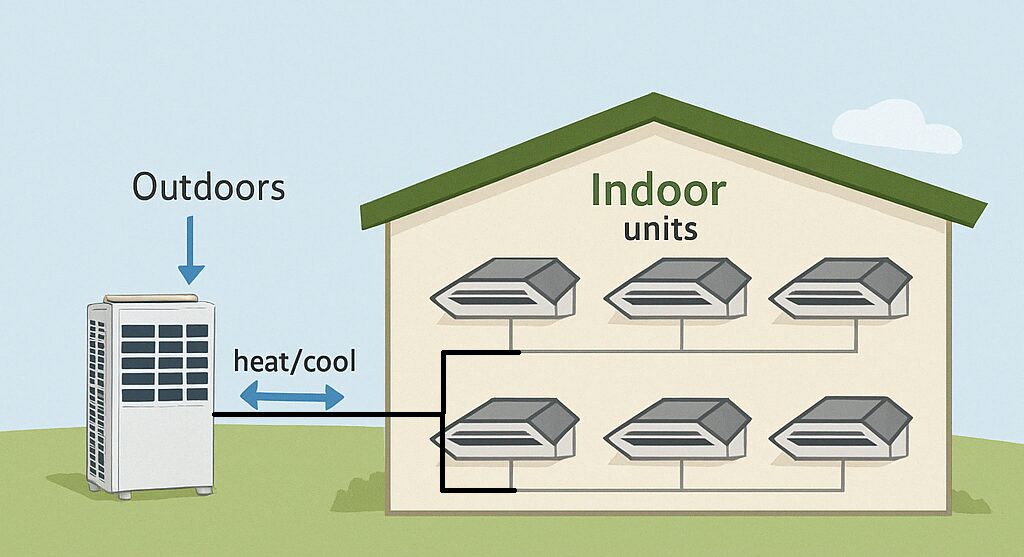
    • Multi-Zone Units: These systems consist of multiple indoor units connected to a single outdoor unit, providing customized cooling solutions for larger areas or multiple rooms.
    • Heat Pump Units: Some cassette AC units are equipped with heat pump technology, allowing them to provide both cooling and heating functions for year-round comfort.
    • Ducted Cassette Units: These units feature ducted airflow systems that distribute cooled air through ductwork, offering enhanced flexibility and installation options.

    Choosing the right type of cassette AC unit depends on factors such as cooling capacity, installation requirements, and specific operational needs.

    Comparison Between Ceiling-Mounted and Wall-Mounted Cassette AC Units

    Cassette AC units are available in ceiling-mounted and wall-mounted configurations, each offering unique advantages:

    • Ceiling-Mounted Units: These units are installed flush with the ceiling, providing discreet and unobtrusive cooling without occupying floor space. They offer 360-degree airflow distribution for consistent comfort.
    • Wall-Mounted Units: Wall-mounted cassette AC units are installed on interior walls, offering flexibility in placement and installation. They provide directional airflow and are suitable for rooms with specific cooling needs.

    Choosing between ceiling-mounted and wall-mounted cassette AC units depends on room layout, aesthetic preferences, and cooling requirements.

    Buildings Suited for Cassette AC Units

    Cassette AC units are well-suited for various types of buildings and spaces, including:

    • Office Buildings: These units provide efficient cooling for individual offices, conference rooms, and open-plan areas, maintaining comfortable working environments.
    • Retail Stores: Cassette AC units offer discreet cooling solutions for retail spaces, ensuring pleasant shopping experiences for customers and staff.
    • Hotels: These units contribute to guest comfort in hotel rooms, lobbies, and common areas, enhancing overall guest satisfaction.
    • Restaurants: Cassette AC units help maintain optimal temperatures in dining areas, ensuring a pleasant dining experience for patrons.
    • Residential Spaces: In homes, cassette AC units provide efficient cooling with minimal visual impact, blending seamlessly with interior decor.

    Their versatility, efficiency, and aesthetic appeal make cassette AC units a preferred choice among architects, designers, and building owners seeking effective cooling solutions.

    Integration of Cassette AC Units into Residential Spaces

    In residential settings, cassette AC units offer several advantages that cater to modern living requirements:

    • Discreet Installation: Ceiling-mounted cassette units blend seamlessly with interior aesthetics, maintaining unobtrusive cooling without occupying valuable floor space.
    • Efficient Cooling: These units provide effective cooling for living rooms, bedrooms, and other areas, ensuring comfort during hot weather.
    • Quiet Operation: Cassette AC units operate quietly, minimizing noise disruptions and enhancing overall indoor comfort for residents.
    • Energy Efficiency: Modern cassette units incorporate energy-saving features that reduce operational costs and environmental impact, making them cost-effective solutions for homeowners.

    By integrating cassette AC units into residential spaces, homeowners can enjoy enhanced comfort, improved indoor air quality, and energy-efficient cooling throughout the year.

    Key Specifications to Consider When Choosing a Cassette AC Unit

    When selecting a cassette AC unit, it’s essential to evaluate key specifications to ensure optimal performance and suitability:

    1. Cooling Capacity (BTU): This specification indicates the unit’s cooling power and should be matched to the size of the room or area being cooled.
    2. Energy Efficiency Ratio (EER): The EER reflects the unit’s energy efficiency by comparing cooling output to energy input. Higher EER ratings indicate greater efficiency.
    3. Noise Levels: Consider the unit’s noise output, typically measured in decibels (dB). Quieter units are preferable for noise-sensitive environments.
    4. Dimensions: Ensure the unit’s dimensions are compatible with ceiling space and installation requirements, allowing for proper fit and ventilation.
    5. Warranty Coverage: Review the manufacturer’s warranty terms, including coverage duration and conditions, to ensure comprehensive protection against potential defects or malfunctions.

    By considering these specifications, consumers can make informed decisions and select a cassette AC unit that meets their cooling needs effectively.

    Interpreting Specifications Listed for Cassette AC Units

    Understanding and interpreting the specifications listed for cassette AC units is essential for assessing their performance and suitability:

    • Cooling Capacity: This specification indicates the amount of heat the unit can remove from indoor air within a specific time, expressed in BTU (British Thermal Units) per hour.
    • Energy Efficiency Ratio (EER): The EER represents the cooling output divided by the electrical input, providing a measure of the unit’s energy efficiency. Higher EER ratings indicate lower energy consumption.
    • Noise Levels: Manufacturers typically specify noise levels in decibels (dB) to indicate the unit’s operational sound output. Lower dB ratings denote quieter operation.
    • Dimensions and Weight: These specifications detail the unit’s physical size and weight, ensuring compatibility with ceiling space and installation requirements.
    • Additional Features: Specifications may include features such as adjustable airflow louvers, programmable settings, remote control capabilities, and advanced filtration systems.

    By carefully reviewing and interpreting these specifications, consumers can make informed choices and select a cassette AC unit that aligns with their cooling requirements and preferences.

    Benefits of Investing in Cassette AC Units for Businesses

    Businesses can benefit significantly from investing in cassette AC units due to their unique advantages and operational efficiency:

    • Enhanced Comfort: Cassette AC units provide effective cooling and temperature control, creating a comfortable environment for employees, customers, and visitors.
    • Improved Aesthetics: The sleek, flush-mounted design of cassette units enhances interior aesthetics and contributes to a professional and inviting business environment.
    • Energy Efficiency: Modern cassette units feature energy-saving technologies that reduce operational costs and promote sustainable business practices.
    • Noise Reduction: These units operate quietly, minimizing disruptions in workplaces and ensuring a conducive environment for productivity and concentration.
    • Flexible Installation: Cassette AC units offer flexibility in installation, adapting to various commercial settings and optimizing space utilization.

    By investing in cassette AC units, businesses can enhance operational efficiency, improve indoor comfort, and create positive impressions on customers and stakeholders.

    Preference for Other AC Unit Types Over Cassette Models

    While cassette AC units offer several advantages, some users may prefer alternative AC unit types for specific reasons:

    • Cost Considerations: Other AC unit types, such as split-system or window units, may have lower initial purchase and installation costs, making them more budget-friendly options for consumers.
    • Installation Flexibility: Split-system AC units offer flexible installation options, including wall-mounting or floor-standing configurations, which may better suit certain room layouts or building designs.
    • Personal Preferences: Individual preferences for AC unit aesthetics, noise levels, or specific cooling requirements may influence users’ choices of alternative AC unit types over cassette models.

    Understanding these considerations helps users evaluate and select the most suitable AC unit type based on their priorities, budget constraints, and operational preferences.

    Importance of Technical Data Sheets for Cassette AC Units

    Technical data sheets provide vital information that helps consumers and HVAC professionals assess the performance, specifications, and capabilities of cassette AC units:

    • Performance Metrics: Data sheets include cooling capacity, EER ratings, noise levels, and airflow specifications, enabling precise evaluation of the unit’s operational efficiency.
    • Installation Requirements: Information on dimensions, weight, and installation guidelines ensures compatibility with ceiling space and structural considerations.
    • Maintenance Guidelines: Data sheets may outline recommended maintenance procedures, filter replacement schedules, and troubleshooting tips to optimize unit performance and longevity.
    • Warranty Coverage: Details on warranty terms and conditions provide assurance of product quality and comprehensive protection against potential defects.

    By reviewing technical data sheets, consumers can make informed decisions, address installation challenges, and ensure efficient operation and maintenance of cassette AC units.

    Information to Look for in a Cassette AC Unit’s Technical Data Sheet

    When reviewing a cassette AC unit’s technical data sheet, focus on critical information that influences performance, efficiency, and compatibility:

    1. Cooling Capacity: Verify the unit’s BTU rating to determine its cooling power and suitability for specific room sizes or environments.
    2. Energy Efficiency Ratings: Evaluate EER or SEER ratings to assess the unit’s energy efficiency and potential cost savings over its operational lifespan.
    3. Noise Levels: Check dB ratings to understand the unit’s operational sound output and its impact on indoor noise levels.
    4. Dimensions and Installation Requirements: Ensure the unit’s dimensions and installation guidelines align with ceiling space and structural considerations for seamless integration.
    5. Additional Features and Technologies: Review specifications for advanced features such as inverter technology, smart controls, and enhanced filtration systems to optimize cooling performance and user experience.

    By focusing on these key aspects in the technical data sheet, consumers can confidently select a cassette AC unit that meets their cooling requirements, operational preferences, and budget considerations.

    Primary Components of a Cassette AC Unit and Their Efficiency Contributions

    The primary components of a cassette AC unit work together to ensure efficient cooling performance:

    • Evaporator Coil: This component absorbs heat from indoor air, cooling it before circulating it back into the room. A clean and well-maintained evaporator coil enhances cooling efficiency.
    • Condenser Coil: Responsible for releasing absorbed heat to the external environment, the condenser coil plays a crucial role in the refrigeration cycle’s heat exchange process.
    • Compressor: The compressor pressurizes and circulates refrigerant through the system, maintaining optimal pressure and temperature levels for efficient heat transfer.
    • Expansion Valve: This component regulates refrigerant flow into the evaporator coil, controlling the rate of evaporation and ensuring precise cooling capacity.
    • Fan: The fan circulates air over the evaporator coil and throughout the room, distributing cooled air evenly and enhancing overall cooling efficiency.
    • Filters: Air filters trap dust, pollen, and other airborne particles, preventing them from entering the system and maintaining indoor air quality.
    • Control Panel: User-friendly controls allow for easy adjustment of settings such as temperature, fan speed, and operating modes, optimizing comfort and energy efficiency.

    Each of these components plays a critical role in the functionality and efficiency of a cassette AC unit, ensuring reliable cooling performance and indoor comfort.

    Factors Influencing the Design of Cassette AC Units

    The design of cassette AC units is influenced by several factors that cater to functional performance, installation requirements, and user preferences:

    • Ceiling Space: Units are designed to fit seamlessly within standard ceiling grids, maximizing space utilization while maintaining aesthetic appeal.
    • Installation Flexibility: Manufacturers offer various installation options, including recessed, semi-recessed, or surface-mounted configurations, to accommodate diverse architectural designs.
    • Cooling Efficiency: Design considerations focus on optimizing airflow distribution, heat exchange capabilities, and refrigerant management for enhanced cooling efficiency.
    • Noise Reduction: Innovative designs incorporate noise-reducing technologies and vibration dampeners to minimize operational noise levels and enhance user comfort.
    • User Experience: Ergonomic features such as remote controls, programmable settings, and smart connectivity enhance user convenience and operational flexibility.

    By addressing these design factors, cassette AC units deliver superior performance, energy efficiency, and user satisfaction across various residential and commercial applications.

    Evolution of Cassette AC Unit Design Over the Years

    The design of cassette AC units has evolved significantly to meet changing consumer demands and technological advancements:

    • Sleek Aesthetics: Modern units feature streamlined profiles, flush-mounted designs, and minimalist aesthetics that blend seamlessly with contemporary interior decor.
    • Enhanced Cooling Performance: Advanced technologies, such as inverter compressors and enhanced airflow systems, improve cooling efficiency and operational reliability.
    • Energy Efficiency: Innovations in energy-saving features and smart controls optimize performance while reducing operational costs and environmental impact.
    • Improved Air Quality: Integrated air filtration systems and IAQ enhancements promote cleaner, healthier indoor environments for enhanced occupant comfort.
    • Noise Reduction: Design refinements focus on minimizing operational noise levels, ensuring quiet operation and minimal disruption in residential and commercial settings.

    By embracing these design advancements, cassette AC units continue to redefine cooling solutions, offering superior comfort, efficiency, and aesthetic appeal for modern living and working environments.

    Installation Process of Cassette AC Units in Commercial Settings

    The installation of cassette AC units in commercial settings involves several systematic steps to ensure optimal performance and operational efficiency:

    1. Site Assessment: Conduct a thorough assessment of the installation site, considering ceiling structure, electrical requirements, and access for equipment and personnel.
    2. Unit Placement: Determine the optimal location for unit placement, considering airflow distribution, aesthetic considerations, and accessibility for maintenance.
    3. Ceiling Preparation: Prepare the ceiling space for unit installation, including cutting the appropriate opening, reinforcing structural support if necessary, and ensuring proper alignment.
    4. Electrical Installation: Connect the unit to the electrical supply, following manufacturer specifications and local building codes to ensure safe and compliant operation.
    5. Refrigerant Line Connection: Install and connect refrigerant lines between the indoor and outdoor units, ensuring proper sealing, insulation, and compliance with refrigeration regulations.
    6. Testing and Commissioning: Conduct comprehensive testing of the unit’s functionality, including airflow, temperature control, and operational modes, to verify performance and address any issues.
    7. User Training: Provide training to facility personnel on unit operation, maintenance procedures, and troubleshooting techniques to ensure optimal performance and longevity.

    By following these installation processes and best practices, commercial facilities can achieve efficient and reliable operation of cassette AC units, enhancing indoor comfort and occupant satisfaction.

    Maintenance Tips for Maximizing the Lifespan of Cassette AC Units

    Regular maintenance is essential for maximizing the lifespan and efficiency of cassette AC units:

    • Filter Cleaning or Replacement: Clean or replace air filters regularly to maintain optimal airflow and prevent dust buildup that can affect cooling performance.
    • Coil Cleaning: Schedule routine cleaning of evaporator and condenser coils to remove dirt, debris, and contaminants that hinder heat exchange efficiency.
    • Refrigerant Check: Monitor refrigerant levels and perform leak checks to ensure proper system operation and prevent potential compressor damage.
    • Fan Inspection: Check fan blades for debris or obstructions and ensure smooth operation to maintain efficient airflow distribution.
    • Condensate Drainage: Clear condensate drains to prevent clogs and water buildup that can lead to moisture-related issues and system malfunctions.
    • Electrical Components: Inspect electrical connections, controls, and wiring for signs of wear or corrosion, ensuring safe and reliable operation.
    • Professional Service: Schedule annual maintenance by qualified HVAC technicians to perform comprehensive inspections, adjustments, and performance tuning.

    By following these maintenance tips, users can prolong the lifespan of cassette AC units, optimize energy efficiency, and ensure consistent cooling performance for residential and commercial applications.

    Common Issues and Troubleshooting Tips for Cassette AC Units

    Understanding common issues and troubleshooting tips helps users address potential problems and ensure reliable operation of cassette AC units:

    • Inadequate Cooling: Check air filters for clogs and clean or replace them as needed. Ensure adequate airflow around the unit and verify that settings are correct for cooling mode.
    • Uneven Air Distribution: Inspect adjustable louvers for obstructions or misalignment. Adjust airflow direction and louvers for optimal air distribution throughout the room.
    • Water Leakage: Check condensate drains for blockages and clear them to prevent water buildup. Inspect connections and seals for leaks that may require professional repair.
    • Electrical Issues: Verify power supply and electrical connections. Reset circuit breakers or replace fuses if necessary. Consult a qualified technician for complex electrical problems.
    • Unusual Noises: Inspect fan blades for debris or damage. Tighten loose components and ensure proper installation to reduce vibration and noise levels.
    • Remote Control Malfunctions: Replace remote control batteries and ensure a clear line of sight between the remote and unit’s receiver. Reset or reprogram remote settings as needed.
    • Sensor Errors: Clean or recalibrate IAQ sensors to ensure accurate monitoring and adjustment of indoor air quality parameters.

    By addressing these common issues promptly and applying troubleshooting tips, users can maintain optimal performance and extend the lifespan of cassette AC units, ensuring consistent comfort and efficiency.

    Summary of Cassette AC Unit Advantages and Applications

    Cassette AC units offer numerous advantages and versatile applications across residential and commercial settings:

    • Advantages: Sleek design, discreet installation, 360-degree airflow distribution, quiet operation, energy efficiency, and advanced features such as inverter technology and smart controls.
    • Residential Applications: Ideal for living rooms, bedrooms, kitchens, and other living spaces, providing efficient cooling with minimal visual impact.
    • Commercial Applications: Suitable for offices, retail stores, hotels, restaurants, and various commercial spaces, enhancing indoor comfort and operational efficiency.
    • Specialized Installations: Options include single-zone and multi-zone configurations, ducted units, and models with heat pump capabilities for year-round comfort.

    By leveraging these advantages and applications, cassette AC units deliver superior cooling performance, energy efficiency, and user satisfaction in diverse environments.

    Comparison Between Cassette AC Units and Other Types

    When comparing cassette AC units with other types of air conditioning systems, several key factors influence consumer preferences and practical considerations:

    • Installation: Cassette AC units are typically installed in the ceiling, offering a discreet and space-saving solution. In contrast, split-system AC units may require wall-mounting or floor-standing installations, which can impact interior aesthetics and space utilization.
    • Cooling Efficiency: Both cassette and split-system AC units offer efficient cooling performance. Cassette units feature 360-degree airflow distribution, ensuring uniform temperature control throughout the room, while split-system units may vary in airflow direction and distribution based on installation.
    • Noise Levels: Cassette AC units are known for their quiet operation, making them suitable for environments where minimal noise disruption is essential. Split-system units vary in noise levels depending on the model and installation location.
    • Design Flexibility: Split-system AC units offer flexibility in installation options, accommodating various room layouts and building designs. Cassette units, while ceiling-mounted, provide a sleek and integrated appearance that enhances interior aesthetics.
    • Cost Considerations: Initial costs for cassette AC units may include installation and ceiling modifications, depending on existing infrastructure. Split-system units may have lower upfront costs but could incur additional expenses for installation and equipment.

    Understanding these differences helps consumers evaluate the most suitable air conditioning solution based on their preferences, budget, and specific cooling requirements.

    Technical Data Sheet Importance in Cassette AC Unit Selection

    The technical data sheet serves as a crucial tool for selecting the right cassette AC unit by providing comprehensive information on performance, specifications, and operational capabilities:

    • Cooling Capacity: Verify the unit’s BTU rating to determine its cooling power and suitability for room size and environmental conditions.
    • Energy Efficiency Ratings: Evaluate EER or SEER ratings to assess the unit’s energy efficiency and potential cost savings over its operational lifespan.
    • Noise Levels: Check dB ratings to understand the unit’s operational sound output and its impact on indoor noise levels.
    • Dimensions and Installation Requirements: Ensure the unit’s dimensions and installation guidelines align with ceiling space and structural considerations for seamless integration.
    • Additional Features and Technologies: Review specifications for advanced features such as inverter technology, smart controls, and enhanced filtration systems to optimize cooling performance and user experience.

    By leveraging the information provided in the technical data sheet, consumers can make informed decisions, address installation challenges, and ensure efficient operation and maintenance of cassette AC units.

    Primary Components of Cassette AC Units and Their Efficiency Contributions

    The efficiency and performance of cassette AC units depend on several primary components that work together seamlessly:

    • Evaporator Coil: Absorbs heat from indoor air, cooling it before circulating it back into the room. A clean and well-maintained evaporator coil enhances cooling efficiency.
    • Condenser Coil: Releases absorbed heat to the external environment, crucial for the refrigeration cycle’s heat exchange process.
    • Compressor: Pressurizes and circulates refrigerant through the system, maintaining optimal pressure and temperature levels for efficient heat transfer.
    • Expansion Valve: Regulates refrigerant flow into the evaporator coil, controlling the rate of evaporation and ensuring precise cooling capacity.
    • Fan: Circulates air over the evaporator coil and throughout the room, distributing cooled air evenly and enhancing overall cooling efficiency.
    • Filters: Trap dust, pollen, and other airborne particles, preventing them from entering the system and maintaining indoor air quality.
    • Control Panel: Allows for easy adjustment of settings such as temperature, fan speed, and operating modes, optimizing comfort and energy efficiency.

    Each component plays a critical role in the functionality and efficiency of cassette AC units, ensuring reliable cooling performance and indoor comfort.

    Factors Influencing the Design Evolution of Cassette AC Units

    The design evolution of cassette AC units is driven by various factors that prioritize functionality, installation requirements, and user preferences:

    • Ceiling Space: Units are designed to fit seamlessly within standard ceiling grids, maximizing space utilization while maintaining aesthetic appeal.
    • Installation Flexibility: Manufacturers offer various installation options, including recessed, semi-recessed, or surface-mounted configurations, to accommodate diverse architectural designs.
    • Cooling Efficiency: Design considerations focus on optimizing airflow distribution, heat exchange capabilities, and refrigerant management for enhanced cooling efficiency.
    • Noise Reduction: Innovative designs incorporate noise-reducing technologies and vibration dampeners to minimize operational noise levels and enhance user comfort.
    • User Experience: Ergonomic features such as remote controls, programmable settings, and smart connectivity enhance user convenience and operational flexibility.

    By addressing these design factors, cassette AC units deliver superior performance, energy efficiency, and user satisfaction across residential and commercial applications.

    FAQ

    Which AC is better, cassette or split?

    The choice between cassette and split AC depends on factors like installation space, aesthetic preferences, and cooling efficiency. Cassette ACs are ideal for spaces where ceiling installation is preferred, offering 360-degree airflow and quiet operation. Split ACs, on the other hand, provide flexibility in installation and are suitable for various room sizes.

    What is a Cassette AC Unit?

    A Cassette AC Unit is a type of air conditioner designed to be mounted in the ceiling. It distributes conditioned air through a grille, ensuring even airflow across the room. It’s commonly used in commercial spaces and offers a discreet cooling solution.

    Do cassette ACs consume more electricity?

    Cassette ACs are designed for efficiency, often featuring advanced technologies like inverter compressors that adjust power based on cooling demands. Proper sizing, regular maintenance, and energy-efficient models can help minimize electricity consumption.

    What are the disadvantages of cassette air conditioners?

    Some drawbacks of cassette air conditioners include higher installation costs due to ceiling modifications, potential maintenance challenges due to ceiling-mounted location, and limited options for DIY maintenance.

    Cassette AC Units price

    Cassette AC unit prices vary based on brand, capacity, features, and installation requirements. Generally, they are priced higher than traditional split systems due to their design and installation complexities.

    Cassette AC price

    The price of a cassette AC unit depends on factors such as brand, capacity (tonnage), energy efficiency rating, and additional features like smart controls or inverter technology. Prices typically range higher than wall-mounted split ACs.

    Cassette AC Units price in India

    In India, cassette AC unit prices vary widely based on factors like brand, tonnage, energy efficiency ratings (BEE star ratings), and local installation costs. Prices can range significantly across different cities and regions.

    Cassette AC 1.5 Ton Price

    The price of a 1.5-ton cassette AC unit varies based on brand and features but generally falls within a specific range. It’s advisable to compare prices from different suppliers and consider long-term operational costs.

    Cassette AC Units India

    Cassette AC units are widely used in India, particularly in commercial spaces where efficient cooling and aesthetic integration are priorities. They offer advantages like space-saving installation and quiet operation.

    Cassette AC 2 Ton

    A 2-ton cassette AC unit is suitable for larger rooms or areas requiring higher cooling capacity. Prices and energy efficiency considerations should be reviewed when selecting the right model for specific cooling needs.

    Conclusion

    Cassette AC units represent a sophisticated cooling solution that combines efficient performance with aesthetic appeal. Their discreet installation, quiet operation, and advanced features make them ideal for enhancing indoor comfort in both residential and commercial settings. With ongoing technological advancements and design innovations, cassette AC units continue to evolve, offering consumers versatile cooling options that prioritize energy efficiency and user convenience. By understanding the key components, operational principles, advantages, and applications of cassette AC units, consumers can confidently select a cooling solution that meets their specific needs and enhances their living or working environment.

    Whether for residential living spaces or commercial establishments, the versatility and efficiency of cassette AC units make them a compelling choice for modern cooling solutions. As technology advances and consumer demands evolve, cassette AC units remain at the forefront of innovative HVAC solutions, ensuring optimal comfort, energy efficiency, and environmental sustainability.

    For more information on cassette AC units, their applications, or assistance in selecting the right unit for your needs, contact our HVAC experts today. Discover how cassette AC units can transform your indoor environment with reliable cooling performance and unmatched comfort.

    Remember, choosing the right HVAC system is crucial for maintaining indoor comfort and energy efficiency. Invest in a cassette AC unit that not only meets your cooling requirements but also enhances your living or working space with its advanced features and superior performance.

    About The Author

    Omprakash Ramagiri; as the Founder of HVAC Technocrats, I bring over 18 years of experience as a Mechanical Engineer specializing in HVAC (Central Air-conditioning) for commercial, cleanrooms, data centers, and Petrochemical industries. Throughout my career, I’ve held pivotal roles at companies like TATA Consulting Engineers, MW Zander (for Cleanroom solutions), Bluestar Malaysia, and ETA in Dubai. I’ve managed international HVAC projects and gained valuable exposure in dynamic markets like Dubai and Saudi Arabia. With a passion for excellence and a commitment to innovative solutions, I specialize in designing Class 10K & 100K Cleanrooms for various industries. Connect with me to explore collaborations in HVAC design, project sales, and consultancy. Click to visit the Author’s Linkedin page


    Disclaimer: The pictures used are for illustrative purposes only. They may not depict actual products or situations and are meant for educational purposes. Actual products, situations, or outcomes may differ.

    Air Cooler: How To Upgrade and Enhance Energy Efficiency?

    Air cooler unit showing evaporative cooling pads and control panel.

    Air cooler, also known as evaporative coolers, are increasingly popular alternatives to traditional air conditioning systems due to their energy efficiency and environmental benefits. They work by using the natural process of water evaporation to cool and humidify the air, making them ideal for dry and hot climates.

    What Are the Basics of Air Cooler?

    At its core, an air cooler operates on the principle of evaporative cooling. It draws warm air from the environment through water-soaked pads or filters. As the air passes through these pads, the water evaporates, absorbing heat and cooling the air, which is then circulated back into the room. This process is effective in increasing humidity levels, which can be beneficial in dry climates.

    What Is the Role of Air Coolers in Modern HVAC Systems?

    Air coolers play a crucial role in HVAC (Heating, Ventilation, and Air Conditioning) systems by providing sustainable cooling solutions. Unlike traditional air conditioners that use refrigerants and compressors, air coolers rely on water and a fan to cool the air. This makes them more energy-efficient and eco-friendly, contributing to lower electricity bills and reduced carbon footprint.

    What Types of Air Coolers Are Available?

    There are several types of air coolers designed to suit different needs:

    • Portable Air Coolers : These are compact units that can be moved from one room to another, offering flexibility in cooling specific areas.
    • Window-Mounted Air Coolers: Installed in windows, these coolers are more permanent fixtures and are effective in cooling larger spaces.
    • Ducted Air Coolers: These coolers are integrated into ductwork, distributing cooled air throughout a building or home.

    Each type varies in size, cooling capacity, and installation requirements, catering to residential, commercial, and industrial applications.

    What Are the Applications of Air Coolers in Different Industries?

    Air coolers find diverse applications across various industries:

    • Residential Use: Ideal for cooling individual rooms or apartments, providing cost-effective cooling solutions compared to central air conditioning.
    • Commercial Use: Used in offices, retail spaces, and restaurants to maintain comfortable indoor environments for customers and employees.
    • Industrial Use: Employed in factories, warehouses, and manufacturing facilities to regulate temperatures and improve worker productivity.
    • Agricultural Use: Used in greenhouses to create optimal growing conditions for plants by Temperature Control and Humidity Control.

    These applications demonstrate the versatility and efficiency of air coolers in various settings.

    What Are the Key Specifications of Air Cooler?

    When selecting an air cooler, consider the following specifications:

    • Airflow Capacity (CFM): Indicates the volume of air circulated by the cooler per minute, affecting its cooling efficiency.
    • Cooling Area: Specifies the size of the area the cooler can effectively cool, ensuring it matches the intended space.
    • Water Tank Capacity: Determines how long the cooler can operate before needing a refill, crucial for uninterrupted cooling.
    • Power Consumption: Indicates the energy efficiency of the cooler, with lower wattage units being more energy-efficient.
    • Noise Level: Measures the sound produced by the cooler, important for maintaining a peaceful environment.

    These specifications help consumers choose a cooler that meets their specific cooling needs and efficiency expectations.

    What Are the Advantages and Disadvantages of Using Air Cooler?

    Advantages of air coolers include:

    • Energy Efficiency: They consume less electricity compared to traditional AC units, leading to lower operational costs.
    • Environmentally Friendly: Air coolers use natural evaporation processes and do not emit harmful chemicals, reducing their environmental impact.
    • Cost-Effective: Initial purchase and operational costs are generally lower than air conditioners, making them accessible to a broader range of consumers.

    However, air coolers may have limitations:

    • Effectiveness in Humid Climates: They perform best in dry climates where humidity levels are low. In humid conditions, their cooling efficiency may decrease.
    • Regular Maintenance: Air coolers require periodic cleaning of water pads and filters to prevent mold and bacterial growth.

    Understanding these pros and cons helps consumers make informed decisions when choosing between air coolers and other cooling options.

    What Should Be Included in a Technical Data Sheet for Air Cooler?

    A comprehensive technical data sheet for air coolers should include:

    • Detailed specifications such as dimensions, weight, and materials used
    • Performance data including airflow rate, cooling capacity, and energy efficiency rating
    • Installation guidelines and requirements
    • Maintenance instructions for filters, water pads, and other components
    • Safety precautions and operational tips

    This information assists consumers and professionals in understanding the capabilities, limitations, and maintenance requirements of the cooler.

    What Are the Main Components of Air Cooler?

    The primary components of air coolers include:

    • Fan Assembly: Responsible for drawing air into the cooler and expelling cooled air into the environment.
    • Water Pump: Circulates water from the tank to the evaporative pads, facilitating the cooling process.
    • Evaporative Cooling Pads: Water-soaked pads through which warm air passes, causing water to evaporate and cool the air.
    • Control Panel: Allows users to adjust settings such as fan speed, cooling mode, and timer functions.
    • Housing: Encases and protects internal components while directing airflow efficiently.

    Each component plays a vital role in the cooling process and overall functionality of the air cooler.

    What Are the Key Subcomponents of Air Cooler?

    Subcomponents of air coolers include:

    • Fan Motor: Powers the fan assembly to circulate air.
    • Float Valve: Regulates the water level in the cooler’s reservoir, ensuring optimal operation.
    • Drain Valve: Allows for easy drainage of excess water and maintenance of water quality.
    • Water Level Indicator: Alerts users when the water level in the tank is low, prompting refilling.
    • Filter Media: Filters impurities from water to prevent clogging and maintain cooling efficiency.

    These subcomponents contribute to the proper functioning, efficiency, and longevity of the air cooler.

    How Is the Design of Air Coolers Optimized?

    The design of air coolers is optimized to enhance performance and efficiency:

    • Airflow Path: Ensures efficient circulation of air through the cooler for maximum cooling.
    • Material Selection: Uses corrosion-resistant materials to withstand exposure to water and environmental conditions.
    • Compact Design: Maximizes cooling capacity while minimizing space requirements for installation.
    • Energy-Efficient Components: Incorporates motors, pumps, and fans designed to minimize power consumption.

    These design considerations ensure that air coolers deliver optimal cooling performance while maintaining durability and reliability.

    What Are the Essential Design Parameters for Air Cooler?

    Essential design parameters for air coolers include:

    • Cooling Capacity: Measured in BTUs (British Thermal Units) or CFM (Cubic Feet per Minute), indicates the amount of heat the cooler can remove from the air per unit of time.
    • Water Distribution System: Ensures uniform wetting of evaporative pads for efficient cooling across the entire surface area.
    • Noise Level: Specifies the sound produced during operation, influencing user comfort and indoor noise levels.
    • Environmental Impact: Considers the eco-friendliness of materials used and energy efficiency rating to minimize environmental footprint.

    These parameters guide manufacturers in designing air coolers that meet performance standards and consumer expectations.

    How Are Unit Conversions Relevant to Air Cooler Specifications?

    Unit conversions play a crucial role in understanding and comparing air cooler specifications:

    • Converting airflow rates from CFM to cubic meters per hour (m³/h) for international standards and regional preferences.
    • Converting cooling capacities from BTUs to kilowatts (kW) for energy consumption and efficiency calculations.
    • Converting water tank capacities from liters to gallons for convenience in refilling and operational management.

    These conversions facilitate global compatibility and ensure accurate interpretation of air cooler specifications across different markets.

    How to Calculate the Capacity of an Air Cooler?

    The capacity of an air cooler depends on several factors:

    • Room Size: Measure the dimensions of the room (length, width, height) to calculate the volume of air that needs to be cooled.
    • Cooling Efficiency: Consider the cooler’s airflow capacity (CFM) and cooling area coverage to determine its suitability for the room size.
    • Climate Conditions: Account for local climate conditions, including temperature and humidity levels, which affect cooling performance.

    Using these factors, consumers can calculate the required cooling capacity to effectively cool their living or working space.

    What Codes and Standards Govern Air Cooler?

    Air coolers must adhere to various codes and standards:

    • ASHRAE Standards: Established by the American Society of Heating, Refrigerating and Air-Conditioning Engineers, providing guidelines for energy efficiency and indoor air quality.
    • IEC Standards: International Electrotechnical Commission standards ensure safety and performance compliance for electrical components used in air coolers.
    • NBC India Govern installation requirements and safety protocols to ensure proper integration of air coolers in buildings and structures.

    Adhering to these standards ensures that air coolers meet safety, efficiency, and environmental requirements, providing reliable cooling solutions.

    What Is a General Arrangement Drawing in Air Cooler Design?

    A general arrangement drawing in air cooler design:

    • Provides an overview of the cooler’s layout, including dimensions, component locations, and assembly details.
    • Guides manufacturers, engineers, and installers in understanding spatial requirements and integration of components.
    • Ensures consistency in design and construction processes, facilitating efficient production and installation.

    This drawing serves as a blueprint for manufacturing, installation, and maintenance activities related to air coolers.

    What Is a Schematic Drawing for Air Cooler?

    A schematic drawing for air coolers:

    • Illustrates the internal workings and connections of key components such as the fan, pump, water distribution system, and control panel.
    • Clarifies the flow of air and water within the cooler, aiding in troubleshooting, maintenance, and repair tasks.
    • Provides a visual representation of electrical circuits and controls, ensuring proper installation and operational functionality.

    This drawing is essential for understanding the operational logic and maintenance requirements of air coolers.

    What Is Included in the Electrical Scope of Works for Air Cooler?

    The electrical scope of works for air coolers includes:

    • Installation of electrical wiring, switches, and outlets required for powering the cooler.
    • Integration of control panels, sensors, and safety devices to monitor and regulate cooler operation.
    • Testing and commissioning of electrical systems to ensure compliance with safety standards and operational reliability.

    These tasks ensure safe and efficient electrical operation of air coolers, minimizing risks and maximizing performance.

    Who Are the Leading Manufacturers of Air Cooler?

    Some of the leading manufacturers of air coolers globally include:

    • Symphony Limited: Known for innovative designs and energy-efficient cooling solutions.
    • Havells India Limited: Offers a wide range of air coolers with advanced features for residential and commercial use.
    • Bajaj Electricals: Provides reliable and affordable air coolers suitable for various consumer needs.
    • Crompton Greaves: Offers high-performance air coolers designed for superior cooling efficiency.

    These manufacturers are recognized for their quality, reliability, and innovation in air cooler technology, catering to diverse consumer preferences and market demands.

    What Should Be Included in the Bill of Material for Air Cooler?

    A comprehensive bill of material for air coolers should list:

    • All components and parts required for manufacturing the cooler, including materials, dimensions, and quantities.
    • Supplier information for each component to facilitate procurement and supply chain management.
    • Cost estimates and pricing details for budgeting and financial planning purposes.

    This document ensures transparency, accuracy, and efficiency in the production and assembly of air coolers.

    What Is a Shop Drawing for Air Cooler?

    A shop drawing for air coolers:

    • Details the fabrication and assembly of components, including dimensions, materials, and manufacturing techniques.
    • Provides instructions for production processes, ensuring consistency and quality control in cooler manufacturing.
    • Guides fabricators, technicians, and assemblers in accurately constructing air coolers according to design specifications.

    This drawing is essential for streamlining manufacturing processes and ensuring product conformity and reliability.

    How to Install an Air Cooler Properly?

    Proper installation of an air cooler involves:

    • Selecting an appropriate location with adequate ventilation and access to electrical outlets.
    • Assembling the cooler according to manufacturer instructions, ensuring all components are securely connected.
    • Positioning the cooler for optimal airflow and cooling efficiency, considering room layout and airflow patterns.
    • Connecting electrical wiring and water supply as per installation guidelines, ensuring safety and functionality.

    Following these steps ensures effective installation and reliable operation of the air cooler, maximizing cooling performance and user satisfaction.

    What Are the Installation Checklists for Air Cooler?

    An installation checklist for air coolers includes:

    • Verification of all components and parts against the bill of material.
    • Pre-installation inspection to ensure site readiness and compliance with safety standards.
    • Assembly and placement of the cooler according to shop drawings and installation guidelines.
    • Testing of electrical and mechanical systems to confirm operational functionality and performance.
    • Documentation of installation procedures and final inspection for quality assurance.

    Adhering to this checklist ensures systematic and efficient installation of air coolers, minimizing errors and ensuring compliance with specifications.

    What Supporting Details Are Needed for Air Cooler Installation?

    Supporting details for air cooler installation include:

    • Technical drawings and specifications for structural supports and mounting requirements.
    • Electrical wiring diagrams and schematics for proper connection and integration with existing systems.
    • Water supply and drainage plans to ensure adequate flow and management of water within the cooler.
    • Safety protocols and equipment for handling and installation to prevent accidents and ensure worker safety.

    These details provide essential information and guidelines for safe and effective installation of air coolers in various environments and applications.

    How to Conduct Testing, Adjusting & Balancing for Air Cooler?

    Testing, adjusting, and balancing (TAB) procedures for air coolers involve:

    • Testing electrical systems and controls to ensure proper operation and compliance with safety standards.
    • Adjusting fan speed, water flow rate, and cooling settings for optimal performance and efficiency.
    • Balancing airflow distribution to maintain uniform cooling throughout the designated area or space.
    • Conducting performance tests to verify cooling capacity, noise levels, and energy consumption.

    These procedures optimize air cooler performance, ensuring reliable operation and user satisfaction throughout its service life.

    How to Control Noise & Vibration in Air Cooler?

    Controlling noise and vibration in air coolers involves:

    • Isolating the cooler from structural elements and surfaces to minimize transmission of vibrations.
    • Using vibration-damping materials and mounting pads to absorb and reduce mechanical vibrations.
    • Installing sound-absorbing materials inside the cooler housing to dampen noise generated by fans and motors.
    • Optimizing fan blade design and motor operation to minimize noise without compromising cooling efficiency.

    These techniques mitigate noise and vibration levels, creating a quieter and more comfortable indoor environment for users.

    What Are the Maintenance Procedures for Air Cooler?

    Regular maintenance of air coolers is essential for optimal performance and longevity:

    • Cleaning evaporative pads and filters periodically to prevent buildup of dirt, dust, and microbial growth.
    • Inspecting and lubricating fan motors, bearings, and moving parts to ensure smooth operation and extend component life.
    • Checking water levels and quality in the tank, refilling with fresh water and additives as recommended by the manufacturer.
    • Testing electrical systems and controls for proper function, replacing worn-out or damaged components as needed.

    These maintenance procedures enhance cooling efficiency, prevent breakdowns, and prolong the service life of air coolers, ensuring continued performance and reliability.

    How to Troubleshoot Common Issues with Air Cooler?

    Common issues with air coolers and troubleshooting steps include:

    • Insufficient Cooling: Check airflow obstruction, clean or replace clogged filters, and adjust fan speed for increased cooling.
    • Water Leakage: Inspect water supply connections, tighten fittings, and replace damaged hoses or seals.
    • Noisy Operation: Lubricate fan bearings, tighten loose components, and adjust fan blade alignment for quieter operation.
    • Electrical Malfunction: Test electrical connections, check for blown fuses or tripped breakers, and replace defective components.

    By identifying and addressing these issues promptly, users can restore air cooler performance and ensure uninterrupted cooling comfort.

    Conclusion

    Air coolers offer efficient and eco-friendly cooling solutions for residential, commercial, and industrial applications. By understanding their principles, types, applications, specifications, advantages, and maintenance requirements, consumers can make informed decisions when selecting and using air coolers. Regular maintenance and adherence to installation guidelines and safety standards maximize the performance, reliability, and longevity of air coolers, ensuring comfortable indoor environments and sustainable cooling solutions.

    Energy Savings with Multi Split AC: What You Need to Know

    Multi-Split Condensing Units Overview

    Efficient Multi Split AC Condensing Units provide advanced cooling solutions with multiple compressors and independent refrigerant circuits. Designed for various fan coil units, these units are factory-packaged for easy installation, featuring robust components like copper piping, brazed connections, and leak-tested refrigerant circuits. They include high-performance condenser coils, centrifugal blowers, and comprehensive safety controls for reliable operation. Ideal for diverse applications, they offer efficient cooling with minimal maintenance requirements.

    Overview of Multi Split AC Condensing Units

    The multi-split condensing units shall be with multiple compressors, each with its own independent refrigerant circuit couple with selected fan coil units (wall mounted, ceiling concealed, ceiling cassette or ceiling exposed type). Multi split units are completely factories packaged, wired and provided with shut off valves for convenient connection to the suitably selected direct expansion fan coil units. Each refrigerant circuit of this package shall be constructed using copper piping with brazed connections; joining compressor, condenser coil, filter drier, sight glass, thermo-expansion valve and evaporator cooling coil in a completely sealed loop. The refrigerant circuit shall also be factory leak tested, dehydrated, evacuated and pre-charged with R-22. The air-cooled condensing section shall consist of the compressor(s); condenser coil; centrifugal condenser fan(s) with motor and drive assembly, factory packaged switchboard, safety and operating controls.

    The evaporator blower section shall consist of the direct driven centrifugal blower fan and motor assembly; direct expansion coil complete with thermo-expansion valve(s), remote controller and a filter frame for flat filters.

    Air-Cooled Condensing Section

    Casing

    All steel parts shall be coated with epoxy-acrylic electro-deposition (ED) paint. Prior to ED coating, the part shall undergo a complete pre-treatment process, which involves de-greasing, phosphating and rinsing with de-ionized water.

    Compressor(s)

    Compressors shall be of sealed hermetic rotary, reciprocating or scroll type, with suction gas-cooled motor, internal suspension system to eliminate vibration, internal line or solid state protection and external crankcase heater. Unit shall have multiple compressors and each shall have its own independent refrigerant circuit and controls. Compressor shall also be pre-charged with oil.

    Condenser Coil(s)

    Each coil shall consist of staggered row of 3/8″ OD seamless copper tubes, mechanically expanded into die-formed corrugated hydrophilic coated aluminium fins. Each coil shall also be provided with integral sub cooling circuit. Coils shall be leak and pressure tested to 450 psig.

    Condenser Blower(s)

    The condenser fans shall be centrifugal types. Fan shall be statically and dynamically balanced and shall be mounted on a solid steel shaft running in self-aligning ball bearing, amply sized for quiet operation and long life. The condenser fan shall be driven directly by a resiliently mounted squirrel cage induction motor with adequate horsepower for the day.

    Factory Packaged Switchboard

    The multi-split condensing unit shall be completed with built-in factory wired starters for compressors, condenser fan motor, indicating lights, line fuses, isolator and interlocking points for fan motors of evaporator blower unit. Factory packaged starters for compressors shall be direct on line type.

    Safety Controls

    High pressure and low-pressure cutouts to guard against compressor damage due to high discharge head pressure and system leakage respectively shall be included. Crankcase heater for each compressor and anti-recycling timer shall also be provided.

    Evaporator Blower Section

    Evaporator Coil(s)

    Each coil shall consist of staggered row of seamless copper tubes mechanically expanded into die-formed corrugated hydrophilic-coated alluminium fins, spaced 12 per inch. The direct expansion coil(s) shall have one or multiple independent refrigerant circuits each with its own thermo-expansion valve. Each coil shall be leak and pressure tested to 450 psig, evacuated and pre-charged with a small holding charge of R-22.

    Blower

    Centrifugal blower(s) of forward curved multi-blade type shall be fitted to the air conditioning unit. Blower shall be statically and dynamically balanced and shall be rust proofed. Blower shall be run on a common shaft mounted on self-aligning bearing. Bearings shall be sized for load imposed and shall be either permanently lubricated type or fitted with accessible greasing points.

    Remote Controller

    LCD wireless remote controller shell be operated in 3 operation modes (cool, dry and fan), fan speed control (Low/Med/High/Auto), 24 hours auto start/stop timer and clock, and on/off air swing control.

    Pros & Cons

    Pros:

    Cons:

    • High initial cost
    • Potential coolant compatibility issues

    FAQ

    What types of fan coil units are suitable for multi-split condensing units?

    Multi-split condensing units are suitable for wall-mounted, ceiling-concealed, ceiling cassette or ceiling exposed fan coil units.

    How are refrigerant circuits of multi-split units constructed?

    Refrigerant circuits are constructed using copper piping with brazed connections, including components such as compressors, condenser coils, filter driers, sight glasses, thermo-expansion valves, and evaporator cooling coils.

    What safety features are included in multi-split condensing units?

    They feature high-pressure and low-pressure cutouts, crankcase heaters and anti-recycling timers to ensure safe and efficient operation.

    Conclusion

    Efficient multi-split condensing units provide reliable cooling solutions for a wide variety of applications, combining advanced technology with robust construction. Despite their initial cost and potential challenges with refrigerant compatibility, they offer efficient performance and ease of installation, making them a preferred choice for a variety of refrigeration needs.

    What Makes Precision AC the Best Choice for Data Center?

    Diagram of a precision AC system highlighting its benefits for data centers.

    Precision AC units are required to maintain optimal environmental conditions in critical settings such as data centers and laboratories. These units provide precise Temperature Control , Humidity Control , and air quality, ensuring reliable performance and longevity of sensitive equipment. Understanding the key features of precision air conditioning units is crucial for businesses aiming to improve operational efficiency and reduce downtime due to environmental fluctuations

    Data Center Precision AC Units Key Features

    Precision AC units represent a unique category in the HVAC industry that is specifically designed to provide precise and consistent environmental control. In environments where even slight fluctuations in temperature or humidity can lead to equipment failures or compromised processes, these units serve as indispensable assets. They are engineered to handle conditions within the tightest tolerance levels, ensuring consistent performance and reliability for sensitive electronic equipment and high-precision manufacturing processes.

    Variable Speed Technology for Precision AC

    Variable speed technology is a unique feature of precision AC units. These units dynamically adjust cooling capacity based on real-time environmental conditions and load demands. By operating at optimal speeds rather than fixed settings, variable speed compressors and fans increase energy efficiency and reduce operational costs over time. This feature is particularly beneficial in environments with fluctuating cooling requirements, ensuring precise temperature control while reducing energy consumption and operational costs.

    High Sensitivity Temperature and Humidity Control in Precision AC

    Precision AC units excel in maintaining extremely fine control over temperature and humidity levels. Equipped with advanced sensors and controllers, these units continuously monitor and adjust environmental conditions to exact tolerances. This capability is critical for environments where stability is critical, such as server rooms, clean rooms, and research laboratories. By maintaining optimal conditions, precision air conditioning units protect the integrity and reliability of sensitive equipment, ensuring uninterrupted operation and reducing the risk of costly downtime.

    Redundancy and Fault Tolerance System in Precision AC

    Reliability is a cornerstone feature of precision AC units, highlighted by their built-in redundancy and fault tolerance mechanisms. Designed with duplicate components and fail-safe systems, these units can continue to operate smoothly even if a component or subsystem fails. Redundancy ensures continuity of cooling operations in critical environments, reducing the risk of equipment overheating or failure due to unexpected technical problems. This feature is essential for businesses and organizations that cannot afford disruptions to their operations due to environmental control failures.

    Advanced Air Filtration and Purification

    Precision AC units contribute significantly to indoor air quality management. Equipped with advanced filtration systems, these units effectively capture and remove airborne particles, dust, allergens, and pollutants. By improving indoor air quality, precision air conditioning units not only protect sensitive equipment from dust but also create a healthier and more comfortable environment for occupants. This feature is particularly beneficial in settings where maintaining clean air is critical, such as medical facilities, research laboratories, and manufacturing clean rooms.

    Beauty of Precision AC for Scalability and Modular Design

    Scalability is a key benefit that precision air conditioning units offer. Designed with modular components, these units facilitate easy customization and expansion to suit cooling needs. The modular design allows businesses and organizations to efficiently scale their cooling infrastructure without extensive retrofitting or disruption to operations. Expanding capacity to accommodate growth or technological advancements, precision air conditioning units offer flexibility and future-proofing capabilities, ensuring long-term operational efficiency and reliability.

    Precision AC having in-built Remote Monitoring and Control

    Remote monitoring and control capabilities are an integral part of modern precision air conditioning systems. Advanced monitoring systems enable facility managers and technicians to remotely monitor operational parameters and make real-time adjustments as needed. This capability improves proactive maintenance practices and troubleshooting, enabling potential problems to be addressed before they affect operations. Remote monitoring not only improves operational efficiency by reducing on-site interventions but also ensures continuous optimization of cooling performance, contributing to overall energy savings and environmental sustainability.

    Precision AC are Energy Efficienct

    Energy efficiency is a primary consideration in the design and operation of precision air conditioning units. These units feature innovative technologies such as electronically commutated (EC) fans and inverter-driven compressors that optimize energy consumption based on actual cooling demands. By reducing energy consumption during periods of low cooling demand and operating at maximum efficiency during periods of high demand, precision air conditioning units help organizations reduce their carbon footprint and reduce overall operating costs. Energy-efficient design supports sustainability goals and regulatory compliance in various industries, ensuring environmental responsibility while maintaining operational excellence.

    Low Noise Operation

    Precision air conditioning units are designed for quiet operation, making them suitable for noise-sensitive environments such as offices, hospitals, and research facilities. Advanced sound-dampening technologies and optimized fan designs ensure minimal noise levels during operation, creating a comfortable and productive indoor environment for occupants. Low noise operation is critical in environments that require concentration, communication, and patient care, allowing businesses and organizations to operate optimally without interruptions or distractions.

    Conforming to Industry Standards

    Adherence to industry standards and certifications is vital to ensure the quality and reliability of precision air conditioning units. These units undergo rigorous testing and meet standards set by organizations such as ASHRAE, ensuring performance excellence, energy efficiency, and environmental responsibility. Compliance with industry standards provides assurance to businesses and organizations investing in precision air conditioning systems, verifying their ability to effectively meet operational requirements and regulatory obligations.

    User-Friendly Interface

    User-friendly interfaces improve the usability and accessibility of precision air conditioning units. Equipped with intuitive controls and interfaces, these units simplify system management and operation for facility managers and operators. Features such as touchscreen displays, intuitive menus, and remote accessibility enable easy navigation, monitoring, and adjustment of operational settings. User-friendly interfaces empower users to optimize cooling performance, respond instantly to changing environmental conditions, and ensure seamless integration into facility management practices.

    Codes & Standards

    Precision air conditioning units adhere to strict industry standards and certifications to ensure performance, reliability, and safety in critical environments. Compliance with these standards is critical for businesses and organizations that want to maintain optimal conditions and operational continuity. The main criteria that precision air conditioning units usually meet are:

    • ASHRAE Standards: Developed by the American Society of Heating, Refrigerating and Air-Conditioning Engineers, ASHRAE standards define best practices for HVAC design, operation, and maintenance. Compliance ensures that units meet efficiency and performance standards to suit various applications.
    • ISO 14644 (Cleanrooms and associated controlled environments): This international standard specifies cleanliness levels for cleanrooms and controlled environments. Precision air conditioning units designed for cleanroom applications adhere to these standards to maintain specified air quality and cleanliness.
    • UL Certification: Offered by Underwriters Laboratories, UL certification certifies product safety and compliance with industry-specific standards. Precision air conditioning units with UL certification meet strict safety requirements, ensuring reliability and operational safety.
    • EU directives (CE marking): In Europe, precision air conditioning units must comply with the applicable EU directives and bear the CE marking. This marking indicates compliance with health, safety, and environmental protection standards, allowing units to be sold in the European Economic Area.
    • NEBS (Network Equipment Building System): NEBS standards are specific to telecommunication equipment and define environmental and durability requirements. Precision air conditioning units deployed in telecommunication facilities meet NEBS standards to ensure robust performance and reliability in telecommunication environments.
    • Energy Star: Units bearing the Energy Star label meet energy efficiency guidelines set by the Environmental Protection Agency (EPA) in the United States. ENERGY STAR-certified precision air conditioning units use less energy, reduce greenhouse gas emissions, and have lower operating costs compared to standard models.

    Pros & Cons

    Advantages:

    • Accurate Temperature Control and Humidity Control

    • Energy-efficient operation with variable speed technology

    • High reliability and fault tolerance with redundancy

    • Advanced air filtration and purification for improved indoor air quality

    • Scalable design allows for easy expansion and customization

    • Remote monitoring and control capabilities improve operational efficiency

    • Low noise operation suitable for noise-sensitive environments

    • Ensures quality and reliability in accordance with industry standards

    • User-friendly interface facilitates maintenance and operation

    Disadvantages:

    • Higher initial investment compared to standard HVAC systems

    • Requires specialized management and technical expertise

    FAQ

    What makes precision AC units different from regular HVAC systems?

    Precision air conditioning units provide precise control of temperature, humidity, and air quality, suitable for sensitive environments such as data centers and laboratories.

    How do precision AC units contribute to energy efficiency?

    They employ advanced technologies such as variable speed compressors and EC fans to optimize energy consumption based on real-time demands.

    What are the primary applications of precision AC units?

    They are used in critical environments that require stable conditions, including server rooms, clean rooms, and medical facilities.

    How important is redundancy in precision AC units?

    Redundancy ensures continued operation even if a component fails, reducing downtime and preserving equipment reliability.

    Are precision air conditioning units suitable for noise-sensitive environments?

    Yes, they are designed for low noise operation, making them ideal for environments where noise levels need to be reduced.

    Conclusion

    Precision AC units play a vital role in maintaining stable and controlled environmental conditions in critical settings such as data centers, laboratories, and clean rooms. Their advanced features including variable speed technology, high sensitivity temperature control, redundancy, advanced filtration, scalability, remote monitoring, energy efficiency, low noise operation, conformance to industry standards, and user-friendly interfaces ensure reliability, efficiency, and stability. Understanding these key attributes empowers organizations to make informed decisions that enhance operational efficiency, equipment reliability, and environmental stewardship across their facilities.

    About The Author

    Omprakash Ramagiri; as the Founder of HVAC Technocrats, I bring over 18 years of experience as a Mechanical Engineer specializing in HVAC (Central Air-conditioning) for commercial, cleanrooms, data centers, and Petrochemical industries. Throughout my career, I’ve held pivotal roles at companies like TATA Consulting Engineers, MW Zander (for Cleanroom solutions), Bluestar Malaysia, and ETA in Dubai. I’ve managed international HVAC projects and gained valuable exposure in dynamic markets like Dubai and Saudi Arabia. With a passion for excellence and a commitment to innovative solutions, I specialize in designing Class 10K & 100K Cleanrooms for various industries. Connect with me to explore collaborations in HVAC design, project sales, and consultancy. Click to visit the Author’s Linkedin page


    Disclaimer: The pictures used are for illustrative purposes only. They may not depict actual products or situations and are meant for educational purposes. Actual products, situations, or outcomes may differ.