HVAC Sales Manager for Cleanroom Projects

HVAC Sales Manager for Cleanroom Projects career in Hyderabad

In today’s rapidly evolving industrial and healthcare landscape, cleanrooms and advanced HVAC solutions play a crucial role. From pharmaceuticals and biotech to semiconductors and aerospace, organizations are investing in controlled environments to ensure safety, compliance, and efficiency. This growing demand has opened up a rewarding career path for professionals as HVAC Sales Manager for Cleanroom Projects, particularly in regions like Hyderabad where the life sciences and technology sectors are thriving.

For aspiring professionals and experienced engineers looking to transition into leadership, this role offers not just a job, but a chance to be at the forefront of industry innovation and growth.

Why the Role of a HVAC Sales Manager in Cleanroom Projects Matters

Cleanrooms are specialized environments where air quality, temperature, humidity, and particle control are strictly maintained. HVAC systems form the backbone of these facilities, ensuring compliance with ISO standards and industry-specific requirements.

A HVAC Sales Manager – Cleanroom Projects bridges technical expertise with business development. They are responsible for generating new business, driving revenue, and ensuring client satisfaction across diverse sectors like pharma, biotech, medical devices, aerospace, and advanced manufacturing.

👉 To understand the significance of HVAC in controlled spaces, explore our guide on Cleanroom Design and Construction.

Key Responsibilities of a HVAC Sales Manager in Cleanroom Projects

A sales manager in this field wears many hats. Some of the core responsibilities include:

  • Business Development – Identifying new opportunities in pharmaceutical, biotech, and industrial sectors.
  • Client Acquisition – Building strong relationships with consultants, architects, PMCs, contractors, and end-users.
  • Project Sales – Handling greenfield (new projects) and brownfield (retrofits) with HVAC systems, AHUs, and cleanroom panels.
  • Technical Engagement – Preparing techno-commercial proposals, conducting presentations, and negotiating contracts.
  • Pipeline Management – Monitoring leads, ensuring timely follow-ups, and converting opportunities into orders.

In short, this role is both technical and client-facing, demanding strong interpersonal skills backed by solid engineering knowledge.

Educational and Experience Requirements

A Bachelor’s degree in Mechanical Engineering is often the baseline qualification. However, experience outweighs credentials in this niche. Companies typically look for candidates with 10+ years in HVAC, MEP, or cleanroom projects.

Sales managers must understand:

  • Cleanroom classifications (ISO Class 5 to 9).
  • HVAC system design (high side and low side).
  • Air handling units (AHUs), filtration, and pressure differential.
  • Greenfield and retrofit project requirements.

This technical foundation allows them to confidently engage with clients and consultants while positioning their company’s solutions as superior.

👉 Curious about technical elements? Read about Why Pressure Differential is Key in Cleanroom HVAC Systems.

Skills Every Cleanroom Sales Manager Must Have

Beyond degrees and years of service, success in this role depends on a blend of soft and hard skills:

  • Technical Acumen – Strong knowledge of HVAC equipment and cleanroom standards.
  • Negotiation Skills – Ability to handle high-value contracts and close deals.
  • Networking – Established industry contacts across pharma, biotech, and semiconductors.
  • Communication – Clear, persuasive presentations to decision-makers.
  • Field Orientation – Willingness to travel extensively and engage with clients on-site.

Career Growth Opportunities

Starting as a Sales Manager opens pathways to leadership roles such as:

  • Regional Sales Head
  • Business Development Director
  • Vice President – Projects and Sales

The cleanroom industry is expected to grow at a double-digit rate in India, especially with government push in pharmaceuticals and semiconductor manufacturing. This means career opportunities are set to expand.

👉 For related insights, check our article on India Semiconductor – Innovative Cleanroom Tech for Growth.

Compensation and Benefits

A Sales Manager in Hyderabad can expect:

  • Salary: Up to ₹1,00,000 per month (experience-based).
  • Incentives: Performance-based, linked to targets.
  • Job Type: Permanent, full-time, field-based.
  • Growth: Opportunities in a 15+ year-old established cleanroom company with strong sector presence.

This structure ensures that high performers not only earn well but also gain career stability.

Challenges in the Role

While rewarding, this career path also has its challenges:

  • Intense Field Work – Long hours on-site and travel-heavy schedule.
  • Target Pressure – Monthly and quarterly targets must be achieved.
  • Complex Client Needs – Balancing compliance, budgets, and technical requirements.
  • Competition – Multiple solution providers vying for the same contracts.

Sales Managers must be resilient, adaptable, and solutions-oriented to thrive.

Industry Outlook: Why Now is the Best Time

With growing emphasis on pharmaceutical exports, biotech R&D, and semiconductor fabs, demand for cleanrooms in India is at an all-time high. Hyderabad, being a pharma hub, offers immense opportunities for professionals ready to take on this challenge.

Moreover, technological advancements in HVAC—like AI-powered systems and sustainable designs—are reshaping how cleanrooms operate.

👉 Explore more about How AI is Revolutionizing HVAC.

Frequently Asked Questions (FAQ)

What does a Sales Manager in Cleanroom Projects do?

A Sales Manager handles business development, client engagement, and revenue generation for cleanroom and HVAC projects. They manage greenfield and brownfield opportunities while ensuring technical compliance and client satisfaction.

What qualifications are needed for this role?

A bachelor’s degree in mechanical engineering or related field is preferred, along with 10+ years of HVAC, MEP, or cleanroom project sales experience. Strong industry networking and technical knowledge are critical.

Is the role field-based or office-based?

The role is 100% field-based with extensive travel across Hyderabad and Telangana. Office presence is minimal.

What sectors hire Cleanroom Project Sales Managers?

Pharmaceuticals, biotech, semiconductors, aerospace, healthcare, and industrial sectors are major recruiters for this position.

What is the salary for a Sales Manager in Cleanroom Projects?

The salary can go up to ₹1,00,000 per month in Hyderabad, with additional performance-based incentives. Send us the CV to hvactechnocrats@gmail.com

Final Thought

The position of HVAC Sales Manager – Cleanroom Projects is not just a sales role; it’s a leadership-driven, technical, and high-impact career. With Hyderabad emerging as a hub for pharmaceuticals and technology, now is the best time for ambitious professionals to step into this space. The blend of technical knowledge, client interaction, and revenue-driven targets makes it a unique and rewarding career opportunity.

Disclaimer

This article is for educational purposes only. It provides industry insights and career guidance, not financial or guaranteed employment advice.

About the Author

Om Prakash, founder of HVAC Technocrat, brings over 18 years of hands-on experience in the HVAC industry. He specializes in cleanroom, pharmaceutical, semiconductor, data center, commercial, and industrial HVAC systems. His expertise spans custom HVAC design, energy audits, retrofits, and turnkey consultancy across India. Known for his practical approach to complex environments, Om delivers efficient, reliable, and future-ready solutions. Through his writings, he simplifies HVAC concepts and shares actionable insights for professionals, facility managers, and decision-makers.

Heat Load Estimate: How to Calculate for Pharma Cleanrooms

Pharma cleanroom HVAC heat load estimate setup with detailed Excel sheet

Unlock precision in pharma cleanroom HVAC Load Estimate join my exclusive online class for just ₹499! Pay via mobile (+91-9908091942), WhatsApp your screenshot, and receive the Google Meet link for a live session (7–8:30 pm daily). Attendees get my “Mastering HVAC” eBook (worth ₹1500, sold at ₹399 on our site) and my custom cleanroom heat load and room data sheet in excel format (worth ₹6000)—free with the class, including a guided sample calculation.

What is Heat Load and Why Are Heat Load Estimate Necessary?

Heat load is the total amount of heat energy that must be removed from a space to maintain the desired temperature and humidity. In pharmaceutical cleanrooms, this calculation is far more than a routine HVAC step—it’s the backbone of compliance, product safety, and process consistency. Cleanrooms require strict control over temperature, relative humidity (RH), air velocity, and pressure differentials, all while minimizing particle count and ensuring optimal indoor air quality (IAQ). Even a minor miscalculation can disrupt processes, compromise product quality, or breach regulatory standards.

Why are heat load estimate necessary?

  • Guarantee precise environmental control for sensitive pharma processes
  • Ensure compliance with ISO, WHO, and cGMP cleanroom standards
  • Achieve energy efficiency and cost-effectiveness
  • Protect product integrity and staff safety
  • Enable proper selection of HVAC equipment and air handling units (AHUs)

For a deeper dive into cleanroom essentials, see Clean Room Design and Construction.

What is the Formula for Heat Load?

The heat load estimate formula is the starting point for any HVAC design. For pharma cleanrooms, the formula must account for all sources of heat gain and loss:

Total Heat Load (Q) = Q_sensible + Q_latent

Where:

  • Q_sensible = Sensible heat gain (from equipment, people, lighting, walls, etc.)
  • Q_latent = Latent heat gain (from moisture sources—people, infiltration, processes)

General formula for sensible heat:

Q_sensible = 1.23 × CFM × ΔT
  • 1.23: Specific heat of air (kJ/kg°C)
  • CFM: Airflow in cubic feet per minute
  • ΔT: Temperature difference (°C)

For latent heat:

Q_latent = 0.68 × CFM × ΔW
  • 0.68: Latent heat constant
  • ΔW: Difference in humidity ratio (kg/kg dry air)

For more on the basics, see Heat Load Calculation and Estimation: Everything You Need to Know.

How to Calculate Heat Load from kW?

Heat load is often calculated in kilowatts (kW) for HVAC equipment sizing.
To convert BTU/hr to kW:

kW = (BTU/hr) / 3412

To convert tons of refrigeration to kW:

1 TR (ton of refrigeration) = 3.517 kW

This conversion is crucial when matching calculated loads to chiller or AHU capacities.

What is CFM in Heat Load Estimate?

CFM (Cubic Feet per Minute) is the standard unit for airflow in HVAC. It’s vital in cleanroom applications because:

  • CFM determines the air change rate (ACH), crucial for particle control
  • CFM is used in both sensible and latent heat formulas
  • The higher of the CFM required for air changes or for heat removal is used for AHU selection

Example:
A cleanroom requiring 30 ACH may need more CFM than the heat load alone would dictate—always use the higher value.

For more on air change rates, see The Ultimate Guide to ISO Class 5 Cleanrooms.

Heat Load Estimate for Room: Pharma Cleanroom Focus

Calculating the heat load for a room in a pharma cleanroom involves a detailed breakdown:

  • Envelope Heat Gains: Walls, roof, floor, windows (solar and ambient)
  • Internal Heat Gains: People, lighting, equipment, process loads
  • Ventilation and Infiltration: Fresh air, bleed air for pressure balancing, infiltration through doors
  • Process and Miscellaneous Loads: HEPA filters, laminar flow units, return air dynamics

Narrative Insight:
In my experience, pharma cleanrooms demand extra vigilance—factors like reheat for monsoon/winter, fresh air for IAQ, and differential pressures between rooms (to prevent cross-contamination) all impact the heat load. Traditional E-20 formats fall short; you need a revised, cleanroom-specific approach.

For practical examples and downloadable resources, check Heat Load Calculation Example PDF and Heat Load Calculation Sheet PDF.

Heat Load Estimate Formula in HVAC

The HVAC heat load estimate formula integrates all sources of heat gain and loss:

Total Room Heat Load = 
(Envelope Gains) + (People Gains) + (Lighting Gains) + (Equipment Gains) +
(Fresh Air Gains) + (Process Gains) + (Miscellaneous)
  • Envelope Gains: Solar, conduction, infiltration
  • People Gains: Sensible + latent (activity-based)
  • Lighting/Equipment: Wattage × usage factor
  • Fresh Air: Sensible and latent, based on outdoor air conditions

For a more detailed breakdown, see Heat Gain Calculations.

HVAC Load Estimate: Special Considerations for Cleanrooms

HVAC load estimate for cleanrooms go beyond standard comfort applications. You must factor in:

  • Stringent temperature and RH control
  • Laminar air velocity from HEPA filters
  • Return air dynamics and bleed air
  • Particle count and filtration restrictions
  • Differential pressures between rooms
  • Year-round sensible heat ratio (SHR) balancing—reheat may be needed in monsoon/winter

My View:
Many engineers rely solely on the Carrier E-20 format, but this isn’t sufficient for cleanrooms. My custom Excel sheet addresses these gaps and is demonstrated in my class.

For advanced cleanroom design, see Cleanroom Technology: How Are Automation and Sustainability Reshaping?.

Heat Load Estimate Excel: The Power of Custom Tools

Excel-based heat load calculators are invaluable for pharma cleanrooms, allowing:

  • Custom input fields for all heat gain sources
  • Real-time psychrometric calculations
  • Automated CFM and coil selection
  • Reheat and dehumidification logic for year-round operation

Sample Screenshot Placement:
A screenshot of my fine-tuned cleanroom heat load sheet (evolved from E-20) can be placed here to illustrate the additional features for cleanroom applications.

Downloadable Resource:
Attendees of my demo class receive this Excel sheet, along with a live walkthrough and sample calculation.

For more on Excel tools, visit Heat Load Calculation Excel.

Heat Load Estimate Example: Step-by-Step for a Pharma Cleanroom

Let’s walk through a sample calculation for a pharma cleanroom:

Room Data:

  • Area: 30 m², Height: 3 m (Volume: 90 m³)
  • People: 4 (light activity)
  • Lighting: 500 W
  • Equipment: 2 kW
  • Fresh Air: 300 CFM (for IAQ and pressure balancing)
  • Envelope: Medium insulation, no direct sun

Step 1: Envelope Gains
Calculate heat transfer through walls, roof, and floor using U-value × area × ΔT.

Step 2: Internal Gains

  • People: 4 × (75 W sensible + 55 W latent) = 300 W + 220 W
  • Lighting: 500 W
  • Equipment: 2,000 W

Step 3: Fresh Air Gains

  • Sensible: 1.23 × 300 × (T_out – T_in)
  • Latent: 0.68 × 300 × (W_out – W_in)

Step 4: Total Heat Load
Sum all sensible and latent loads to get the total.

Step 5: CFM and AHU Selection
Calculate required CFM for both air changes and heat removal; select the higher value for AHU sizing.

Narrative Tip:
Always cross-check with process-specific air change requirements—sometimes, the ACH dictates a higher CFM than the heat load alone.

For more examples, see HVAC Heat Load Calculation Example PDF Free Download.

Heat Load Estimate Software and Online Tools

While Excel sheets are flexible, heat load estimate software and online calculators offer:

  • Pre-loaded weather and material databases
  • Automated psychrometric plotting
  • Quick scenario analysis for design optimization

Popular options include:

  • Carrier HAP
  • Trane TRACE
  • Elite CHVAC
  • Online calculators (for quick checks)

Limitation:
Most generic software doesn’t address pharma cleanroom nuances (reheat, pressure balancing, process-driven air changes). My custom Excel sheet bridges this gap.

For more on software, visit HVAC Heat Load Calculation Software.

Clean Room Heat Load Estimate Excel: Why Customization Matters

Cleanroom heat load estimate Excel sheets must be tailored for:

  • 100% fresh air systems (for critical applications)
  • Dehumidified CFM adjustment (to match process needs)
  • Reheat provision for monsoon/winter (to maintain SHR)
  • Room-to-room pressure mapping

My Experience:
Over years, I’ve refined my sheet to include these features, enabling accurate and compliant cleanroom HVAC design. This is a key highlight of my demo class.

For more on cleanroom best practices, see Cleanroom Best Practices: What You Need to Know.

Heat Load Estimate for AC: Sizing for Pharma Cleanrooms

Heat load estimate for AC is not just about comfort—it’s about process integrity. In pharma cleanrooms:

  • AC units must handle both sensible and latent loads
  • Sizing must account for process-driven air changes, not just thermal loads
  • Always select equipment based on the higher of ACH or heat load CFM

For more on AC sizing, see How to Select Right AC for Your Home (the principles apply to commercial systems too).

Room Data Sheet: The Foundation for AHU Selection

The room data sheet is the master document summarizing all heat loads, airflows, and conditions for each cleanroom. It is:

  • The basis for AHU selection and specification
  • Essential for commissioning and validation
  • Required for regulatory compliance documentation

Narrative Insight:
In my consultancy, the room data sheet is the “single source of truth” for all stakeholders—engineers, QA, and regulatory auditors.

For more on AHU selection, see AHU Specifications: Exploring What You Need to Know.

Heat Load Estimate Worksheet and PDF Resources

For hands-on learning and reference, downloadable heat load estimate worksheets and PDFs are invaluable.

  • Use them to practice calculations
  • Reference them during design and commissioning
  • Adapt them for project documentation

Resource:
Attendees of my class receive a comprehensive worksheet and PDF examples, tailored for pharma cleanrooms.

For additional resources, see Heat Load Calculations for HVAC PDF.

Thermal Load Calculations: Beyond the Basics

Thermal load calculations encompass all forms of heat gain and loss, including:

  • Sensible and latent loads
  • Process-specific loads (e.g., autoclaves, lyophilizers)
  • Air movement and mixing effects

Tip:
Always validate your calculations with real-world measurements during commissioning—fine-tune your models for future projects.

For more on process-driven HVAC, see Why Temperature and Humidity Control is Critical in Cleanrooms.

Heat Load Estimate App and Online Tools

Mobile apps and online calculators offer quick, on-the-go calculations for field engineers:

  • Input room data, get instant load estimates
  • Useful for preliminary sizing and site surveys

Limitation:
For pharma cleanrooms, use these tools only for rough checks—always finalize with a detailed, customized sheet.

For recommended apps, see Heat Load Calculation Calculator Online.

Special Note: 100% Fresh Air Systems and Dehumidification

Some pharma processes require 100% fresh air systems for critical containment or sterility.

  • Adjust fresh air CFM to match dehumidification needs
  • Ensure the Excel sheet or software allows for this flexibility
  • Factor in the higher energy and equipment requirements

Narrative Insight:
My custom Excel sheet includes this provision, allowing you to model both recirculating and 100% fresh air systems with ease.

For more on air system innovations, see How to Design Effective 100% Exhaust Air System.

Internal and External References

FAQ

What is the formula for heat load in HVAC?

The standard formula is:
Total Heat Load = Sensible Heat + Latent Heat. Sensible heat is calculated as 1.23 × CFM × ΔT, and latent heat as 0.68 × CFM × ΔW.

How do you calculate heat load from kW?

Convert BTU/hr to kW by dividing by 3412. For tons of refrigeration, multiply by 3.517 to get kW.

What is CFM in heat load calculation?

CFM stands for Cubic Feet per Minute and measures airflow. It is used to determine both air change rates and the amount of air needed to remove calculated heat loads.

Why are heat load calculations necessary for pharma cleanrooms?

They ensure precise temperature, humidity, and pressure control, which are critical for product quality, process consistency, and regulatory compliance.

What is the best tool for cleanroom heat load calculation?

A customized Excel sheet, tailored for pharma cleanroom needs, is best. Generic software often misses process-specific requirements like reheat and pressure balancing.

How do you select the right AHU for a cleanroom?

Choose the AHU based on the higher of the required CFM for air changes or for heat removal. Also, consider pressure, filtration, and process-specific needs.

What is a room data sheet in HVAC?

It’s a summary document listing all heat loads, airflows, and design conditions for each space. It’s essential for equipment selection and regulatory compliance.

How do you handle 100% fresh air systems in cleanrooms?

Adjust the fresh air CFM in your calculations to match dehumidification and process requirements. Ensure your tool accommodates this flexibility.

Where can I get a heat load calculation worksheet or PDF?

Join my demo class to receive a comprehensive worksheet, Excel tool, and PDF resources tailored for pharma cleanrooms.

How does reheat affect cleanroom heat load calculations?

Reheat is often required in monsoon and winter to maintain the sensible heat ratio (SHR) and precise humidity control, which standard tools may not account for.

Final Thought

Accurate heat load calculation is the foundation of successful pharma cleanroom HVAC design.
It’s not just about formulas—it’s about understanding process needs, regulatory demands, and the nuances of cleanroom operation. With the right approach, tools, and training, you can ensure compliance, efficiency, and product safety.

Ready to master cleanroom HVAC?
Join my demo class for hands-on training, free resources, and expert guidance. Just Pay ₹499 to through phonepe or google pay +91-9908091942, WhatsApp your payment screenshot, and unlock your Google Meet link for today’s class (7–8:30 pm). Get my “Mastering HVAC” eBook and custom Excel sheet—free for attendees!

Disclaimer

This article is for educational purposes only.

About the Author

Om Prakash, founder of HVAC Technocrats, brings over 18 years of hands-on experience in the HVAC industry. He specializes in cleanroom, pharmaceutical, semiconductor, data center, commercial, and industrial HVAC systems. His expertise spans custom HVAC design, energy audits, retrofits, and turnkey consultancy across India. Known for his practical approach to complex environments, delivers efficient, reliable, and future-ready solutions. Through his writings, he simplifies HVAC concepts and shares actionable insights for professionals, facility managers, and decision-makers.
Contact: +91 9908091942 | hvactechnocrats@gmail.com
www.hvactechnocrat.com | LinkedIn Profile

Ready to elevate your cleanroom HVAC expertise? Join the class, get the free tools, and lead your next project with confidence!

HVAC Site Engineer: Best Cleanroom Pharma Opportunities in Hyderabad

HVAC site engineer working on cleanroom pharma project in Hyderabad

The pharmaceutical industry in Hyderabad has witnessed unprecedented growth, creating substantial demand for skilled HVAC site engineer specializing in cleanroom applications. With major pharma companies establishing manufacturing facilities across the city, the need for experienced professionals with 3-5 years of relevant experience who understand both HVAC systems and cleanroom requirements has become critical. These opportunities offer competitive compensation packages ranging from ₹4-5 lakh per annum, with performance-based yearly bonuses that recognize exceptional contributions to project success.

The pharmaceutical cleanroom sector requires specialized knowledge that goes beyond conventional HVAC applications. Engineers must understand contamination control principles, regulatory compliance requirements, and validation protocols that ensure pharmaceutical products meet stringent quality standards. Multiple pharmaceutical companies are actively seeking B.Tech Mechanical Engineering graduates with 3-5 years experience who possess strong communication skills in English and demonstrate capability in both technical implementation and project coordination activities.

Enjoying this content? Get expert HVAC updates on our Telegram Channel.

What is a HVAC Site Engineer in Pharma Cleanroom Applications?

A HVAC site engineer in pharmaceutical cleanroom projects serves as the technical backbone for critical environmental control systems that maintain sterile manufacturing conditions. These professionals bridge the gap between design specifications and actual implementation, ensuring that complex air handling systems, filtration networks, and environmental monitoring equipment function according to pharmaceutical industry standards. Their role encompasses both high-side and low-side HVAC applications, from primary air handling units to terminal filtration systems that deliver ISO-classified clean air to production areas.

The position demands comprehensive understanding of airflow patterns, pressure differentials, temperature and humidity control mechanisms that directly impact product quality and regulatory compliance. Unlike conventional HVAC roles, pharma cleanroom engineers must navigate complex validation requirements, documentation protocols, and change control procedures that govern any modifications to critical systems. Their expertise ensures that manufacturing environments consistently meet Good Manufacturing Practice guidelines while optimizing energy efficiency and operational costs.

Site engineers coordinate with multiple stakeholders including design consultants, equipment vendors, construction teams, and regulatory inspectors throughout project lifecycles. They serve as technical problem-solvers who identify potential issues before they impact production schedules or compliance status. This multifaceted role requires both deep technical knowledge and strong project management capabilities to deliver successful cleanroom installations.

HVAC Site Engineer Roles and Responsibilities in Pharma Projects

The comprehensive responsibilities of HVAC site engineer in pharmaceutical cleanroom projects extend far beyond traditional installation and commissioning activities. These professionals must ensure that every aspect of environmental control systems meets both functional requirements and regulatory expectations. Their primary responsibility involves overseeing the installation of complex HVAC systems including air handling units, ductwork networks, filtration systems, and environmental monitoring equipment that collectively maintain cleanroom classification standards.

Installation coordination requires meticulous attention to detail, as pharmaceutical cleanrooms operate under strict contamination control protocols. Engineers must verify that all equipment installations follow manufacturer specifications, design drawings, and industry best practices. They coordinate with construction teams to ensure proper sequencing of activities, preventing contamination during installation phases and maintaining system integrity throughout commissioning processes.

Commissioning and validation activities represent critical responsibilities that distinguish pharma cleanroom engineers from their counterparts in other industries. These professionals must execute comprehensive testing protocols that verify system performance against predetermined acceptance criteria. They document all testing activities, generate validation reports, and coordinate with quality assurance teams to ensure compliance with pharmaceutical regulations. This documentation becomes part of the facility’s regulatory submission package, making accuracy and completeness essential for successful project outcomes.

Client coordination and vendor management form essential components of the site engineer’s role, requiring excellent communication skills and technical credibility. Engineers serve as primary technical contacts for pharmaceutical companies, addressing concerns, providing progress updates, and ensuring that project deliverables meet expectations. They coordinate with equipment vendors to resolve technical issues, manage warranty claims, and facilitate equipment modifications when necessary.

HVAC Site Engineer Job Description for Cleanroom Applications

The detailed job description for HVAC site engineer in pharmaceutical cleanroom applications encompasses diverse technical and management responsibilities that require specialized expertise. Primary duties include overseeing installation, testing, and commissioning of sophisticated air handling systems designed to maintain precise environmental conditions within pharmaceutical manufacturing areas. These systems must consistently deliver specified air changes per hour, maintain pressure differentials between adjacent spaces, and provide filtered air that meets particle count requirements for different cleanroom classifications.

Technical responsibilities extend to managing both high-side and low-side HVAC applications throughout pharmaceutical facilities. High-side activities involve primary air handling equipment, central plant systems, and distribution networks that serve multiple production areas. Low-side applications focus on terminal equipment, local filtration systems, and room-specific environmental controls that fine-tune conditions for specific manufacturing processes. Engineers must understand the interdependencies between these systems and ensure seamless integration throughout facility operations.

Project coordination responsibilities require engineers to manage multiple concurrent activities while maintaining focus on quality and compliance objectives. They coordinate with construction teams, electrical contractors, controls specialists, and validation engineers to ensure proper system integration and performance verification. This coordination extends to managing project schedules, resource allocation, and quality control processes that prevent rework and delays.

Documentation and reporting activities form critical components of the role, as pharmaceutical cleanrooms require extensive validation documentation for regulatory submissions. Engineers must maintain detailed installation records, test results, deviation reports, and change control documentation that demonstrate system compliance with design specifications and regulatory requirements. This documentation must meet pharmaceutical industry standards for accuracy, completeness, and traceability.

HVAC Site Engineer Qualifications and Skills Requirements

The qualification requirements for HVAC site engineer in pharmaceutical cleanroom applications combine formal education, technical expertise, and 3-5 years of relevant industry experience. A Bachelor’s degree in Mechanical Engineering serves as the foundational requirement, providing essential knowledge of thermodynamics, fluid mechanics, heat transfer principles, and mechanical systems design. This educational background combined with practical experience equips engineers with both theoretical understanding and hands-on capability necessary to comprehend complex HVAC system interactions and troubleshoot performance issues effectively.

Technical skills requirements extend beyond basic HVAC knowledge to encompass specialized cleanroom technologies and pharmaceutical industry practices gained through 3-5 years of professional experience. Engineers must demonstrate understanding of filtration theory, contamination control principles, and airflow visualization techniques used in cleanroom applications. Familiarity with HEPA and ULPA filtration systems becomes essential, as these components directly impact cleanroom performance and compliance status.

Communication skills represent critical qualifications, as engineers must interact effectively with diverse stakeholders throughout project lifecycles. Strong English proficiency in reading, writing, and speaking enables clear communication with international clients, equipment vendors, and regulatory inspectors. These skills become particularly important during validation activities, where precise documentation and clear explanations of system performance are essential for regulatory approval.

Local knowledge and cultural familiarity provide significant advantages for engineers working in Hyderabad’s pharmaceutical sector. Understanding local construction practices, vendor capabilities, and regulatory procedures accelerates project execution and reduces coordination challenges. Companies often prefer local candidates who can navigate cultural nuances and maintain effective working relationships with regional stakeholders.

HVAC Site Engineer Salary Structure and Career Progression

The compensation structure for HVAC site engineer in Hyderabad’s pharmaceutical cleanroom sector reflects the specialized nature of their expertise and the critical importance of their contributions to facility operations. Entry-level positions typically offer annual salaries ranging from ₹4-5 lakh, with significant variation based on individual performance, project complexity, and demonstrated expertise in cleanroom applications. This compensation range positions pharmaceutical HVAC roles competitively within Hyderabad’s engineering job market while recognizing the specialized skills required for cleanroom applications.

Performance-based yearly bonuses provide additional earning potential for engineers who consistently deliver exceptional results and demonstrate leadership capabilities on challenging projects. These bonuses recognize contributions to project success, client satisfaction, and technical innovation that advance company capabilities in pharmaceutical cleanroom applications. The bonus structure incentivizes continuous learning and professional development, encouraging engineers to expand their expertise in emerging cleanroom technologies and regulatory requirements.

Career progression opportunities within the pharmaceutical cleanroom sector offer multiple advancement paths for dedicated professionals. Senior engineer positions involve greater technical responsibility, project leadership roles, and mentorship of junior team members. Technical specialist roles focus on developing deep expertise in specific cleanroom technologies or regulatory areas, while project management positions emphasize coordination and delivery of complex multi-disciplinary projects.

The growing pharmaceutical industry in Hyderabad creates expanding opportunities for experienced cleanroom engineers to advance into consulting roles, business development positions, or technical management responsibilities. Companies value engineers who combine technical expertise with business acumen and can contribute to strategic planning and market development activities.

Installation and Commissioning of HVAC Systems in Pharma Cleanrooms

The installation phase of pharmaceutical cleanroom HVAC projects requires meticulous planning and execution to ensure system performance meets stringent industry requirements. Engineers must coordinate complex sequences of activities that integrate air handling equipment, ductwork distribution systems, filtration components, and environmental monitoring devices into cohesive environmental control systems. Each installation activity must follow detailed procedures that prevent contamination introduction and maintain system cleanliness throughout construction phases.

Air handling unit installation represents a critical milestone that establishes the foundation for overall system performance. Engineers must verify that equipment placement provides adequate access for maintenance activities while minimizing vibration transmission and noise generation. Proper installation requires attention to structural support requirements, utility connections, and integration with building management systems that monitor and control cleanroom environmental parameters.

Ductwork installation and testing activities ensure proper airflow distribution throughout cleanroom areas while maintaining system cleanliness and structural integrity. Engineers coordinate leak testing procedures, airflow balancing activities, and cleanliness verification protocols that confirm ductwork systems meet design specifications. These activities require specialized testing equipment and procedures that differ significantly from conventional HVAC applications.

Commissioning activities verify that installed systems perform according to design specifications and regulatory requirements before facility turnover to production operations. Engineers execute comprehensive testing protocols that measure airflow rates, pressure differentials, temperature and humidity control, and particle count performance under various operating conditions. This testing generates documentation required for facility validation and regulatory approval processes.

Validation and Documentation Requirements for Pharma Cleanrooms

Validation activities represent the most critical phase of pharmaceutical cleanroom projects, as they generate documentation that demonstrates system compliance with regulatory requirements and design specifications. HVAC site engineer play central roles in executing validation protocols, coordinating testing activities, and generating comprehensive documentation packages that support facility qualification and regulatory submissions. These activities require deep understanding of pharmaceutical industry practices, regulatory expectations, and quality management principles.

Installation Qualification protocols verify that HVAC systems are installed correctly according to design specifications, manufacturer recommendations, and industry best practices. Engineers must document equipment specifications, utility connections, calibration certificates, and installation procedures that demonstrate system readiness for performance testing. This documentation establishes the foundation for subsequent qualification activities and provides traceability for regulatory inspections.

Operational Qualification testing demonstrates that installed systems perform within specified parameters under various operating conditions. Engineers coordinate comprehensive testing programs that measure airflow patterns, pressure differentials, temperature and humidity control, and recovery performance following disruptions. These tests generate quantitative data that validates system capability to maintain cleanroom classification requirements consistently.

Performance Qualification activities verify that integrated HVAC systems support actual production operations while maintaining environmental conditions within acceptable ranges. Engineers coordinate with production teams to monitor system performance during simulated and actual manufacturing activities, documenting any deviations from specified parameters and implementing corrective actions as necessary.

Client Coordination and Vendor Management in Cleanroom Projects

Effective client coordination forms a cornerstone of successful pharmaceutical cleanroom projects, requiring HVAC site engineer to maintain clear communication channels with diverse stakeholders throughout project lifecycles. Engineers serve as primary technical contacts for pharmaceutical companies, providing regular progress updates, addressing technical concerns, and ensuring that project deliverables align with client expectations and regulatory requirements. This coordination requires understanding both technical specifications and business objectives that drive project success.

Client meetings and progress reporting activities require engineers to translate complex technical information into accessible formats that enable informed decision-making by non-technical stakeholders. Engineers must prepare comprehensive status reports, identify potential risks or delays, and propose solutions that maintain project schedules while ensuring quality and compliance objectives. These communications build trust and credibility that support long-term client relationships.

Vendor management responsibilities extend throughout equipment procurement, delivery, installation, and commissioning phases of cleanroom projects. Engineers coordinate with multiple equipment suppliers to ensure timely delivery of components that meet project specifications and quality requirements. They manage vendor performance, resolve technical issues, and coordinate warranty services that minimize disruptions to project schedules.

Technical coordination with vendors requires engineers to facilitate problem-solving activities when equipment performance issues arise during installation or commissioning phases. They serve as technical liaisons who understand both system requirements and vendor capabilities, enabling effective collaboration that resolves issues quickly and cost-effectively.

Labor Management and Project Coordination Skills

Labor management capabilities distinguish successful HVAC site engineer from their peers, as cleanroom projects require coordination of diverse skilled trades working within contamination-controlled environments. Engineers must understand workforce capabilities, schedule coordination requirements, and safety protocols that govern activities within pharmaceutical facilities. Effective labor management ensures project efficiency while maintaining quality standards and compliance requirements.

Workforce planning activities require engineers to coordinate with construction managers, subcontractors, and client representatives to develop realistic schedules that account for cleanroom-specific work procedures and contamination control requirements. These procedures often require additional time for gowning, equipment decontamination, and material transfer protocols that differ significantly from conventional construction activities.

Quality control oversight ensures that all installation activities meet project specifications and industry standards for pharmaceutical cleanroom applications. Engineers must implement inspection procedures, document quality issues, and coordinate corrective activities that prevent rework and schedule delays. This oversight requires technical knowledge combined with leadership skills that motivate teams to achieve consistent quality performance.

Safety management responsibilities encompass both conventional construction safety requirements and specialized protocols for working within pharmaceutical environments. Engineers coordinate with safety professionals to implement procedures that protect workers while maintaining facility contamination control and security requirements.

Career Opportunities Through HVAC Technocrat Recruitment Services

HVAC Technocrat provides specialized recruitment services connecting qualified mechanical engineers with leading pharmaceutical companies seeking HVAC site engineer for cleanroom applications. Our extensive network of pharmaceutical clients across Hyderabad and India creates continuous opportunities for experienced professionals with 3-5 years of relevant experience to advance their careers in this specialized sector. We specialize in matching candidates with positions that offer competitive compensation and professional growth opportunities in the expanding pharmaceutical manufacturing industry.

Current opportunities through our recruitment services include positions offering annual salaries within the ₹4-5 lakh range, with performance-based adjustments that recognize individual contributions to project success and client satisfaction. Many of our pharmaceutical clients offer yearly bonus opportunities that provide additional earning potential for engineers who consistently demonstrate technical excellence, leadership capabilities, and innovative problem-solving skills. This compensation structure supports career development while providing financial stability for growing professionals.

Professional development opportunities include exposure to diverse cleanroom technologies, regulatory frameworks, and project management methodologies that enhance career prospects within the pharmaceutical and biotechnology sectors. Engineers gain experience with cutting-edge cleanroom innovations and emerging technologies that shape industry best practices and regulatory requirements.

Our recruitment services focus on connecting qualified candidates with pharmaceutical companies that value technical excellence and provide environments where engineers can develop expertise while contributing to meaningful projects that impact pharmaceutical manufacturing quality and patient safety. This mission-driven approach attracts professionals who value technical challenges and professional growth opportunities.

Application Process and Candidate Requirements

Qualified candidates with 3-5 years of relevant HVAC experience in pharmaceutical or cleanroom applications can submit their resume to hvactechnocrats@gmail.com for consideration with our current client opportunities. By submitting their CV, candidates consent to receiving future educational articles and industry updates related to HVAC and cleanroom technologies via email. HVAC Technocrat operates as a recruitment services provider, connecting qualified candidates with leading pharmaceutical companies seeking experienced HVAC site engineers.

The evaluation process includes comprehensive assessment of candidates’ technical qualifications, relevant experience, and communication capabilities to ensure optimal matching with client requirements. Candidates should demonstrate 3-5 years of hands-on experience with HVAC systems, preferably including cleanroom applications, pharmaceutical facilities, or other regulated environments. Understanding of air handling systems, filtration technologies, and environmental control principles that govern cleanroom operations provides significant advantages during the evaluation process.

Communication skills assessment evaluates candidates’ ability to interact effectively with clients, vendors, and team members in professional settings. Strong English proficiency in reading, writing, and speaking becomes essential for success in roles that require extensive documentation, client coordination, and technical communication activities. Experience with project coordination, quality control procedures, and regulatory compliance activities provides additional advantages.

Upon successful matching with suitable client opportunities, HVAC Technocrat facilitates the interview and selection process between candidates and pharmaceutical companies. Our recruitment services include a one-time placement fee equivalent to 4% of the candidate’s annual CTC, collected upon successful placement and commencement of employment. This transparent fee structure ensures alignment between candidate success and our service objectives while providing access to premium employment opportunities in the pharmaceutical cleanroom sector.

Interview Preparation for HVAC Site Engineer Positions

Successful interview preparation for pharmaceutical cleanroom HVAC positions requires comprehensive understanding of both technical concepts and industry-specific applications that distinguish these roles from conventional HVAC opportunities. Candidates should review fundamental HVAC principles including thermodynamics, fluid mechanics, and heat transfer theory while developing familiarity with cleanroom-specific applications such as contamination control strategies and validation procedures.

Technical preparation should encompass air handling system design principles, filtration technology applications, and environmental monitoring systems used in pharmaceutical cleanrooms. Understanding of pressure differential maintenance, airflow pattern analysis, and particle count measurement techniques demonstrates specialized knowledge that employers value in cleanroom applications. Candidates should also familiarize themselves with relevant industry standards including ISO 14644, FDA guidelines, and ICH recommendations that govern pharmaceutical manufacturing environments.

Project coordination and communication skills receive significant emphasis during interview processes, as these capabilities directly impact project success and client satisfaction. Candidates should prepare examples that demonstrate their ability to coordinate complex activities, resolve technical problems, and communicate effectively with diverse stakeholders. Experience with documentation preparation, quality control procedures, and regulatory compliance activities provides additional advantages.

Industry knowledge preparation should include understanding of India’s pharmaceutical manufacturing landscape, major companies operating in Hyderabad, and growth trends that create opportunities for HVAC professionals. Familiarity with current semiconductor and pharmaceutical industry developments demonstrates candidates’ commitment to staying current with industry evolution and market opportunities.

Resume Building for HVAC Site Engineer Applications

An effective resume for pharmaceutical cleanroom HVAC positions must highlight both technical qualifications and industry-specific experience that distinguishes candidates from those seeking conventional HVAC roles. The document should emphasize educational background in mechanical engineering, relevant certifications, and any specialized training in cleanroom technologies or pharmaceutical industry practices. Technical skills sections should specifically mention familiarity with air handling systems, filtration technologies, and environmental control applications.

Professional experience descriptions should emphasize responsibilities and achievements that demonstrate capability in complex project environments requiring attention to detail and regulatory compliance. Quantifiable achievements such as successful project completions, cost savings, or process improvements provide concrete evidence of professional capability and results orientation. Experience with installation, commissioning, or validation activities should receive prominent positioning within the resume.

Project experience sections should highlight involvement in challenging installations, particularly those involving cleanroom applications, pharmaceutical facilities, or other regulated environments. Descriptions should emphasize coordination responsibilities, problem-solving achievements, and successful outcomes that demonstrate professional growth and increasing responsibility levels.

Communication and leadership capabilities should be evident throughout the resume through descriptions of client coordination, team leadership, and training responsibilities. These soft skills often determine success in site engineer roles that require extensive stakeholder interaction and project coordination activities.

Future Trends in Pharmaceutical Cleanroom HVAC Applications

The pharmaceutical cleanroom industry continues evolving through technological advancement, regulatory changes, and sustainability initiatives that create new opportunities for skilled HVAC professionals. Automation integration represents a significant trend, with advanced building management systems and artificial intelligence applications enabling more precise environmental control and predictive maintenance capabilities. Engineers who develop expertise in these emerging technologies position themselves advantageously for career advancement opportunities.

Energy efficiency optimization has become increasingly important as pharmaceutical companies seek to reduce operational costs while maintaining stringent environmental requirements. Advanced heat recovery systems, variable speed drive applications, and intelligent control strategies offer opportunities for significant energy savings without compromising cleanroom performance. Engineers who understand these technologies can contribute to both cost reduction and sustainability objectives.

Regulatory evolution continues shaping cleanroom design and operation requirements, with increasing emphasis on data integrity, environmental monitoring, and quality risk management principles. Understanding these regulatory trends enables engineers to anticipate future requirements and design systems that accommodate evolving compliance expectations. This forward-thinking approach adds value for pharmaceutical clients planning long-term facility strategies.

The growing biotechnology and personalized medicine sectors create new cleanroom applications with unique environmental requirements that differ from traditional pharmaceutical manufacturing. These applications often require flexible systems capable of accommodating diverse processes and rapid changeover capabilities. Engineers who develop expertise in these specialized applications can access premium career opportunities in emerging market segments.

FAQs

What qualifications are required for HVAC site engineer positions in pharma cleanrooms?

B.Tech in Mechanical Engineering is essential, along with strong English communication skills and preferably local Hyderabad residence. Understanding of cleanroom principles and pharmaceutical industry practices provides significant advantages during selection processes.

What salary range can HVAC site engineer expect in Hyderabad’s pharma sector?

Compensation typically ranges from ₹4-5 lakh annually based on performance and experience, with yearly bonuses recognizing exceptional contributions to project success and client satisfaction.

What are the primary responsibilities of HVAC site engineer in cleanroom projects?

Core responsibilities include installing and commissioning HVAC systems, coordinating validation activities, managing client and vendor relationships, overseeing labor management, and maintaining comprehensive project documentation for regulatory compliance.

How do pharmaceutical cleanroom HVAC projects differ from conventional applications?

Pharma cleanrooms require specialized contamination control measures, extensive validation documentation, regulatory compliance protocols, and precise environmental control systems that maintain sterile manufacturing conditions consistently.

What career advancement opportunities exist for cleanroom HVAC engineers?

Career progression includes senior engineer positions, technical specialist roles, project management responsibilities, and consulting opportunities within the expanding pharmaceutical and biotechnology sectors.

What should candidates know about the application process with HVAC Technocrat?

Applications should be submitted to hvactechnocrats@gmail.com with understanding that a 4% CTC placement fee applies upon successful selection and offer letter receipt, as the company operates as a manpower services provider.

Disclaimer

The content here is intended solely for educational and informational purposes. All case studies, examples, and hypothetical scenarios are illustrative in nature and do not refer to, endorse, or represent any actual company, organization, or product. Any similarity to real-world entities or events is purely coincidental. Readers are encouraged to verify any technical details or operational recommendations with additional, independent research prior to implementation. The author and publisher assume no responsibility or liability for any errors, omissions, or outcomes resulting from the use of this material.

About the Author

Mr. Om Prakash, with over 18 years of hands-on experience in the HVAC industry, brings unmatched expertise in cleanroom, semiconductor, pharmaceutical, data center, commercial, and industrial HVAC systems. As the founder of HVAC Technocrat, he specializes in recruitment services connecting qualified HVAC professionals with leading companies across India, while also providing customized HVAC design consultancy and energy efficiency solutions. He simplifies complex HVAC concepts and shares real-world insights to support professionals, facility managers, and decision-makers. For recruitment services or project consultancy, call or WhatsApp at +91 9908091942, email hvactechnocrats@gmail.com, or visit www.hvactechnocrat.com. Also, follow his LinkedIn profile.
How to Semiconductor Humidity Control in Advanced Manufacturing Cleanrooms

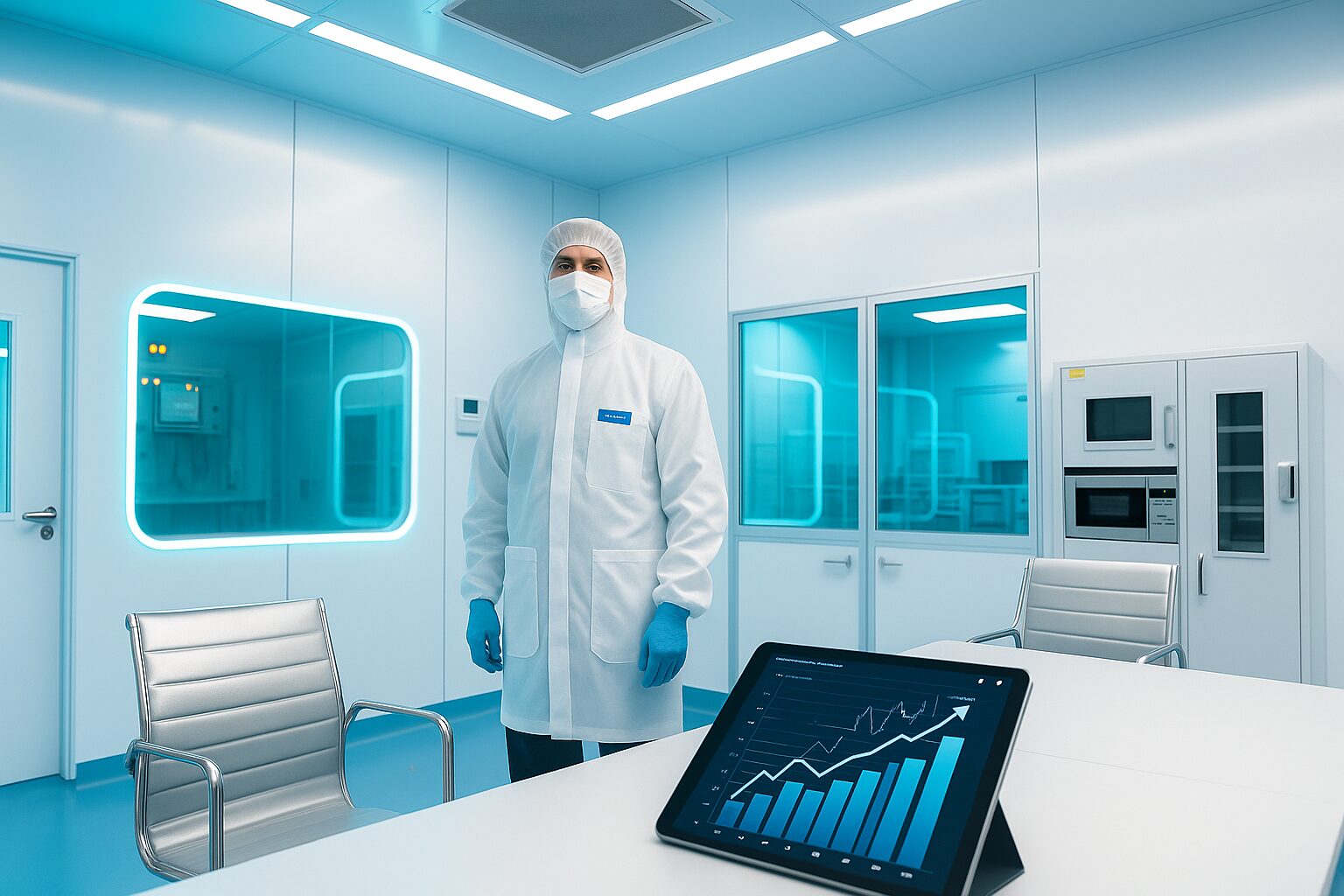
Advanced semiconductor humidity control system with sensor overlays

Semiconductor fabs demand a tightly controlled environment. In these facilities, maintaining precise humidity levels is as critical as temperature or particulate control. Advanced semiconductor humidity control systems protect fragile wafers and chips during sensitive fabrication processes by managing moisture with precision. In a chip manufacturing environment, even slight deviations can cause static buildup, condensation, corrosion, and defects in the final device. This article explores what the ideal humidity should be in a semiconductor cleanroom, techniques to reduce unwanted moisture, and technologies that ensure effective cleanroom dehumidification. In addition, we also examine how moisture affects wafer processing, the role of humidity in chip fabrication, and how fab humidity control systems function in real-world conditions.

Understanding Optimal Humidity in Semiconductor Cleanrooms

Maintaining the right humidity is essential in semiconductor manufacturing. Typically, semiconductor cleanrooms usually maintain relative humidity between 30% and 50%. Such levels are optimal for preventing the adverse effects of both high and low moisture conditions. When humidity exceeds these levels, condensation may form on delicate surfaces or equipment, leading to corrosion and process instability. Conversely, too-low humidity can result in static electricity build-up, which poses its own risks to sensitive semiconductor components.

In a wafer fab environment, precise humidity control contributes to a thermal stability cleanroom that protects materials from moisture-induced defects. For instance, during photolithography, variations in humidity can affect the chemical composition of photoresists, causing pattern irregularities on the wafer. In addition, in the etching and deposition processes, even a small excess of moisture can reduce adhesion and affect film thickness. Thus, extremely accurate humidity control is paramount for wafer processing moisture management and overall product yield.

Why Humidity Control is Vital for Chip Manufacturing

In semiconductor fabrication, every process step is sensitive to environmental conditions. Moisture plays a dual role. On the one hand, high humidity can lead to condensation on wafer surfaces and equipment, increasing the risk of corrosion. On the other hand, excessively dry conditions promote the build-up of static electricity. Both extremes jeopardize chip performance, leading to yield loss and economic setbacks.

For example, during wafer fabrication, a slight increase in ambient moisture might adversely affect dopant diffusion rates or cause unintended reactions during chemical treatments. Controlled humidity not only improves the adhesion of resists but also stabilizes the behavior of process chemicals. As a result, effective semiconductor humidity control safeguards the integrity of microelectronic devices by providing a balanced environment. In advanced fabs, a combination of cleanroom dehumidification and precise climate control is integrated to maintain the ideal conditions for chip fabrication.

Key Techniques to Reduce Humidity in Cleanrooms

Reducing humidity in a cleanroom requires a holistic approach that incorporates both proper HVAC design and the use of specialized dehumidification equipment. There are several effective methods:

  1. HVAC-Based Dehumidification: Semiconductor cleanroom HVAC systems include cooling coils that reduce air temperature below the dew point. This causes water vapor to condense and be removed from the airstream. After removing moisture, the air is reheated to reach the target temperature. This method is effective when integrated with sensors that monitor ambient moisture continuously.
  2. Desiccant Dehumidifiers: In cases where traditional refrigeration-based systems do not achieve desired performance, desiccant dehumidifiers remove moisture by absorbing it onto a hygroscopic material. These are ideal when ultra-low humidity is required or when ambient conditions are highly variable.
  3. Optimized Airflow Management: Ensuring uniform air distribution is crucial. Laminar airflow reduces moisture buildup and evenly distributes humidity throughout the cleanroom. This strategy supports overall wafer processing moisture management.
  4. Smart Controls and HA Sensors: Advanced systems now integrate Internet of Things (IoT) sensors that continuously monitor and adjust humidity settings. With automated feedback loops, these controllers maintain consistent humidity within the target range, ensuring a stable chip manufacturing environment.

By combining these methods, semiconductor fabs can effectively manage moisture, ensuring that the cleanroom environment remains within the optimal range for chip fabrication humidity control.

Technologies for Semiconductor Cleanroom Dehumidification

Modern semiconductor fabs employ advanced technologies for humidity control that integrate seamlessly with their semiconductor cleanroom HVAC setups. Key technologies include:

  • Digital Humidity Controllers: They provide real-time monitoring and automatic adjustments. They work with sensors placed at strategic points within the cleanroom to ensure that relative humidity stays within the 30%–50% range. Digital controllers are typically programmable and can execute complex algorithms (such as PID control) for precise regulation.
  • Precision Cooling Systems: Often, chilled water systems are integrated into the HVAC. These systems reduce air temperature to trigger condensation, subsequently removing moisture. After moisture extraction, the air is conditioned to match the cleanroom’s temperature requirements, ensuring thermal stability cleanroom conditions.
  • Desiccant-Based Systems: As mentioned earlier, desiccant dehumidifiers are particularly effective in environments with demanding moisture control needs. They are widely used in semiconductor manufacturing where traditional systems might struggle due to rapid changes in production load or ambient conditions.
  • Integrated Building Automation Systems (BAS): BAS platforms now allow semiconductor fabs to monitor humidity alongside other environmental parameters. With real-time alerts and automated responses, these systems minimize downtime and enable continuous process optimization.

These innovations not only improve wafer processing moisture management but also contribute to long-term energy efficiency and reduced operational costs in chip manufacturing environments.

Standards and Cleanroom Requirements for Humidity Control

Strict industry standards dictate that semiconductor cleanrooms meet rigorous environmental criteria. The ISO 14644-1 standard specifies cleanliness levels, including recommendations for temperature and humidity. Generally, semiconductor cleanrooms typically maintain 30%–50% humidity to prevent static discharge and material damage.

Guidelines from organizations such as ASHRAE and ISHRAE detail the optimal design, monitoring, and control strategies to maintain these parameters. Adhering to these standards not only ensures compliance but also safeguards against process variability that could impact chip fabrication humidity and overall product quality.

Additionally, semiconductor clean room humidity requirements often intersect with other considerations, including pressure, airflow, and temperature. Manufacturers routinely reference internal documents (such as cleanroom design PDFs available from industry leaders) that outline the necessary conditions for effective semiconductor humidity control cleanrooms.

Challenges in Maintaining Optimal Humidity Levels

In a semiconductor manufacturing cleanroom, maintaining stable humidity presents several challenges:

  • Environmental Fluctuations: Changes in ambient conditions can affect the stable operation of HVAC systems. Fabs located in regions with high seasonal humidity require tailored solutions to mitigate these effects.
  • Equipment and Process Variability: Semiconductor processes such as photolithography and etching are highly sensitive to humidity fluctuations. Even minimal moisture changes can lead to non-uniform film deposition or inconsistent resist performance.
  • Integration with Other Parameters: Humidity cannot be controlled in isolation. Temperature, airflow, and pressure must all be balanced to achieve a thermal stability cleanroom. Some processes might induce localized heat loads that, if not managed, can cause micro-environmental fluctuations.
  • Energy Considerations: Dehumidification systems, especially those relying on refrigeration or desiccants, can be energy-intensive. Maintaining an energy-efficient system while guaranteeing precise wafer processing moisture management is an ongoing challenge.

Engineers overcome these challenges through advanced sensor networks, regular calibration, and integrated control algorithms. Periodic audits and simulations (such as computer-based airflow simulations) help in fine-tuning systems to meet variable production demands.

Best Practices for Semiconductor Humidity Control

Implementing robust humidity control in semiconductor cleanrooms calls for a combination of design expertise and operational discipline. Some best practices include:

  • Regular Calibration and Maintenance: Routine checks on sensors and controllers ensure their accuracy over time. Regular HVAC maintenance helps maintain accurate humidity control.
  • Integration of Smart Controls: Utilize IoT-based solutions and build automation systems to continuously monitor humidity. These systems can automatically adjust settings based on real‑time data, ensuring that cleanroom dehumidification remains consistent.
  • Zonal Control Strategies: In large fabs, dividing the cleanroom into distinct zones enables personalized control of humidity levels. This is particularly useful in areas where high-density equipment or increased personnel activity might create localized moisture variations.
  • Energy Optimization: Incorporate energy-saving measures such as variable frequency drives (VFDs) on dehumidification units and heat recovery systems to balance precise humidity control with low energy consumption.
  • Compliance with International Standards: Adhere strictly to ISO 14644 guidelines and reference recommended ranges from ASHRAE to ensure that the semiconductor cleanroom meets global best practices. This also aids in maintaining a fab relative humidity system that is both reliable and cost-effective.

By following these best practices, semiconductor organizations can reduce product defects and boost yield while achieving sustainable manufacturing goals.

Emerging Trends in Humidity Control Technologies

The landscape of semiconductor manufacturing continues to evolve with emerging technologies that further refine humidity control. AI-driven predictive maintenance algorithms now play a significant role in foreseeing potential humidity level deviations before they occur. Through machine learning, these systems analyze historical performance data and adjust dehumidification processes accordingly.

IoT sensors are now widely used in modern semiconductor cleanrooms. These sensors continuously track not only temperature and pressure but also real-time humidity levels at multiple points. Data gathered from these sensors feed into centralized systems for immediate corrective action. Such integration helps in achieving a stable chip fabrication humidity environment while optimizing energy consumption.

Moreover, innovations in desiccant dehumidification and advanced refrigerant-based systems have led to more compact, efficient, and responsive solutions. As fabs scale in size and process complexity, these evolving technologies ensure that semiconductor humidity control remains ahead of the curve, delivering consistent results even under varying external conditions.

Case Study: Enhancing Process Yield Through Humidity Control

An anonymized semiconductor facility in India recently revamped its humidity control system to address yield inconsistencies. Previously, the fab operated at relative humidity levels that occasionally drifted above the ideal 50% mark. As a result, issues such as condensation on wafer surfaces and static buildup during photolithography were reported. The facility installed a new system employing both advanced HVAC dehumidification and IoT-based monitoring.

Within months, the fab experienced a significant reduction in process variations. Wafer processing moisture management improved, and the overall product yield increased by 18%. This case study underscores the importance of precise semiconductor humidity control in achieving not only compliance with cleanroom semiconductor requirements but also in enhancing operational profitability.

Designing a Humidity Control Strategy for Advanced Manufacturing Cleanrooms

Developing an effective humidity control strategy begins with a detailed analysis of the semiconductor production process. Designers must consider the following:

  • Process Sensitivity: Identify which manufacturing steps are most affected by humidity. For example, photolithography often requires precise humidity control to ensure proper resist application.
  • Cleanroom Layout: Equipment placement and work zones affect airflow and humidity distribution. Plan for a uniform dehumidification system that minimizes localized moisture accumulation.
  • System Integration: The humidity control system must seamlessly integrate with the broader semiconductor cleanroom HVAC. Coordination between temperature control, airflow management, and humidity regulation ensures a balanced environment.
  • Monitoring and Feedback: Employ advanced sensors to continually track cleanroom dehumidification performance. Ensure that the control system—the heart of fab relative humidity systems—can trigger adjustments in real time if deviations occur.
  • Cost and Energy Efficiency: Evaluate the energy impact of dehumidification systems and explore options for energy recovery or hybrid systems using both refrigerant and desiccant technologies.

Furthermore, designers must also adhere to semiconductor clean room standards, which require detailed documentation and periodic verification. Implementing a robust documentation process helps maintain consistency and supports compliance with environmental and industry guidelines.

Integrating Humidity Control with Overall Environmental Management

Humidity control is only one aspect of the broader environmental management strategy in semiconductor fabs. For optimum chip fabrication humidity control, it is essential to integrate humidity data with other key parameters such as temperature, pressure, and airflow. Advanced building automation systems (BAS) now provide platforms where real-time data assist in maintaining a balanced environment. This holistic approach ensures that every component of the semiconductor cleanroom HVAC—ranging from precision cooling systems to dehumidifiers—operates in synchrony.

In many modern fabs, digital dashboards provide operators with a comprehensive view of current operating conditions. Alerts, trend analyses, and predictive algorithms support rapid response and continuous improvement efforts. This integrated system not only enhances product quality but also drives improvements in energy efficiency and operational uptime.

Future Directions and Innovations in Semiconductor Humidity Control

Looking ahead, trends in semiconductor humidity control point towards greater automation and predictive capabilities. The integration of artificial intelligence (AI) and machine learning promises to make humidity regulation even more precise by forecasting changes before they impact the manufacturing process. New materials for desiccants and more efficient refrigerant technologies are under development to further optimize energy consumption while maintaining rigorous cleanroom semiconductor standards.

Innovations such as digital twin simulations will soon allow engineers to virtually test and optimize humidity control strategies under different scenarios. This proactive approach is expected to drive remarkable advances in both the performance and sustainability of semiconductor cleanrooms. With these emerging technologies, fabs can look forward to improved yield, lower operating costs, and a reduced environmental footprint.

Conclusion

Effective humidity control is critical for semiconductor manufacturing. Achieving a balanced, stable environment through precise semiconductor humidity control systems not only supports wafer processing moisture management but also protects delicate chip fabrication processes. Integrated within a sophisticated semiconductor cleanroom HVAC, these advanced dehumidification solutions maintain relative humidity within the ideal range—typically 30% to 50%. By embracing emerging trends such as AI-driven controls and IoT monitoring, fabs achieve a thermal stability cleanroom that maximizes product yield and reduces defects. Adhering to international standards and best practices further ensures that these facilities remain at the forefront of high-performance semiconductor production.

Semiconductor manufacturers who invest in robust humidity control strategies will see improved process consistency, higher-quality products, and significant long-term energy savings. As technology advances, continuous system improvements will become increasingly important to the global semiconductor industry.

FAQs

What is the ideal humidity level for a semiconductor cleanroom?

A semiconductor cleanroom typically maintains a relative humidity between 30% and 50%, a range that minimizes both condensation and static electricity, ensuring reliable chip fabrication.

How can humidity be reduced in a cleanroom?

Humidity reduction is achieved by deploying advanced HVAC systems with integrated dehumidifiers. Techniques include refrigerant-based cooling coils, desiccant dehumidification, and optimized airflow management to maintain uniform moisture levels.

What is the humidity control for semiconductors?

Humidity control for semiconductors involves precise environmental regulation using sensors, digital controllers, and automated systems that continuously monitor and adjust relative humidity to the ideal range, ensuring optimal wafer processing.

How does humidity affect semiconductor manufacturing?

Incorrect humidity levels can lead to condensation, static buildup, corrosion, and process interruptions. Maintaining optimal humidity ensures that photoresists adhere correctly, chemical reactions proceed uniformly, and wafers remain defect-free.

What are common methods for cleanroom dehumidification?

Common methods include using HVAC systems with refrigerant dehumidification, desiccant-based dehumidifiers, and smart control systems that adjust air flows in real time to maintain stable humidity levels.

Which standards guide semiconductor cleanroom humidity control?

Semiconductor facilities adhere to international standards such as ISO 14644-1, ASHRAE, and guidelines from ISHRAE. These standards establish recommended humidity ranges and ensure that cleanrooms meet the stringent requirements necessary for chip manufacturing.

About the Author

Mr. Om Prakash, with over 18 years of hands-on experience in the HVAC industry, brings unmatched expertise in cleanroom, semiconductor, pharmaceutical, data center, commercial, and industrial HVAC systems. As the founder of HVAC Technocrat, he specializes in customized HVAC design, energy efficiency audits, retrofit planning, and turnkey consultancy services across India. He simplifies complex HVAC concepts and shares real-world insights to support professionals, facility managers, and decision-makers. For enquiries or project support, call or WhatsApp at +91 9908091942, email hvactechnocrats@gmail.com, or visit www.hvactechnocrat.com. Also, follow his LinkedIn profile.

Disclaimer

The content here is intended solely for educational and informational purposes. All case studies, examples, and hypothetical scenarios are illustrative in nature and do not refer to, endorse, or represent any actual company, organization, or product. Any similarity to real-world entities or events is purely coincidental. Readers are encouraged to verify any technical details or operational recommendations with additional, independent research prior to implementation. The author and publisher assume no responsibility or liability for any errors, omissions, or outcomes resulting from the use of this material.

How to Design Precise Wafer Fab Temperature Control Systems

Advanced wafer fab temperature control in semiconductor cleanroom HVAC

In today’s advanced chip manufacturing environment, precise temperature control is essential for success. Semiconductor fabs demand robust, stable thermal management to support optimal deposition, etching, and photolithography. Advanced systems for wafer fab temperature control ensure that every step of the process remains within strict tolerances. Integrated within a high-performance semiconductor cleanroom HVAC setup, these precision cooling systems promote a thermal stability cleanroom that sustains quality and enhances yield.

Understanding Precise Temperature Control in a Chip Manufacturing Environment

Precise temperature control refers to maintaining a set temperature with minimal variation. In a chip manufacturing environment, even a fraction-of-a-degree deviation can alter semiconductor properties and jeopardize process reliability. For wafer fab temperature control, systems employ advanced sensors and fast-reacting controllers that continuously adjust heating and cooling elements. These systems are part of precision cooling systems engineered for semiconductor cleanroom HVAC setups. The goal is to create a thermal stability cleanroom where wafer processing occurs under optimal, uniform conditions.

Today’s fabs rely on real‑time feedback loops—often using PID (Proportional-Integral-Derivative) controllers—to maintain consistent target temperatures. This tight regulation improves film deposition uniformity and minimizes defects on silicon wafers. By reducing thermal gradients, fabs achieve higher device reliability and maximize efficient processing.

Temperature Control in Semiconductor Manufacturing

Temperature control for semiconductor manufacturing is critical due to the sensitivity of process steps. In wafer fabrication, temperature discrepancies directly affect dopant diffusion, film thickness, and even stress levels in the wafer. Semiconductor cleanroom HVAC systems are designed with integrated temperature modules that ensure precision cooling systems operate in tandem with airflow regulation. For example, during rapid thermal processing (RTP), an extremely controlled thermal environment prevents unwanted thermal shock and warping. Thus, accurate wafer fab temperature control is vital at every process stage.

Additionally, specialized systems maintain a narrow temperature range—often within 20°C to 22°C—to guarantee environmental uniformity. This care not only preserves the chip manufacturing environment but also improves overall process repeatability and yield reliability. The integration with semiconductor cleanroom HVAC minimizes energy fluctuations and supports the stringent requirements of modern fabs.

Controllers and Technologies Behind Precise Temperature Control

A crucial aspect of precise temperature regulation lies in the selection of effective controllers. PID controllers are typically favored in semiconductor cleanroom HVAC installations because they continuously measure actual versus set temperatures and make quick adjustments. These controllers enable wafer fab temperature control by providing the required accuracy to handle rapid thermal cycles, such as those seen in advanced deposition or annealing processes.

In addition to PID controllers, modern systems also leverage digital temperature controllers (DTCs) and adaptive algorithms. These devices interface with comprehensive monitoring systems that are part of the overall precision cooling systems. Overall, choosing the right controller is essential for maintaining a thermal stability cleanroom and ensuring that the chip manufacturing environment remains optimal, even during rapid process changes.

Wafer Temperature Control and Uniformity

Wafer temperature control focuses on achieving consistent thermal distribution across the entire wafer surface. Non-uniform temperature during wafer processing can lead to inconsistent film deposition, unwanted dopant diffusion, and ultimately, lower yield. Advanced multi-zone temperature control systems address this challenge by dividing the wafer area into several independently controlled heating zones.

These zones are continuously monitored and adjusted through semiconductor cleanroom HVAC systems. The use of precision cooling systems allows for real-time corrections, ensuring that every part of the wafer receives the same thermal treatment. In effect, this leads to a thermal stability cleanroom where uniformity is achieved, helping prevent warpage and other thermal-induced defects.

Impact of Temperature on Semiconductor Performance

Temperature significantly impacts semiconductor devices at both the material and circuit levels. Fluctuations in temperature can modify charge carrier concentrations, affect leakage currents, and even shift the threshold voltage of transistors. In the chip manufacturing environment, minor temperature variations may lead to critical failures such as premature breakdown or reduced operational speed.

Maintaining a low variance in process temperature, through efficient wafer fab temperature control, becomes paramount. Advanced precision cooling systems directly contribute to preserving the electrical properties crucial for reliably produced semiconductors. A stable temperature environment ensures that both the mechanical structure and electronic performance achieve desired specifications and long-term reliability.

Wafer Fabrication: An Overview

Wafer fabrication involves building semiconductor devices on a silicon wafer through a series of complex processes. Each stage—oxidation, doping, photolithography, and etching—needs precise temperature control. A semiconductor cleanroom HVAC system integrates into the fabrication process to create an environment where precision cooling systems can maintain thermal stability cleanroom conditions.

High-precision temperature control in wafer fabrication not only supports dimensional accuracy but also sustains the chemical reactions that form the electronic components in chips. With innovations in wafer fab temperature control, modern fabs achieve greater yields and improved performance of the final semiconductor devices.

Case Study: Enhancing Yield with Precision Temperature Control

Consider a semiconductor fab in India that faced recurring issues with uneven film deposition during chemical vapor deposition (CVD) steps. Engineers suspected that subtle temperature variations were affecting quality. By integrating a multi-zone precision cooling system within their semiconductor cleanroom HVAC, they achieved a uniform thermal profile across the wafers. This upgrade improved wafer fab temperature control and increased yield by 20%, while also reducing energy consumption during rapid thermal cycles. This case study reinforces that robust temperature control solutions are integral to modern semiconductor manufacturing.

Best Practices for Temperature Control in a Semiconductor Cleanroom

  • Regular Calibration: Ensure that sensors and controllers are calibrated frequently to achieve optimum wafer fab temperature control.
  • Multi-Zone Management: Divide temperature zones within the cleanroom so that different areas receive tailored thermal treatments; this enhances precision cooling systems performance.
  • Feedback Integration: Use a closed-loop system with continuous feedback to adjust heating and cooling outputs immediately.
  • Redundancy in Systems: Incorporate backup controllers and sensors within semiconductor cleanroom HVAC to maintain process integrity even during component failure.
  • Compliance with Standards: Adhere to international guidelines set by ASHRAE and ISHRAE to build a thermal stability cleanroom that meets the rigorous demands of a chip manufacturing environment.

These practices not only yield better process outcomes but also fortify the overall system reliability in a high-stakes production setting.

Emerging Technologies in Precision Temperature Control

Next-generation wafer fab temperature control will heavily rely on emerging technologies like artificial intelligence (AI) and the Internet of Things (IoT). Real-time data, coupled with machine learning algorithms, allows for predictive maintenance and immediate adjustments during rapid process changes. Additionally, integration with digital twin technology enables simulation and optimization of thermal processes before actual implementation.

Precision cooling systems are evolving to offer even greater accuracy and energy efficiency, ensuring that semiconductor cleanroom HVAC setups remain at the cutting edge. These improvements are expected to further stabilize the chip manufacturing environment and drive down the costs associated with thermal management.

Integrating Temperature Control with the Overall HVAC Ecosystem

Precision temperature control does not exist in isolation; it forms part of an integrated semiconductor cleanroom HVAC system. Maintaining stable temperature, airflow, and humidity is crucial for a thermally stable cleanroom. Modern HVAC systems are designed to support multi-faceted environmental monitoring, ensuring that precision cooling systems communicate seamlessly with other components.

Engineers now design complete HVAC frameworks using computer-based simulations to predict interactions between temperature control and other environmental factors. This integrated approach helps maintain a consistent chip manufacturing environment and reduces energy consumption through smart automation—thereby improving both operational efficiency and sustainability.

Challenges in Achieving Precise Temperature Control

Maintaining exact temperature control in wafer fabrication environments presents several challenges:

  • Tight Tolerances: Achieving fluctuations within fractions of a degree is difficult and requires exceptionally precise sensors.
  • Dynamic Changes: Rapid thermal cycles during process transitions demand controllers that can adapt almost instantaneously.
  • Uniformity Across Large Areas: Ensuring even temperature distribution across a large wafer can be challenging.
  • System Integration: Aligning temperature control with other HVAC components demands precise engineering planning.

Engineers overcome these challenges by continuously refining control algorithms, employing adaptive controllers, and integrating advanced sensor networks into semiconductor cleanroom HVAC systems.

Historical Overview and Future Opportunities

In the past, simple on/off temperature control methods were used, but these proved insufficient for modern semiconductor manufacturing. Today’s fabs deploy sophisticated precision cooling systems that use digital temperature controllers and continuous monitoring solutions. Looking to the future, advancements in AI, IoT, and big data analytics are expected to further revolutionize wafer fab temperature control. These emerging technologies promise even greater accuracy and energy efficiency while creating a thermal stability cleanroom that adapts dynamically to process requirements.

Internal Linking for Additional Resources

For more detailed insights, explore our related articles:

  • Clean Room Design and Construction
  • Smart HVAC Systems for Semiconductor Manufacturing
  • Energy Efficiency in HVAC Systems

These resources provide further context on integrated environmental control, supporting robust semiconductor fabrication processes.

FAQs

What is precise temperature control?

Precise temperature control means keeping the temperature steady with very little variation. It ensures that a chip manufacturing environment remains stable, which is critical for wafer fab temperature control.

What is the temperature control for semiconductor manufacturing?

It involves maintaining a consistent temperature—often between 20°C and 22°C—throughout the manufacturing process. This uniformity helps prevent defects during wafer processing and ensures a thermal stability cleanroom.

Which controller is used for temperature control?

PID controllers are commonly used because they adjust heating and cooling outputs based on real-time sensor feedback. Advanced digital controllers integrated into semiconductor cleanroom HVAC systems provide even more precise management.

What is wafer temperature control?

Wafer temperature control focuses on keeping the temperature uniform across the silicon wafer during processing. This prevents thermal gradients that could lead to non-uniform film deposition or inconsistent doping.

How does temperature affect semiconductors?

Temperature variations can alter electrical properties by affecting charge carrier concentrations and causing thermal expansion. Such changes can degrade performance and reliability, making precise temperature control essential in a chip manufacturing environment.

What is wafer fabrication in semiconductor manufacturing?

Wafer fabrication is the process by which semiconductor devices are created on a silicon wafer. This multi-step process requires a highly controlled cleanroom environment with stringent temperature control to achieve high yields.

Conclusion

Precision temperature control systems are a cornerstone of semiconductor manufacturing, enabling strict wafer fab temperature control in chip manufacturing environments. Advanced controllers integrated within semiconductor cleanroom HVAC not only ensure thermal stability but also drive overall process efficiency. By implementing precision cooling systems and adhering to industry best practices, modern fabs can maintain a thermal stability cleanroom that maximizes yield and product quality. As technology advances, emerging solutions promise even greater control, energy efficiency, and smarter integration with the complete HVAC ecosystem.

About the Author

Mr. Om Prakash, with over 18 years of hands-on experience in the HVAC industry, brings unmatched expertise in cleanroom, semiconductor, pharmaceutical, data center, commercial, and industrial HVAC systems. As the founder of HVAC Technocrat, he specializes in customized HVAC design, energy efficiency audits, retrofit planning, and turnkey consultancy services across India. He simplifies complex HVAC concepts and shares real-world insights to support professionals, facility managers, and decision-makers. For any enquiries or project support, call or WhatsApp at +91 9908091942, email hvactechnocrats@gmail.com, or visit www.hvactechnocrat.com. Also, follow his LinkedIn profile.

Disclaimer

The content here is intended solely for educational and informational purposes. All case studies, examples, and hypothetical scenarios are illustrative in nature and do not refer to, endorse, or represent any actual company, organization, or product. Any similarity to real-world entities or events is purely coincidental. Readers are encouraged to verify any technical details or operational recommendations with additional, independent research prior to implementation. The author and publisher assume no responsibility or liability for any errors, omissions, or outcomes resulting from the use of this material.

How to Calculate Semiconductor ACPH and Airflow

Advanced semiconductor ACPH clean room with HVAC system showcasing ACH and airflow management

Semiconductor clean rooms demand precise environmental control. In these facilities, engineers design HVAC systems that calculate air changes per hour ACPH and manage airflow requirements with extreme accuracy. Semiconductor clean room performance depends on proper ACPH calculations, as even small errors may affect wafer quality and chip performance. In semiconductor manufacturing, ensuring that HEPA filtration, temperature regulation, and humidity control work harmoniously is critical. This article explains how to calculate semiconductor ACPH, determine proper airflow, and implement effective HVAC designs for semiconductor clean rooms.

Understanding the Concept of Semiconductor ACPH in Clean Rooms

Air changes per hour (ACPH) represent the number of times a room’s air volume is completely exchanged in one hour. In semiconductor clean rooms, engineers calculate ACH by dividing the total volume of air supplied by the room volume. Practically, designers measure the airflow in cubic meters per hour and divide it by the clean room’s volume in cubic meters. ACH plays a key role in controlling airborne contaminants and ensuring the clean room maintains its designated classification. For example, excessive airflow may lower energy efficiency, whereas insufficient airflow can lead to contamination. Therefore, the balance achieved through accurate ACH calculations supports continuous production stability and robust contamination control.

Furthermore, semiconductor clean room ACH calculations help designers determine the optimum layout of fan filter units (FFUs) and ductwork. An optimized ACH ensures that ultra-clean air flows uniformly over sensitive equipment. Manufacturers also use computer-based airflow simulations to verify that calculated ACH meets real-world performance. Industry standards such as ISO 14644-1 and guidelines from ASHRAE and ISHRAE ensure that semiconductor facilities conform to regulatory requirements. Properly calculated ACH reduces the probability of airborne contaminants interfering with chip manufacturing processes.

Calculating Semiconductor ACPH and Airflow Requirements in Clean Rooms

Engineers determine airflow by considering clean room dimensions, occupancy, equipment heat loads, and contamination risks. Designers calculate required air volume by multiplying air changes per hour (ACH) with the room’s volume. Typically, clean room airflow is measured in cubic meters per hour (m³/h) or cubic feet per minute (CFM). For semiconductor applications, airflow must maintain a unidirectional (laminar) pattern that pushes contaminants away from production areas.

Additionally, advanced HVAC systems monitor airflow rates continuously. They adjust fan speeds and duct configurations, thereby ensuring that the volume of air delivered meets exact process requirements. Semiconductor clean room designs include sensors that track air velocity and supply volumes, providing instant feedback if deviations occur. This proactive approach helps minimize downtime and ensures that even minor fluctuations in airflow do not compromise the manufacturing environment.

Key HVAC Parameters and Their Importance in Semiconductor Clean Rooms

Several HVAC parameters influence semiconductor clean room performance. Besides ACH, engineers carefully control temperature, humidity, and positive pressure. Temperature stability within a range of 20°C to 22°C (±0.1°C) prevents thermal expansion or contraction that may cause defects during photolithography. Humidity control (typically maintained between 40% and 60% relative humidity) reduces the risk of electrostatic discharge (ESD) and condensation issues. Positive pressure in the cleanroom prevents unfiltered air from entering from surrounding areas.

Moreover, designers plan the placement of supply diffusers and return vents to achieve uniform airflow distribution. Proper pressure gradients and airflow zoning guarantee that contaminants do not settle on critical wafers. Integrating smart controls into HVAC systems further refines the operation by automatically adjusting to changes in environmental conditions. These measures not only protect semiconductor products but can also lead to energy savings and reduced operational costs.

Methods and Formulas for Calculating Semiconductor ACPH Clean Rooms

Calculating ACH follows a simple formula:

ACH = (Airflow Rate ÷ Room Volume)

For example, if a clean room has a volume of 1,000 m³, and the HVAC system delivers 20,000 m³/h, then:

ACPH = 20,000 ÷ 1,000 = 20 air changes per hour

Q = Volume x ACPH / 60; where Q in cubic feet per min, Volume in cubit feet, ACPH in number

Additionally, engineers often convert airflow from CFM to m³/h (1 CFM ≈ 1.7 m³/h) and consider these conversions during design calculations. Furthermore, designers factor in the efficiency of ductwork and filter media, which might lower the effective airflow delivered.

Case studies reveal that semiconductor facilities in India have achieved optimized ACH by carefully balancing airflow with energy considerations. In one anonymized case study, a semiconductor plant improved its yield by 15% after recalculating ACH to better match clean room dimensions and process requirements. This demonstrates that precise measurement and control of ACH directly impact production efficiency.

Airflow Measurement Techniques and Instrumentation

Accurate airflow measurement is pivotal for proper ACH calculations. Engineers use an array of instruments, such as anemometers, airflow capture hoods, and manometers. These devices provide real-time measurements of air velocity and pressure. For instance, digital anemometers measure the speed of the air flowing out of fan filter units, which is then used in the ACH formula.

Moreover, sensors in the HVAC system alert operators if airflow falls below required levels. Continuous monitoring not only helps maintain clean room classification but also supports energy-efficient operation. A semiconductor clean room with misaligned airflow may experience increased energy consumption or, worse, contamination issues. Utilizing modern instrumentation thus ensures that semiconductor HVAC systems perform reliably over time.

Optimizing HVAC System Design for Semiconductor Clean Rooms

Optimal HVAC system design for semiconductor clean rooms includes several aspects:

  • Precise Calculations: Use accurate measurements for ACH and total airflow, ensuring uniform distribution.
  • Efficient Filtration: Integrate HEPA filters with a high removal efficiency (99.97% at 0.3 microns), which maintain low particle counts.
  • Smart Controls: Implement sensor networks and building automation systems (BAS) that adjust air supply dynamically.
  • Energy Efficiency: Design systems that balance high airflow with low energy consumption by using variable frequency drives (VFDs) and heat recovery measures.

Designers also use computer-based simulations to model airflow trajectories. This method, known as CFD (computer-based airflow simulations), helps predict how air moves throughout the clean room. Internal links to detailed guides on Clean Room Design and Construction provide more insights on this topic. Such simulations contribute to achieving the optimal balance between contamination control and energy efficiency.

Impact of Room Layout and Geometry on Airflow Requirements

Room layout and geometry significantly affect airflow performance. Semiconductor clean rooms use a combination of modular panels, raised floors, and dedicated gowning zones to optimize airflow. The placement of equipment, workstations, and staff affects how clean air flows throughout the room. Engineers design layouts that support unidirectional airflow, which clears out contaminants quickly and prevents stagnation.

For example, facilities in semiconductor manufacturing incorporate zigzag or serpentine airflow patterns to avoid dead zones. Additionally, strategic placement of diffusers ensures that air reaches every part of the clean room. These design choices not only improve the effectiveness of HVAC systems but also enhance energy efficiency by minimizing the need for excessive airflow.

Challenges in Calculating Ach and Airflow in Semiconductor Clean Rooms

Several challenges arise when calculating ACH and airflow in semiconductor clean rooms. First, the complex geometry of high-density equipment and varying occupancy levels can lead to uneven air distribution. Second, filters and ducts may introduce pressure drops, which affect the actual airflow rate delivered to the clean room space. Third, the dynamic nature of manufacturing processes means that airflow requirements may change over time.

Engineers must address these issues by performing regular audits, conducting CFD analyses, and recalibrating sensors. In one case study from India, recalibration of airflow systems led to a 10% energy savings and a more uniform ACH across production areas. By overcoming these challenges, semiconductor facilities improve both product yield and operational cost-effectiveness.

Future Trends: AI, IoT, and Smart Monitoring in ACH Calculations

Emerging technologies such as artificial intelligence (AI) and the Internet of Things (IoT) are revolutionizing HVAC system optimization. Modern semiconductor clean rooms now utilize smart sensors that continuously feed data about temperature, humidity, and airflow into centralized control systems. AI algorithms analyze these data streams in real time, predicting maintenance needs and optimizing air delivery for the calculated ACH.

For example, early AI-driven predictive analytics have helped reduce downtime by alerting facility operators to potential system inefficiencies before they cause contamination events. IoT connectivity further supports energy-efficient operations by automatically adjusting fan speeds and air distribution based on process demands. These innovations promise greater precision in ACH calculations and a more sustainable operation.

Calculating ACH: Practical Case Studies and Industry Examples

Several semiconductor clean room facilities have successfully optimized their HVAC systems by closely monitoring ACH. One semiconductor plant in Hyderabad recalculated its airflow requirements by installing advanced sensors and integrating a smart BAS. This resulted in a 15% increase in yield and a 10% decrease in energy costs. Another example from a facility in South Korea demonstrated that recalculating ACH to account for recirculating air improved contamination control and extended filter lifespan.

These case studies underscore how crucial accurate ACH calculations are in real-world scenarios. They offer practical insights into how minor adjustments in airflow rates can yield significant benefits in terms of performance and cost savings.

Strategies for Enhancing Energy Efficiency and Airflow Control

Semiconductor clean room HVAC systems must balance high performance with energy efficiency. Several strategies help achieve this balance:

  • Variable Frequency Drives (VFDs): Adjust fan speeds automatically based on real-time process requirements.
  • Heat Recovery Systems: Reuse waste heat from the clean room to pre-condition incoming air.
  • Regular Maintenance and Calibration: Maintain sensor accuracy and system performance to ensure that calculated ACH remains reliable over time.
  • Design Optimization: Use CFD simulations to optimize duct routes and diffusers in relation to clean room geometry.

Furthermore, implementing such strategies not only guarantees contamination control but also reduces the operating costs significantly. Manufacturers across the globe, including those in India, have noted improvements in overall efficiency after adopting these measures.

Integrating Standards and Regulatory Guidelines in ACH Calculations

Compliance with established standards safeguards semiconductor clean rooms from performance lapses. HVAC systems in such facilities must adhere to ISO 14644-1, which details classification and airflow criteria, as well as SEMI standards that illustrate industry-specific requirements. Designers also refer to guidelines from ASHRAE and ISHRAE to ensure that their calculations follow best practices.

Regulatory compliance includes detailed documentation in cleanroom PDFs and continuous monitoring protocols. These practices help maintain a stable environment that meets stringent criteria and supports high-yield semiconductor production.

Future of Semiconductor ACH Calculations: Trends and Innovations

The next generation of semiconductor HVAC systems will integrate even more advanced predictive maintenance and AI-powered monitoring capabilities. Increased reliance on data analytics and IoT devices will allow for real-time adjustments to ACH, ensuring that the clean room environment remains consistent with process demands. In addition, emerging trends toward carbon-neutral retrofits and sustainable HVAC technology further drive innovation in this field.

As semiconductor manufacturing evolves, these technological advancements will greatly impact how engineers calculate and control ACH. Facilities that adopt these innovations enjoy not only cleaner environments but also reduced energy consumption and enhanced operational reliability.

Internal Linking for Expanded Insights

For readers seeking further details on related topics, consider exploring our additional articles:

These internal links provide valuable, supplementary information related to HVAC design principles and energy-efficient systems.

FAQs

What is the significance of calculating semiconductor ACPH in clean rooms?

Calculating ACH is crucial because it defines how often the entire volume of air in a clean room is replaced. A properly calculated ACH ensures that contaminants are continuously removed, maintaining strict environmental conditions necessary for semiconductor manufacturing.

How is airflow measured in semiconductor clean room HVAC systems?

Engineers use instruments like anemometers and airflow capture hoods to measure air velocity and volume. They convert these measurements into cubic meters per hour and divide by the clean room’s volume to determine ACH.

What factors influence the appropriate airflow requirements for a semiconductor clean room?

Factors include the room volume, required cleanliness class (based on ISO 14644-1), heat loads from equipment, occupancy, and the design of fan filter units. Designers also consider pressure differentials and laminar airflow patterns.

How do smart controls enhance ACH performance in clean rooms?

Smart controls use IoT sensors and AI to monitor temperature, humidity, and airflow in real time. They automatically adjust fan speeds and air distribution to maintain steady ACH and ideal conditions.

What challenges do engineers face when calculating ACH?

Challenges include addressing complex room geometries, compensating for pressure drops in ducts and filters, and accommodating fluctuations in occupancy and equipment usage. Regular calibration and advanced simulations help overcome these challenges.

How do international standards and industry guidelines influence ACH calculations?

Standards such as ISO 14644-1 and guidelines from SEMI, ASHRAE, and ISHRAE provide benchmarks for allowable particle levels and environmental conditions. Compliance with these standards ensures that calculated ACH meets the strict demands of semiconductor fabrication.

Can ACH calculations adapt to changing production conditions?

Yes, with continuous monitoring and smart HVAC controls, ACH calculations can dynamically adjust to accommodate changes in production processes, occupancy, and equipment load, ensuring optimal performance at all times.

About the Author

Mr. Om Prakash, with over 18 years of hands-on experience in the HVAC industry, brings unmatched expertise in cleanroom, semiconductor, pharmaceutical, data center, commercial, and industrial HVAC systems. As the founder of HVAC Technocrat, he specializes in customized HVAC design, energy efficiency audits, retrofit planning, and turnkey consultancy services across India. He simplifies complex HVAC concepts and shares real-world insights to support professionals, facility managers, and decision-makers. For any enquiries or project support, call or WhatsApp at +91 9908091942, email hvactechnocrats@gmail.com, or visit www.hvactechnocrat.com. Also, follow his LinkedIn profile for more updates.

Disclaimer

The content here is intended solely for educational and informational purposes. All case studies, examples, and hypothetical scenarios are illustrative in nature and do not refer to, endorse, or represent any actual company, organization, or product. Any similarity to real-world entities or events is purely coincidental. Readers are encouraged to verify any technical details or operational recommendations with additional, independent research prior to implementation. The author and publisher assume no responsibility or liability for any errors, omissions, or outcomes resulting from the use of this material.

Semiconductor Cleanroom: How to Design HVAC Systems

Advanced semiconductor cleanroom with integrated HVAC system and cleanroom air filtration

Semiconductor fabrication demands ultra‐clean environments to protect delicate wafers and complex integrated circuits. In today’s high‐tech manufacturing, advanced HVAC systems ensure that semiconductor cleanroom maintain optimal temperature, humidity, and air purity. This article explains what a cleanroom is for semiconductor manufacturing, why semiconductors need a cleanroom, how cleanrooms and semiconductor cleaning processes work, and details HVAC design principles, from air filtration to complying with stringent HVAC standards for semiconductor facilities.

What Is a Cleanroom in Semiconductor Manufacturing?

A semiconductor cleanroom is a highly controlled space where particles, temperature, and humidity are kept to strict limits. These rooms adhere to international standards such as ISO 14644‑1 that classify cleanrooms based on the maximum allowable particles per cubic meter. Cleanrooms usually range from ISO Class 1 (the strictest) up to Class 10 or even Class 100, depending on the application. In semiconductor fabs, the typical cleanroom often operates in ISO Class 5 or lower, ensuring that the wafer surfaces remain pristine throughout photolithography, deposition, and etching processes.

Why Do Semiconductors Need a Cleanroom?

Semiconductor devices are built layer by layer on silicon wafers using photolithography and other processes that are extremely sensitive to contamination. Even a single microscopic particle may cause defects, compromises in yield, or electrical shorts. Consequently, semiconductor cleanrooms protect chips from airborne particles, metal ions, and volatile compounds. In addition, stable temperature and humidity conditions prevent device variability caused by thermal expansion or moisture-induced oxidation. Ultimately, maintaining a contaminant‐free environment leads to higher efficiency, reliability, and improved overall wafer yields.

Also Read | Why Temperature and Humidity Control Is Critical in Cleanrooms

How Do You Clean a Semiconductor?

Cleaning semiconductor components is a multi‐step process designed to remove every trace of contamination without damaging the wafer. Typical cleaning steps include:

  • Preliminary Rinse: Using ultra‐pure deionized (DI) water to remove loose particulate matter.
  • Organic Solvent Cleaning: Immersing or wiping the wafer with solvents (e.g., acetone or isopropyl alcohol) to eliminate grease, photoresists, or polymer residues.
  • Oxide Removal: Employing chemical etches like hydrofluoric acid (HF) dips to strip away native oxides before subsequent processing steps.
  • Megasonic or Ultrasonic Cleaning: Applying high‐frequency sound waves in DI water to dislodge particles that cling to the wafer surface.
  • Final Rinse and Drying: Using spin rinse dryers and controlled atmosphere drying to ensure the wafer is completely dry and free of residual contaminants.

These methods together achieve the cleanliness levels required in semiconductor manufacturing.

Semiconductor Cleanroom Standards and Classifications

Cleanroom standards are critical for ensuring that semiconductor processes are not compromised by contaminants. Manufacturers follow guidelines such as ISO 14644‑1 and SEMI standards to set the allowable limits on particle counts. For example, a semiconductor cleanroom may allow no more than 3,520 particles (0.5 µm or larger) per cubic meter of air. Many facilities provide detailed documentation in the form of cleanroom PDFs that outline classification criteria, operational protocols, and layout designs.

Other important criteria include:

  • Cleanroom PDF Guides and Manuals: These documents provide step-by-step procedures for cleanroom construction, maintenance, and gowning procedures.
  • Classification: Semiconductor cleanroom classifications (e.g., Class 1,000 or ISO Class 5) determine the cleanliness level required for various production stages.
  • Manufacturers and Companies: Leading semiconductor cleanroom manufacturers and companies supply customized HVAC solutions, specialized filtration systems, and innovative cleanroom construction materials.
  • Jobs and Training: The semiconductor industry offers many job opportunities, including roles such as cleanroom technicians and HVAC engineers, all of whom must follow strict gowning procedures and layout protocols.
  • Environmental Parameters: Critical operating parameters—such as maintaining a stable temperature (usually around 20 °C to 22 °C) and controlled humidity (typically 40% to 60% RH)—continue to play a pivotal role in the overall design.

HVAC Design for Semiconductor Cleanroom

A robust HVAC design is essential for maintaining a cleanroom environment. Designers must integrate multiple subsystems to meet the demanding requirements of semiconductor manufacturing.

1. Semiconductor HVAC and Cleanroom Air Filtration

Engineers use advanced air filtration systems (HEPA and sometimes ULPA filters) to remove contaminants. In these systems:

  • HEPA filters remove at least 99.97% of 0.3 µm particles, preventing airborne contaminants from reaching sensitive wafer surfaces.
  • Cleanroom Air Filtration is key to maintaining air purity. Filtered air flows downwards through ceiling fan filter units in a smooth, vertical pattern to reduce turbulence.

2. HVAC for Semiconductor: Controlling Temperature and Humidity

Maintaining a controlled environment is key. Semiconductor HVAC systems ensure:

  • Temperature Stability: Semiconductor operations often require temperature control within a narrow range—typically between 20 °C and 22 °C—to avoid process variations due to thermal expansion.
  • Humidity Regulation: Relative humidity is maintained around 40% to 60% to mitigate electrostatic discharge (ESD) issues and prevent moisture condensation on sensitive surfaces.
  • Airflow Management: Unidirectional (laminar) airflow is employed to maintain uniform air distribution and ensure contaminants are efficiently exhausted.

3. Adhering to HVAC Standards for Semiconductor

HVAC standards for semiconductor applications require full compliance with both international and industry-specific guidelines. These include:

  • ISO 14644‑1 Compliance: Establishing the particulate limits and environmental parameters based on the cleanroom classification.
  • SEMI Guidelines: These provide additional criteria for air quality and performance reliability in semiconductor facilities.
  • Energy Efficiency Considerations: While maintaining clean conditions, modern HVAC systems also optimize energy consumption by using variable frequency drives (VFDs) and smart sensors that adjust the system performance in real time.

By incorporating these HVAC standards and using the right combination of filtration, temperature, and airflow controls, semiconductor cleanrooms achieve consistent, high-quality performance.

Semiconductor Cleanroom Design and Construction

Attention to detail in cleanroom design is vital for semiconductor fabrication. Key design considerations include:

  • Layout and Modular Construction: Cleanroom layout must optimize space while ensuring an uninterrupted flow of filtered air. Modular wall panels, raised floors, and dedicated gowning areas facilitate efficient operation and future expansion.
  • Gowning Procedures and Cleanroom Suits: Personnel must wear cleanroom suits (often called “bunny suits”) along with gloves, masks, and shoe covers. Strict gowning procedures reduce particle shedding and protect the clean environment.
  • Cleanroom Construction: Specialized materials—such as non-shedding wall panels and static-dissipative flooring—minimize the generation of particulates. Construction guidelines also incorporate electrical, plumbing, and HVAC system integration.
  • Cleanroom Layout: An effective layout considers pedestrian flow, equipment access, and air return systems, which together contribute to the overall cleanliness of the environment.

Temperature, Humidity, and Environmental Control

Environmental control remains a cornerstone of cleanroom operation. In semiconductor cleanrooms:

  • Temperature is closely managed (typically within ±0.1 °C) to prevent thermal expansion or contraction that could impair chip production.
  • Humidity levels are carefully set between 40% and 60% RH to reduce static electricity and deter condensation.
  • Air Pressure is managed to ensure a positive pressure differential, which blocks contaminants from entering the cleanroom.

These parameters directly influence product yield, making precise HVAC design imperative.

Semiconductor Cleanroom Jobs and Industry Opportunities

The semiconductor industry is expanding rapidly, opening up numerous career paths in cleanroom management and HVAC design. Jobs in this field include:

  • Semiconductor Cleanroom Technicians: Responsible for maintaining cleanliness standards and ensuring strict adherence to gowning procedures.
  • HVAC Engineers: Specialize in designing and optimizing HVAC systems tailored to the stringent requirements of semiconductor fabs.
  • Facility Managers: Oversee cleanroom operations, coordinate maintenance schedules, and ensure compliance with regulatory standards.

Companies investing in semiconductor cleanroom construction and HVAC integration often provide ongoing training, competitive salaries, and opportunities for professional growth.

Conclusion

Semiconductor cleanrooms and their corresponding HVAC systems are critical to producing high‐quality microelectronic devices. By employing advanced cleanroom air filtration, precise temperature and humidity controls, and strictly adhering to HVAC standards for semiconductor environments, manufacturers can ensure that even the smallest contaminants are kept at bay. As semiconductor technologies continue to evolve, the need for optimized HVAC systems grows, driving innovations in cleanroom design, construction, and operational procedures.

If you’re looking to learn more about semiconductor cleanroom standards, layout design, or how to implement robust HVAC for semiconductor applications, many resources—ranging from detailed PDFs to industry webinars—are available to guide you.

FAQs

What is a cleanroom in semiconductor manufacturing?

A semiconductor cleanroom is a controlled environment designed to minimize airborne particles and maintain strict temperature and humidity conditions, ensuring that sensitive wafer fabrication processes remain free from contamination.

Why do semiconductors need a cleanroom?

Semiconductors require cleanrooms because even microscopic contamination can cause defects during photolithography and etching. These environments prevent particle-induced failures and protect the integrity of semiconductor chips.

How do you clean a semiconductor?

Cleaning involves multiple steps: preliminary DI water rinse, solvent washing to remove organics, chemical etching for oxide removal, megasonic or ultrasonic cleaning to dislodge particles, followed by a final rinse and drying.

Which standards govern semiconductor cleanroom?

Cleanrooms follow ISO 14644‑1 classifications and industry‐specific guidelines such as SEMI standards. These ensure that particle counts, temperature, humidity, and airflow are maintained at precise levels.

What role do HVAC systems play in semiconductor cleanroom?

HVAC systems control air filtration, temperature, humidity, and pressure. They maintain a laminar airflow using HEPA or ULPA filters and optimize the environment to comply with strict semiconductor HVAC standards.

How is a semiconductor cleanroom constructed?

Construction involves using modular panels, raised floors, and non‐shed materials, along with dedicated gowning areas and a well-integrated HVAC system. Effective layouts and strict gowning procedures further ensure a contaminant-free environment.

Disclaimer

The content here is intended solely for educational and informational purposes. All case studies, examples, and hypothetical scenarios are illustrative in nature and do not refer to, endorse, or represent any actual company, organization, or product. Any similarity to real-world entities or events is purely coincidental. Readers should verify technical details with independent research before implementation. The author and publisher assume no responsibility for any errors, omissions, or outcomes resulting from this material.

About the Author

Mr. Om Prakash, with over 18 years of hands-on experience in the HVAC industry, brings unmatched expertise in cleanroom, semiconductor, pharmaceutical, data center, commercial, and industrial HVAC systems. As the founder of HVAC Technocrat, he specializes in customized HVAC design, energy efficiency audits, retrofit planning, and turnkey consultancy services across India. He simplifies complex HVAC concepts and shares real-world insights that support professionals, facility managers, and decision-makers. For enquiries or project support, call or WhatsApp at +91 9908091942, email hvactechnocrats@gmail.com, or visit www.hvactechnocrat.com. Also, follow his LinkedIn profile at https://www.linkedin.com/in/hvactechnocrats/.

HEPA Filter: The Heart of Cleanroom Air Purification

Modern semiconductor cleanroom with integrated pleated HEPA filters in an advanced HVAC system

Engineers design HEPA filter to protect cleanrooms in semiconductor fabs, wafer production facilities, and chip-making plants. These filters—short for High-Efficiency Particulate Air filters—play a pivotal role in safeguarding sensitive manufacturing processes. In these high-tech environments, even a single airborne particle can cost millions in yield losses. Therefore, cutting-edge filters work side by side with activated carbon filters to trap dust, chemical vapors, and other impurities. In this article, we explore the full form of HEPA filters, their working principles, various types, sizes, and price points. Furthermore, we compare HEPA filters with ULPA filters and explain their applications in cleanrooms, operating theatres, home air purifiers, and AC systems. We also answer key questions such as “What is the principle of HEPA filtration?” and “What are the three main types of HEPA filters??”

Introduction to HEPA Filter and Their Critical Role in Semiconductor Cleanrooms

Semiconductor manufacturing thrives on precision and low contamination. Manufacturers install HEPA filters in cleanrooms to remove at least 99.97% of particles as small as 0.3 microns. Because even a minuscule particle can ruin an entire wafer, cleanroom managers demand the highest quality filtration. In addition, process engineers incorporate filters into their HVAC systems to ensure continuous airflow in environments where chip-making processes are highly sensitive. As a result, HEPA filters become indispensable in ensuring high yields and defect-free product lines.

Moreover, facility managers in semiconductor plants and related industries continuously optimize their cleanroom designs. They add cutting-edge digital sensors and automated leak tests to monitor filter integrity. Consequently, they can proactively maintain the air purification system with minimal downtime. In comparison, home air purifiers also use HEPA filters, but with lower performance requirements. These systems serve to reduce allergens and provide comfortable indoor environments.

HEPA Filter Full Form and Its Basic Definition

The acronym “HEPA” means High-Efficiency Particulate Air. This term clearly outlines a filter’s purpose. Manufacturers design HEPA filters to trap airborne particles with extraordinary accuracy. In semiconductor cleanrooms, this capability proves essential because chip-making processes use intricate photolithography and etching steps that any contamination could spoil. Therefore, HEPA filters remain at the heart of cleanroom air purification systems.

Manufacturers offer various HEPA filter types based on standards. For instance, “True HEPA” filters adhere strictly to industry guidelines and boast verified efficiency ratings. Engineers in semiconductor fabs carefully select these filters over “HEPA-like” options to ensure that every cleanroom meets rigorous ISO and ASHRAE standards.

The Working Principle of HEPA Filter

To appreciate HEPA filters, one must understand their dynamic working principle. Engineers actively create a dense matrix of fibers wherein air interacts with the fibers by three distinct mechanisms:

  • Interception: Airborne particles follow the airstream and stick when they come within one particle radius of a fiber.
  • Impaction: Larger particles lose momentum and collide with the fibers, embedding within them.
  • Diffusion: Tiny particles move randomly and eventually stick to the filter fibers.

Each mechanism works in unison, ensuring that the filter captures even the most challenging 0.3‑micron particles. In semiconductor cleanrooms, this robust performance keeps particle counts at minimal levels and protects delicate wafers and chips. Additionally, a typical HEPA filter diagram illustrates these processes by showcasing pleated media, airflow paths with arrows, and particle trajectories that reveal the filter’s intricate design.

HEPA Filter Types and Classifications with a Semiconductor Focus

Manufacturers produce several HEPA filter types designed for diverse applications. In semiconductor cleanrooms, every filter must meet strict cleanliness requirements. Generally, industry experts classify HEPA as follows:

  • Standard HEPA: These capture 99.97% of particles and find use in many laboratory and cleanroom environments as well as in home air purifiers.
  • HEPA 13 Filters: Engineers use HEPA 13 filters in industrial settings. Although their efficiency rate hovers around 99.95%, they offer enhanced performance in semiconductor facilities when integrated with smart HVAC systems.
  • HEPA 14 Filters: These filters reach approximately 99.995% efficiency. They serve ultra-critical environments, for example, in advanced chip and wafer manufacturing plants where the tiniest contamination can lead to severe yield losses.

In addition, industry specialists often discuss HEPA filter vs ULPA filter comparisons. ULPA filters offer higher efficiency (up to 99.999% for particles as small as 0.12 microns) but need careful control of airflow resistance. Designers in semiconductor fabs choose HEPA filters when the balance between energy consumption and product yield is optimal. Transitioning from one filter type to another becomes an engineering decision driven by process sensitivity and cost considerations.

HEPA Filter in Semiconductor Cleanrooms: Real-World Applications

Peering into a semiconductor cleanroom reveals an environment where every particle counts. Advanced HEPA maintain ISO-class air quality levels and protect delicate semiconductor wafers during processing. Engineers integrate these filters within HVAC systems that feature automated controls and real-time monitoring. For instance, a leading wafer fabrication plant in Bangalore upgraded its cleanroom with state-of-the-art HEPA filters. This change not only improved chip quality but also reduced process downtime by tracking filter performance continuously.

Semiconductor facilities also use HEPA filters along with activated carbon filters for added air purification. The latter adsorbs airborne chemical vapors, safeguarding photolithography operations and etching processes. These systems support precise manufacturing steps by maintaining environmental stability even when operating under high production loads. Manufacturers then report increased yields, fewer defects, and overall better process reliability.

Furthermore, semiconductor cleanrooms employ rigorous filter replacement schedules, whereby technicians actively test for leaks and measure differential pressure. These checks ensure the filters perform consistently. Ultimately, HEPA become an even more critical asset in the battle against micro contamination in the chip-making industry.

Also Read | India Semiconductor: Innovative for Cleanroom Tech for Growth

HEPA Filter in Air Conditioning and Home Applications

While semiconductor cleanrooms demand ultra-strict filtration, HEPA filters also serve residential applications. Homeowners install HEPA to reduce allergens, dust, and pet dander within living spaces. Similarly, many modern AC systems integrate HEPA to improve indoor air quality. Consequently, residential and commercial markets have evolved to offer multiple sizes and designs—meeting both compact home units and large industrial HVAC systems.

For residential use, HEPA often pair with pre-filters and activated carbon filters to create a multi-stage air purification system. Conversely, semiconductor environments require high-grade filters with precise micron size control. In both cases, manufacturers provide detailed specifications and price ranges. For example, the HEPA filter price varies based on filter type, grade, diagram complexity, and whether the product is disposable or washable. As a result, a careful cost-benefit analysis drives decisions in both home and industrial settings.

HEPA Filter Sizes and Uses in Operating Theatres

In hospital operating rooms, HEPA filters help keep the air sterile and clean. Designers supply filters in various sizes to cover ceiling diffusers fully and ensure the capture of particles from every angle. Surgeons rely on these systems to reduce risks of infection during operations. Although semiconductor cleanrooms and OTs serve different functions, both require precise air purification. Therefore, engineers adapt similar HEPA filter designs across industries with a focus on optimizing overall air quality.

For example, in an OT setting, a specially designed HEPA filter with controlled micron size reduces airborne contaminants and satisfies stringent UK and European ISO standards. In semiconductor fabs, similar filters protect wafers during important lithography processes. In both cases, industry standards ensure that the filters provide consistent performance and prolonged service life.

The Role of Activated Carbon Filters and Complementary Technologies

In many air purification systems, HEPA combine with activated carbon filters to enhance performance. Activated carbon filters use a porous carbon material to adsorb volatile organic compounds (VOCs) and odors. Consequently, semiconductor fabs and cleanroom environments pair these with HEPA filters to tackle both particulate and gaseous pollutants. This integration ensures that semiconductor chips remain free from chemical contaminants during production runs. Furthermore, some advanced systems now incorporate digital air quality sensors that automatically adjust airflow, providing a robust solution to fluctuating contaminant levels.

HEPA Filter Working Principle Recap through Diagrams

A helpful HEPA filter diagram visually breaks down the filtration stages. Typically, the diagram displays a pleated media where airflow encounters numerous fibers. Engineers illustrate how air moves through the filter while particles get intercepted, impacted, or diffuse into the fibers. This visual representation makes it easier for designers, semiconductor engineers, and homeowners alike to understand the filter’s working principle. Moreover, such diagrams often incorporate icons that depict activated carbon filters alongside HEPA components, showcasing a harmonious multi-stage system.

What Is the Principle of HEPA Filtration?

In simple terms, HEPA filtration relies on three active processes:

  • Interception: Particles traveling within the airstream are captured when they come into close contact with a fiber.
  • Impaction: Larger particles that cannot adjust to the air’s curve hit the fibers and stick.
  • Diffusion: The smallest particles move randomly and stick to the fibers over time.

These processes combine to secure a remarkable 99.97% efficiency at filtering out 0.3‑micron particles. This principle proves invaluable in semiconductor fabrication, where ultra-fine control over contamination directly affects wafer yields and chip performance.

What Are the Three Classes of HEPA Filter?

Industry experts typically classify HEPA filters into three categories:

  1. Standard HEPA: Capture 99.97% of 0.3‑micron particles. They serve general cleanroom environments and home air filters.
  2. HEPA 13 Filters: Deliver approximately 99.95% efficiency and often support industrial-scale cleanrooms and semiconductor fabs.
  3. HEPA 14 Filters: Achieve around 99.995% efficiency and find use in ultra-critical applications, such as advanced chip manufacturing facilities.

These classifications help engineers choose the right filter for specific applications based on the level of cleanliness required and energy considerations.

HEPA vs. ULPA Filters: Making the Right Choice

Engineers often compare HEPA filters vs. ULPA filters when selecting air filtration systems. ULPA filters trap up to 99.999% of particles (as small as 0.12 microns) but use more energy and cause greater airflow resistance. In semiconductor cleanrooms, where energy efficiency and process stability are paramount, many experts prefer high-grade HEPA. They offer an ideal balance of performance and operational feasibility, ensuring precise control over airborne contaminants without excessive energy costs.

HEPA Filters for AC Systems and Home Use

Not only do semiconductor fabs benefit from HEPA, but modern air conditioning systems also embrace them. Homeowners install HEPA filter for home air purifiers and AC units to reduce dust, allergens, and pollutants. These filters provide cleaner indoor air and enhance overall comfort. In commercial systems, modern HVAC units incorporate HEPA filter, which work alongside pre-filters and activated carbon stages. Consequently, whether in high-tech cleanrooms or cozy living rooms, HEPA filters improve air quality reliably.

HEPA Filters Manufacturers and Pricing Considerations

Globally, many reputable manufacturers produce HEPA filter that meet stringent standards such as ISO, EN, and ASHRAE. These companies innovate by offering a range of HEPA filter types with varying micron sizes and designs. In semiconductor and critical cleanrooms, buyers invest in the highest-grade filters to secure flawless performance. Prices vary according to the grade (Standard, HEPA 13, HEPA 14), size, and whether the filter is disposable or reusable. Facility managers balance HEPA filter price with overall operational costs, energy consumption, and replacement frequency to achieve optimal performance.

HEPA Filter Diagram and Visual Insights

A well-designed HEPA filter diagram elucidates how the filter works. Typically, the diagram illustrates pleated filter media with a digital overlay showing the paths of airflow. Interception, impaction, and diffusion take place as air moves through the labyrinth of fibers. This visual aid helps semiconductor engineers, facility managers, and even homeowners understand complex filtration concepts. As a result, designers can optimize cleanroom HVAC systems and air purifiers simultaneously.

Transitioning from Traditional to Smart Filtration Systems

Semiconductor fabs are increasingly using smart cooling and filtration systems. Engineers now integrate digital sensors with HEPA filters to monitor air quality in real time. They receive instant alerts if particulate counts begin to rise. Consequently, they can schedule timely maintenance and replace filters before system performance declines. This proactive approach not only saves energy but also protects valuable semiconductor wafers and chips from contamination. Transitioning to smart systems has thus emerged as a key trend across high-tech manufacturing environments.

FAQs

What is the full form of HEPA filter?

HEPA means High-Efficiency Particulate Air filters, showing their strong ability to trap airborne particles.

What is the principle of HEPA filtration?

HEPA filter work actively by employing three mechanisms—interception, impaction, and diffusion—that capture 99.97% of 0.3‑micron particles.

What are the three main classes of HEPA filter?

The three classifications include Standard HEPA, HEPA 13, and HEPA 14 filters, each tailored for different levels of cleanliness required across various applications.

How do HEPA filter compare with ULPA filter?

HEPA filter capture 99.97% of 0.3‑micron particles while ULPA filters capture up to 99.999% of particles as small as 0.12 microns. Although ULPA filters offer higher efficiency, they also require more energy due to increased airflow resistance.

Where are HEPA filter commonly used beyond semiconductor cleanrooms?

HEPA filters serve in home air purifiers, AC systems, hospital operating theatres, and vehicle cabins. They improve indoor air quality and help control allergens and contaminants.

Can activated carbon filters combine with HEPA filters?

Yes, many systems integrate activated carbon filters with HEPA filters to remove both particulate matter and gaseous pollutants. This combination ensures cleaner, fresher air in diverse environments.

What factors affect the price of HEPA filters?

Filter type (Standard, HEPA 13, or HEPA 14), size, design, and whether it’s disposable or reusable all influence the cost.

How do I choose the right HEPA filter for my specific needs?

Consider the application environment, required efficiency, compatibility with your HVAC or air purifier, and maintenance costs. For semiconductor cleanrooms, higher-grade filters such as HEPA 14 are ideal, while home applications typically require standard HEPA filter.

Disclaimer

The content here is intended solely for educational and informational purposes. All case studies, examples, and hypothetical scenarios are illustrative in nature and do not refer to, endorse, or represent any actual company, organization, or product. Any similarity to real-world entities or events is purely coincidental. Readers should verify technical details with independent research before implementation. The author and publisher assume no responsibility for any errors, omissions, or outcomes resulting from the use of this material.

About the Author

Mr. Om Prakash, with over 18 years of hands-on experience in the HVAC industry, brings unmatched expertise in cleanroom, pharmaceutical, semiconductor, data center, commercial, and industrial HVAC systems. As the founder of HVAC Technocrat, he specializes in customized HVAC design, energy efficiency audits, retrofit planning, and turnkey consultancy services across India. He simplifies complex HVAC concepts and shares real-world insights to support professionals, facility managers, and decision-makers. For enquiries or project support, call or WhatsApp at +91 9908091942, email hvactechnocrats@gmail.com, or visit www.hvactechnocrat.com. Also, follow his LinkedIn profile at https://www.linkedin.com/in/hvactechnocrats/.

Semiconductor Manufacturing: How to Control Airborne Contamination

Cleanroom semiconductor manufacturing with advanced HVAC contamination control system.

Airborne Contamination Control in Semiconductor Manufacturing is not merely a process; it stands as a cornerstone for ensuring product purity and optimal yield in high-tech production environments. In semiconductor facilities, even the tiniest particle or molecule can have a profound impact on integrated circuit performance. This chapter delves into the critical techniques and strategies that engineers employ to manage and mitigate airborne contaminants. As contamination levels must be controlled down to the submicron scale, the technological approaches outlined here emphasize active monitoring, filtration, and cleanroom design, all essential for maintaining operational excellence in semiconductor manufacturing. In doing so, we explore how effective airborne contamination control directly contributes to enhanced reliability and improved production outcomes.

Understanding Airborne Contamination in Semiconductor Manufacturing

Airborne contamination refers to the presence of undesired particles, chemical vapors, and molecular compounds suspended in the air—elements that can disrupt delicate semiconductor fabrication processes. Within semiconductor manufacturing, such contaminants can originate from construction materials, human activities, and chemical processes. The unique environment of a semiconductor facility requires that every airborne particulate, whether solid or gaseous, be carefully regulated. Engineers and facility managers leverage advanced HVAC systems, coupled with high-efficiency filters, to maintain the stringent cleanliness standards that are paramount for modern chip fabrication. The clarity in understanding these threats fosters the development of innovative contamination control strategies and sophisticated air monitoring systems. For further insights into sophisticated design approaches, one can review our detailed guide on Clean Room Design and Construction.

Sources and Types of Airborne Contaminants in Semiconductor Environments

In semiconductor cleanrooms, airborne contaminants can be broadly categorized into particulate matter, chemical vapors, and microbial agents. Particulates, which include dust and microfibers, are typically generated by human movement, equipment operation, or even from the natural shedding of materials. Chemical vapors—often byproducts of process chemicals—can infiltrate the manufacturing environment, posing risks to delicate circuitry. Furthermore, microbial contaminants, although less common, present potential hazards if proper environmental controls are not in place. Each contaminant type requires specific methods of detection and elimination. Advanced sensors and real-time monitoring systems help detect even trace concentrations, ensuring an immediate response to any deviation from baseline conditions. These vigilant practices enable semiconductor facilities to systematically address potential yield losses.

Impact of Airborne Contamination on Semiconductor Yield and Reliability

The semiconductor industry is extremely sensitive to airborne contamination due to the minuscule dimensions involved in chip fabrication. Even a single microscopic particle can cause defects that compromise the functionality of integrated circuits. Such contaminants can lead to yield losses, increased rework, and even severe operational delays. In many cases, these yield penalties result in significant financial costs and diminished product reliability. It is not uncommon for modern semiconductor fabs to invest heavily in contamination control measures to avoid the devastating impact of so-called “killer defects.” By proactively managing airborne contaminants, manufacturers not only protect their production lines but also foster long-term reliability and performance improvements. This proactive approach ensures that each chip meets the exacting standards dictated by today’s technology nodes.

Filtration Technologies: HEPA and ULPA Filters in Cleanrooms

Filtration technologies are at the heart of airborne contamination control in semiconductor manufacturing. High-Efficiency Particulate Air (HEPA) filters and Ultra-Low Particulate Air (ULPA) filters are engineered to capture extremely small particles, ensuring that only clean air circulates within the production environment. HEPA filters typically remove at least 99.97% of particles down to 0.3 microns, while ULPA filters offer an even higher degree of filtration efficiency. The integration of these filters within HVAC systems designed for semiconductor cleanrooms is critical. In this setting, filter performance is continuously monitored through a combination of differential pressure sensors and periodic validation tests. Such measures guarantee that filters are replaced or serviced before performance degrades, thereby preventing potential contamination events. For instance, a semiconductor facility in India recently reported a 25% reduction in energy use and enhanced yield stability after upgrading its filter system.

Continuous Monitoring and Real-Time Detection of Airborne Contaminants

Modern semiconductor facilities have embraced continuous monitoring systems that provide real-time insight into airborne contamination levels. Advanced sensors, including ion mobility spectrometers and innovative airborne molecular contaminant detectors, can measure pollutant levels in parts-per-billion (ppb) ranges. These systems are capable of detecting both routine background contaminants and sudden spikes in contamination due to process upsets. By continuously collecting data, facility managers can not only identify emerging issues but also predict trends that may necessitate proactive maintenance or design adjustments. The use of such technology elevates the overall cleanliness and performance of the manufacturing process. In many cases, incorporating smart controllers and automated alerts ensures rapid responses to contamination events, significantly reducing the risk of yield loss. Advanced air quality sensors [like these] also offer affiliate purchasing options that can complement an existing cleanroom setup.

Cleanroom Design for Effective Contamination Control

The blueprint of a semiconductor cleanroom is crucial to the success of its contamination control strategy. Effective design involves strategic layout planning that directs laminar airflow, minimizes turbulence, and segregates critical process areas from potential contamination sources. Careful zoning ensures that personnel, materials, and machinery maintain a disciplined flow throughout the facility. One key aspect is the incorporation of pressure differentials to create gentle barriers between clean and less clean areas. In addition, the design process must consider the integration of advanced HVAC components that support real-time monitoring and rapid environmental adjustments. For detailed methods and innovative strategies in this field, readers may find our article on Cleanroom Design Challenges and How to Overcome Them highly informative. This integrated approach is essential to safeguard the semiconductor manufacturing process against airborne contaminants.

Compliance with International Standards and Codes

Maintaining strict airborne contamination control requires adherence to both national and international standards. Semiconductor facilities in India, for example, must navigate guidelines set by local bodies such as the Bureau of Indian Standards (BIS) in conjunction with globally recognized standards. International codes like ASHRAE and ISHRAE provide rigorous frameworks for HVAC design and operation. Compliance with these standards ensures that cleanroom environments meet necessary criteria for temperature control, humidity regulation, and particulate filtration. Meeting such standards not only boosts process reliability but also reinforces the facility’s commitment to safety and quality. Facility audits and regular performance evaluations serve to validate adherence to these standards and to identify areas for iterative improvement. Overall, global standards push semiconductor manufacturers toward a higher level of operational excellence.

Smart Controls and Automation in Airborne Contamination Control

The rise of digital technologies has revolutionized airborne contamination control in semiconductor manufacturing through the use of smart controls and automation. Intelligent HVAC systems now incorporate machine learning algorithms and IoT connectivity to optimize environmental conditions continuously. Automated systems adjust airflow, pressure, and filtration rates dynamically in response to real-time sensor data. This automation not only enhances precision but also reduces the need for manual intervention, thereby minimizing human error. Smart monitoring solutions enable facility managers to schedule preventive maintenance, predict potential system failures, and quickly respond to any anomaly. Moreover, these systems empower factories to reduce energy consumption while upholding environmental standards. For additional insights on innovative HVAC solutions, check out our article on Innovative HVAC for Semiconductor Manufacturing.

Best Practices and Maintenance Strategies for Contamination Control

Implementing best practices in airborne contamination control involves the coordinated efforts of design, monitoring, and maintenance. Preventive maintenance plays a vital role in ensuring that HVAC systems and associated components like filters and sensors continue to operate at peak performance. Regular cleaning protocols, coupled with re-calibration of monitoring equipment, are essential to detect deviations from the norm. Facilities establish strict gowning and material handling procedures to further minimize the risk of contaminant ingress. Additionally, a culture of continuous improvement drives iterative upgrades, based on performance data trends and technological advances. Detailed documentation and routine training for personnel ensure that everyone in the facility adheres to contamination control protocols. These best practices significantly reduce downtime and maintain high throughput in semiconductor manufacturing.

Case Studies: Successful Implementation in Semiconductor Facilities

Several semiconductor facilities around the world have successfully implemented robust airborne contamination control measures, leading to substantial improvements in yield and efficiency. For example, one facility in Bangalore integrated state-of-the-art real-time monitoring systems with automated filter replacement protocols. This integration not only improved the overall cleanliness of the production environment but also resulted in a significant reduction in maintenance costs. Similarly, a facility in Europe showcased the effectiveness of combining smart controls with advanced HEPA and ULPA filtration, thereby reducing contaminant levels to near-zero. Such case studies highlight the importance of proactive contamination control and serve as benchmarks for other manufacturers. For more on innovative solutions in semiconductor environments, refer to our comprehensive post on India Semiconductor Innovative for Cleanroom Tech for Growth.

Emerging Trends and Future Directions in Contamination Control

The future of airborne contamination control in semiconductor manufacturing appears increasingly intertwined with technological innovation and sustainability. As device geometries become even smaller and production standards more rigorous, emerging trends such as AI-driven analytics, predictive maintenance, and IoT-enabled control systems are set to revolutionize cleanroom operations. Advances in sensor technology, including the use of compact, high-resolution detectors, promise to provide even more granular control of the manufacturing environment. Additionally, sustainable solutions—like energy-efficient HVAC retrofits and green building certifications—are gaining traction. These trends not only pave the way for enhanced contamination control but also align with broader global sustainability goals. Manufacturers who invest in these forward-thinking technologies are well poised to realize significant operational and environmental benefits.

Integrating Advanced Technologies into Existing Systems

Transitioning from traditional contamination control methods to advanced technological solutions can be challenging yet rewarding. Upgrading existing HVAC systems with smart components and enhanced sensors can lead to marked improvements in contamination monitoring and overall air quality management. The integration process usually involves phased implementations and rigorous testing, ensuring that new systems harmonize with legacy infrastructure. Additionally, the integration of advanced data analytics allows facility managers to identify subtle trends in contaminant levels and adjust operations accordingly. This seamless convergence of technology and process management not only maximizes cleanroom performance but also optimizes energy usage and maintenance schedules. Manufacturers have witnessed clear benefits including reduced downtime and improved product quality, thus solidifying the role of modern technologies in airborne contamination control.

The Role of Training and Human Factors

Even in an era of automation, human factors remain critical in the successful control of airborne contamination. Continuous training programs for staff, regular safety drills, and a clear understanding of contamination risks are essential components of a comprehensive control strategy. Personnel are trained to recognize early signs of contamination and to follow strict gowning and procedural protocols. By fostering a culture where every team member is aware of their role in contamination control, semiconductor manufacturers can significantly lower the risk of inadvertent lapses. Moreover, effective communication between technical teams and facility management further enhances response times and preventative measures. The human factor, therefore, acts as both a safeguard and a complement to technological systems, ensuring robust and reliable contamination control.

Operational Challenges and Innovative Solutions

Operating in a semiconductor manufacturing environment is replete with challenges—particularly in managing airborne contaminants. Fluctuating process conditions, unexpected equipment failures, and human error can all contribute to contamination risks. However, innovative engineering solutions are emerging to tackle these obstacles. One notable example is the utilization of real-time analytics powered by AI, which identifies potential contamination events before they escalate. Additionally, modular HVAC designs allow facilities to isolate and address issues rapidly without disrupting the entire cleanroom environment. Such operational innovations not only enhance performance but also boost overall facility resilience. By merging practical experience with cutting-edge technology, semiconductor manufacturers can effectively maintain stringent airborne contamination control.

Maintaining a Competitive Edge through Airborne Contamination Control

In today’s tough semiconductor market, keeping a clean manufacturing environment is key to success. Proactive airborne contamination control translates into improved yield, reduced rework costs, and enhanced product reliability. Businesses that prioritize these measures position themselves at the forefront of technological innovation, ensuring that they can meet the ever-evolving demands of a high-tech market. Ultimately, efficient contamination control instills confidence in clients and stakeholders alike. It becomes a strategic asset, driving operational excellence and strengthening a company’s competitive advantage. As the industry continues to evolve, those who invest in robust control systems will likely achieve sustained success in both performance and profitability.

FAQs

1. What are the primary sources of airborne contamination in semiconductor manufacturing?

Airborne contaminants can arise from human movement, process chemicals, construction materials, and even equipment operation. Dust, chemical vapors, and microbial agents can negatively impact production quality, making rigorous air filtration and control essential.

2. How do HEPA and ULPA filters contribute to contamination control?

HEPA filters capture 99.97% of particles down to 0.3 microns, and ULPA filters provide even better filtration. These filters ensure clean air circulation, preventing microscopic particles from affecting semiconductor fabrication processes.

3. Why is airborne contamination a critical concern in semiconductor fabrication?

Semiconductor chips are highly sensitive to even the smallest impurities. Airborne particles can lead to defects in microcircuits, causing yield losses and reliability issues in finished products.

4. How does HVAC design impact contamination control in semiconductor cleanrooms?

Proper HVAC systems regulate airflow, maintain temperature and humidity stability, and utilize pressure differentials to prevent contaminants from migrating into critical areas. Smart monitoring further enhances control.

5. What role do advanced air monitoring systems play in contamination prevention?

Real-time monitoring sensors detect airborne contaminants at submicron levels, enabling immediate adjustments in air filtration and airflow. These systems help minimize contamination risks and maintain stringent cleanliness standards.

6. How do cleanroom zoning strategies help minimize contamination?

Cleanroom zoning involves segmenting areas based on contamination sensitivity. Pressure differentials between zones prevent cross-contamination, ensuring a controlled environment where airborne particles are kept at bay.

7. What international standards govern airborne contamination control in semiconductor facilities?

Semiconductor cleanrooms follow global standards like ISO 14644, ASHRAE, and ISHRAE for air quality, HVAC systems, and contamination control practices.

8. What are the future trends in airborne contamination control for semiconductor manufacturing?

AI-driven analytics, IoT-enabled sensors, and real-time predictive maintenance are shaping contamination control strategies. Sustainable filtration solutions and automated airflow adjustments further optimize cleanroom conditions.

About the Author

Mr. Om Prakash, with over 18 years of hands-on experience in the HVAC industry, brings unmatched expertise in cleanroom, pharmaceutical, semiconductor, data center, commercial, and industrial HVAC systems. As the founder of HVAC Technocrat, he specializes in customized HVAC design, energy efficiency audits, retrofit planning, and turnkey consultancy services across India. His deep understanding of critical environments and complex building needs ensures every solution is efficient, reliable, and future-ready. Through his writings, he simplifies HVAC concepts and shares real-world insights to support professionals, facility managers, and decision-makers. For any enquiries or project support, feel free to call or WhatsApp at +91 9908091942, email at hvactechnocrats@gmail.com, or visit www.hvactechnocrat.com also follow LinkedIn profile: https://www.linkedin.com/in/hvactechnocrats/

Disclaimer:

The content here is intended solely for educational and informational purposes. All case studies, examples, and hypothetical scenarios are illustrative in nature and do not refer to, endorse, or represent any actual company, organization, or product. Any similarity to real-world entities or events is purely coincidental. Readers are encouraged to verify any technical details or operational recommendations with additional, independent research prior to implementation. The author and publisher assume no responsibility or liability for any errors, omissions, or outcomes resulting from the use of this material.

Clean Room Classification: Ultimate Guide ISO, FS209E & IS15518

Image showing clean room classification standards with particle count charts and digital sensor overlays.

Introduction

Clean room classification matter. They form the foundation for proper manufacturing conditions. In semiconductor fabrication and other high-tech environments, clean room classifications define how clean the air must be. These standards prevent contamination and ensure process reliability. Moreover, they guide engineers and facility managers in setting up systems. In this chapter, we decode clean room classifications. We explain ISO 14644-1, FS 209E, and IS 15518. We also compare their strengths. Finally, we show a hypothetical case that highlights their impact. Consequently, understanding clean room classifications improves routine operations.

Understanding Clean Room Classification

Clean room classifications set specific particle limits in a controlled area. They list the maximum number of particles allowed per cubic meter or per cubic foot. These classifications vary by standard. For instance, ISO 14644-1 defines classes from ISO 1 (the cleanest) to ISO 9. FS 209E categorizes cleanrooms using classes such as Class 100 and Class 10, whereas IS 15518 tailors its standards to align with regional requirements. In this section, we focus on the core ideas behind clean room classifications. We also use the term “clean room standards” as a synonym to reinforce our keyphrase.

Why Clean Room Classifications Are Crucial

Clean room classifications help prevent incidents. They guide the design of HVAC systems and filtration setups. They keep production consistent. Moreover, they meet regulatory demands. In turn, clean room classifications reduce defects and boost operational efficiency. Therefore, every facility must respect these standards.

ISO 14644-1: The Global Benchmark for Clean Room Classification

ISO 14644-1 is the international standard for clean room classifications. It measures cleanliness by the number of airborne particles present in each cubic meter of air. First, engineers use particle counters that measure as small as 0.1 µm. Then, they compare these counts against ISO limits. For example, an ISO Class 5 room allows a limited count of particles ≥ 0.5 µm.

Additionally, ISO 14644-1 supports consistency worldwide. Many industries adopt these clean room classifications. They cover sectors such as semiconductor manufacturing, aerospace, and pharmaceuticals. Clearly, ISO 14644-1 sets a detailed benchmark. As a result, it continues to be the most commonly recognized benchmark for cleanroom classification.

FS 209E: The U.S. Clean Room Standard

FS 209E was the U.S. standard for clean room classifications. Although discontinued today, it remains influential. This standard measured particle counts per cubic foot instead of per cubic meter. As a result, FS 209E defined classes such as Class 1, Class 10, and Class 100.

Let us compare FS 209E with ISO 14644-1. FS 209E uses imperial units, which require conversion to metric units. Moreover, its classification numbers differ from ISO’s incremental levels. Nevertheless, many legacy facilities still refer to FS 209E. In summary, FS 209E played a key role in early clean room classifications.

IS 15518: The Emerging Regional Standard

IS 15518 serves certain regional needs. It adapts clean room classifications to local environmental and regulatory demands. This standard uses a metric system like ISO 14644-1. It also incorporates local air quality factors and industry practices. In this way, IS 15518 delivers targeted guidance for select sectors.

Furthermore, IS 15518 aligns with global expectations while addressing local needs. For industries facing unique climate or regulatory challenges, IS 15518 offers a flexible framework. Thus, clean room classifications under IS 15518 can complement ISO standards. This dual approach helps facilities achieve excellence.

Comparative Analysis of Clean Room Classification

Let us now compare the three standards side by side:

  • Measurement Units: FS 209E uses cubic feet. ISO 14644-1 and IS 15518 use cubic meters. This difference adds complexity. However, conversion remains simple.
  • Classification Ranges: ISO 14644-1 has a broad range (ISO 1 to ISO 9). FS 209E defines classes (e.g., Class 100). IS 15518 often mirrors ISO but may include extra factors. Here, clean room classifications differ in granularity.
  • Industry Applications: New facilities usually follow ISO 14644-1. Legacy facilities often reference FS 209E. Some regional industries choose IS 15518. Therefore, clean room classifications serve various needs.

Overall, each standard has advantages and limitations. ISO 14644-1 provides detailed, scalable guidelines. FS 209E offers simplicity. IS 15518 gives local adaptability. These differences highlight the importance of standard-specific clean room classifications.

Hypothetical Case Study: Upgrading Clean Room Classification

Consider a modern semiconductor fabrication plant that wishes to improve its clean room environment. Initially, the facility used older benchmarks loosely based on outdated clean room classifications. After a rigorous audit, the discrepancy became clear. The measured particle counts exceeded current limits.

Consequently, engineers decided to upgrade the facility using ISO 14644-1 as the primary guide. They also reviewed aspects of IS 15518 to tailor the solution locally. First, they installed state-of-the-art particle counters. Next, they replaced old filters with high-efficiency units. Furthermore, the HVAC system was enhanced with real-time monitoring and control capabilities.

After these changes, the facility achieved an ISO Class 5 rating. This upgrade reduced defects and increased production yields. It also ensured compliance with international clean room classifications. Ultimately, the facility benefitted from improved stability and reduced downtime. This case vividly demonstrates the critical role of clean room classifications in modern manufacturing.

Challenges in Implementing Clean Room Classification

Even with clear clean room classifications, many challenges persist. Let us explore a few:

  • Instrumentation and Calibration: Using accurate particle counters remains essential. Calibration errors can mislead clean room classifications. Thus, regular checks are necessary.
  • Dynamic Environmental Conditions: Factors such as equipment heat and human activity alter particle counts. Robust HVAC systems must adjust quickly. In response, facilities need dynamic monitoring.
  • Training and Expertise: Staff must understand clean room classifications thoroughly. They also need to act swiftly when deviations occur. Therefore, regular training becomes crucial.
  • Cost Implications: Upgrading systems to meet strict clean room classifications may require high initial investments. However, these costs pay off by reducing defects and boosting yields later.

In summary, while clean room classifications set the standards, maintaining compliance demands continuous effort.

Future Trends in Clean Room Classification and Standards

Clean room classifications continue to evolve with technology. Emerging trends include:

  • Digital Integration: Facilities now use AI and IoT sensors. These tools monitor clean room classifications in real time. They also predict system failures. Consequently, the integration of digital systems enhances overall operational efficiency.
  • Granularity and Precision: New standards may become even more detailed. This enhanced precision will further reduce particulate contamination. In turn, clean room classifications will offer greater reliability.
  • Global Harmonization: There is a movement to standardize clean room classifications worldwide. This effort simplifies international manufacturing. Consequently, facilities can better meet global demands.
  • Sustainability Considerations: Future standards may include energy use and environmental impacts. This change encourages greener practices while preserving strict clean room classifications.

These future trends will ensure that clean room classifications remain relevant in a rapidly changing environment.

Concluding Reflections

Clean room classifications are vital to managing high-tech manufacturing processes. They set the limits, guide operational decisions, and ensure regulatory compliance. In short, these standards keep production safe and efficient. By understanding ISO 14644-1, FS 209E, and IS 15518, facility managers can design better systems. Ultimately, robust clean room classifications improve yield, reduce defects, and protect products.

This chapter showed how each standard defines clean room classifications differently. It compared their metrics, applications, and challenges. It also presented a case study to demonstrate real-world impacts. As technology evolves, so too will clean room classifications. Manufacturers must adapt continuously to maintain excellence.

Disclaimer

The content here is intended solely for educational and informational purposes. All case studies, examples, and hypothetical scenarios are illustrative in nature and do not refer to, endorse, or represent any actual company, organization, or product. Any similarity to real-world entities or events is purely coincidental. Readers are encouraged to verify any technical details or operational recommendations with additional, independent research prior to implementation. The author and publisher assume no responsibility or liability for any errors, omissions, or outcomes resulting from the use of this material.