hvactechnocrat.com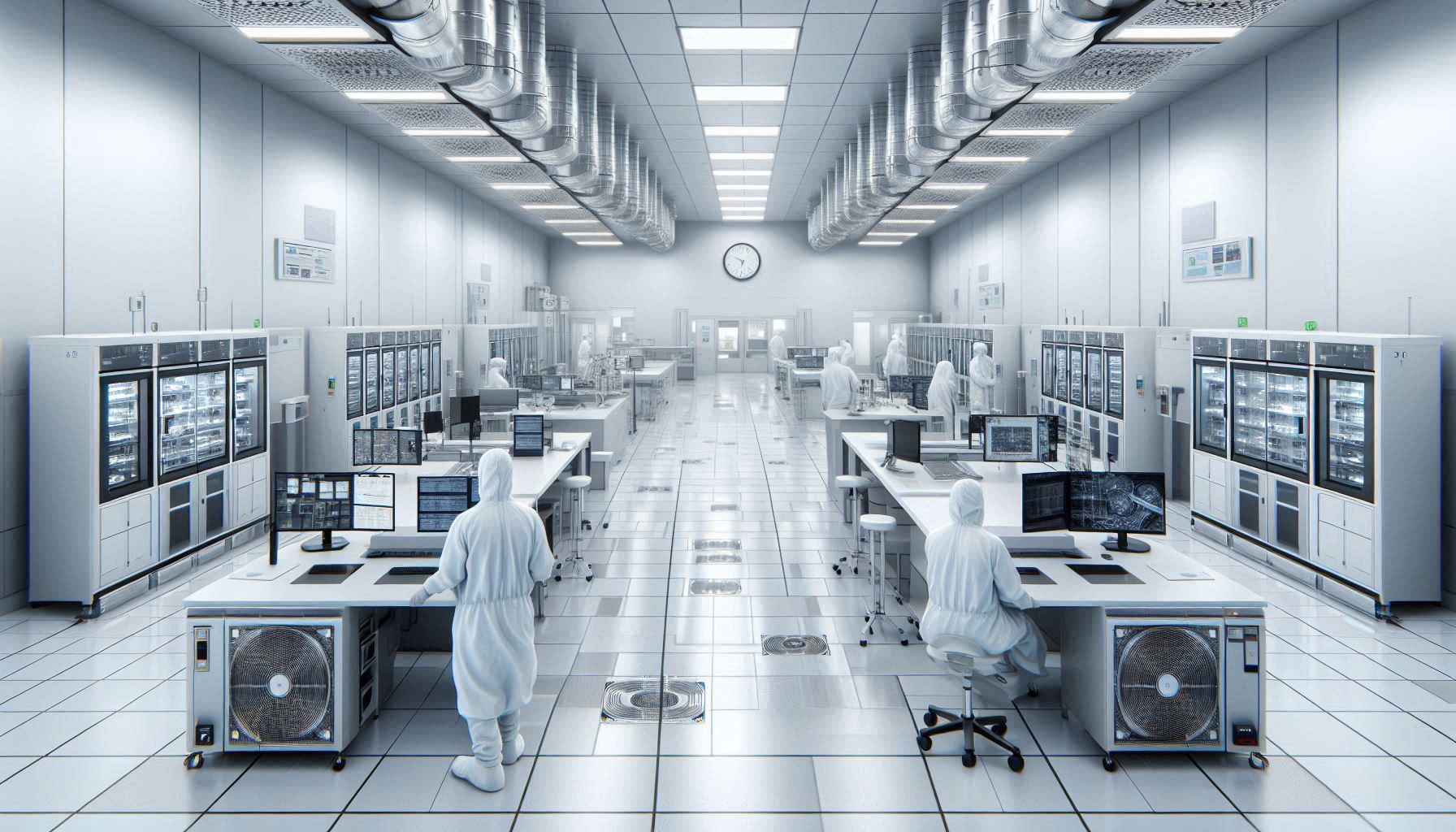
Semiconductor wafer processing recirculating air units form the backbone of modern wafer fabrication facilities. These specialized systems maintain ultra-clean environments through continuous air filtration and precise temperature control. Cleanroom RAU systems remove microscopic particles that could damage delicate chip manufacturing processes. Facility managers rely on fab recirculation equipment to achieve ISO Class 1 cleanliness levels. Wafer fab air filtration demands rigorous engineering standards and constant monitoring. Chip manufacturing air handlers must operate with minimal vibration and exceptional reliability. Indian semiconductor projects increasingly adopt these technologies for domestic production growth. Global facilities demonstrate proven performance through decades of operational excellence. This article explores technical considerations for implementing semiconductor recirculating air units effectively.
Enjoying this content? Get expert HVAC updates on our Telegram Channel.
Understanding Recirculating Air Unit Fundamentals
Semiconductor recirculating air units operate differently from conventional HVAC systems. These units recirculate conditioned air within cleanroom zones repeatedly. Fresh makeup air represents only a small percentage of total airflow. This approach conserves energy while maintaining stringent contamination controls. Cleanroom RAU systems typically achieve air change rates exceeding 300 per hour. Such high circulation ensures rapid particle removal from critical processing areas. Wafer fab air filtration relies on multiple filter stages for optimal performance. Pre-filters capture larger particles before air reaches HEPA or ULPA filters. Final filtration removes particles as small as 0.1 microns effectively. Chip manufacturing air handlers integrate these components within compact modular designs. Fab recirculation equipment must also manage heat loads from process tools. Thermal stability directly impacts yield rates in semiconductor production lines.
Critical Design Parameters for Wafer Fab Environments
Designing semiconductor recirculating air units requires careful consideration of multiple factors. Airflow uniformity represents a primary concern for cleanroom RAU systems. Laminar flow patterns prevent particle accumulation on wafer surfaces. Wafer fab air filtration systems must maintain positive pressure differentials between zones. This strategy prevents cross-contamination from adjacent areas with lower cleanliness levels. Chip manufacturing air handlers need precise temperature control within ±0.1°C tolerance. Humidity management also plays a vital role in preventing electrostatic discharge. Fab recirculation equipment incorporates advanced sensors for real-time monitoring. Control systems adjust fan speeds and damper positions dynamically. Indian facilities often reference ISHRAE guidelines for tropical climate adaptations. Global standards from ASHRAE provide additional technical frameworks. Compliance with BIS and ECBC codes ensures regulatory acceptance in India.
Energy Efficiency Strategies for Recirculation Systems
Energy consumption represents a significant operational cost for semiconductor facilities. Semiconductor recirculating air units can incorporate variable frequency drives for optimization. Cleanroom RAU systems benefit from intelligent controls that match airflow to demand. Wafer fab air filtration pressure drop monitoring enables predictive maintenance scheduling. Chip manufacturing air handlers with heat recovery wheels reduce reheat energy requirements. Fab recirculation equipment design should minimize duct pressure losses strategically. Indian projects increasingly pursue LEED certification for sustainable operations. ISHRAE promotes energy-efficient HVAC practices across the subcontinent. Case studies from Hyderabad’s semiconductor cluster demonstrate 25% energy savings. Global facilities report similar improvements through system optimization initiatives. Retrofitting existing units with modern controls offers attractive return on investment. Operational expenditures in INR (₹) can decrease substantially with proper design.
Filtration Technologies for Ultra-Clean Applications
Filtration performance defines the effectiveness of semiconductor recirculating air units. Cleanroom RAU systems typically employ ULPA filters for final air purification. These filters capture 99.999% of particles at 0.12 microns size effectively. Wafer fab air filtration requires regular integrity testing to ensure compliance. Chip manufacturing air handlers incorporate pre-filtration stages to extend ULPA life. Fab recirculation equipment design must facilitate easy filter access and replacement. Indian facilities follow IS 15518 standards for cleanroom classification and testing. International projects often reference ISO 14644-1 for particle count limits. Advanced monitoring systems track filter pressure differentials continuously. Alarm notifications alert maintenance teams before performance degradation occurs. Proper filter selection balances initial cost with long-term operational efficiency.
Vibration Control in Sensitive Manufacturing Zones
Vibration isolation represents a critical consideration for semiconductor recirculating air units. Cleanroom RAU systems must operate with minimal mechanical disturbance to process tools. Wafer fab air filtration equipment requires flexible connections to decouple vibrations. Chip manufacturing air handlers benefit from inertia bases and spring isolators. Fab recirculation equipment installation should follow IEEE standards for seismic resilience. Indian seismic zones demand additional structural reinforcement for heavy equipment. Global facilities employ laser alignment techniques during commissioning phases. Vibration monitoring sensors provide early warning of bearing wear or imbalance. Maintenance teams can schedule interventions before catastrophic failures occur. Proper isolation design protects both equipment longevity and product quality.
Integration with Building Management Systems
Modern semiconductor recirculating air units connect seamlessly to centralized control platforms. Cleanroom RAU systems communicate operational data through BACnet or Modbus protocols. Wafer fab air filtration parameters appear on facility dashboards for real-time oversight. Chip manufacturing air handlers integrate with emergency shutdown sequences automatically. Fab recirculation equipment alarms trigger notifications to maintenance personnel instantly. Indian projects increasingly adopt IoT-enabled monitoring for predictive analytics. Global facilities leverage artificial intelligence for optimization algorithms. Learn more about BMS integration strategies for enhanced operational intelligence. Data historians record performance trends for continuous improvement initiatives. Cybersecurity measures protect critical infrastructure from unauthorized access attempts.
Maintenance Protocols for Sustained Performance
Regular maintenance ensures reliable operation of semiconductor recirculating air units. Cleanroom RAU systems require scheduled filter inspections and replacements proactively. Wafer fab air filtration integrity testing follows quarterly or annual protocols. Chip manufacturing air handlers need bearing lubrication and belt tension checks. Fab recirculation equipment calibration maintains sensor accuracy over time. Indian facilities often partner with specialized service providers for expertise. Explore comprehensive service evaluation guidelines for vendor selection. Global best practices emphasize documentation and traceability for audits. Maintenance logs support root cause analysis during deviation investigations. Training programs ensure technicians understand cleanroom protocols thoroughly.
Case Study: Indian Semiconductor Wafer Facility Implementation
A recent semiconductor project in Gujarat illustrates practical application principles. The facility deployed semiconductor recirculating air units across multiple production bays. Cleanroom RAU systems achieved ISO Class 3 classification through careful design. Wafer fab air filtration performance exceeded contractual requirements consistently. Chip manufacturing air handlers operated within specified temperature and humidity bands. Fab recirculation equipment energy consumption aligned with ECBC benchmarks. Project costs totaled approximately ₹45 crores for HVAC systems alone. Commissioning activities included extensive particle counting and airflow visualization. Review cleanroom design fundamentals for similar project planning. Operational data demonstrated yield improvements attributable to environmental stability. This case validates the business case for investing in quality RAU systems.
Emerging Technologies Shaping Future Designs
Innovation continues to advance semiconductor recirculating air unit capabilities. Cleanroom RAU systems now incorporate digital twin modeling for performance prediction. Wafer fab air filtration benefits from nanofiber media with lower pressure drops. Chip manufacturing air handlers utilize magnetic bearing chillers for reduced vibration. Fab recirculation equipment design embraces modular construction for faster deployment. Indian research institutions collaborate with industry on next-generation solutions. Discover AI applications in HVAC optimization for intelligent control strategies. Global technology leaders demonstrate pilot projects with promising results. Machine learning algorithms optimize setpoints based on production schedules. Energy storage integration enables demand response participation for cost savings.
Commissioning and Validation Best Practices
Proper commissioning validates semiconductor recirculating air unit performance before production. Cleanroom RAU systems require comprehensive testing of all operational modes. Wafer fab air filtration integrity scans confirm filter installation quality. Chip manufacturing air handlers undergo thermal mapping to verify temperature uniformity. Fab recirculation equipment control sequences simulate emergency scenarios thoroughly. Indian projects follow ISHRAE commissioning guidelines for systematic execution. Global standards from ASHRAE provide additional procedural frameworks. Understand AHU technical submittal requirements for procurement clarity. Documentation packages support regulatory approvals and customer audits. Trained commissioning agents ensure objective verification of design intent.
Cost Considerations and Lifecycle Analysis
Capital investment for semiconductor recirculating air units requires careful justification. Cleanroom RAU systems represent significant upfront expenditure for facility developers. Wafer fab air filtration operating costs include energy, filters, and maintenance labor. Chip manufacturing air handlers lifecycle analysis should evaluate twenty-year horizons. Fab recirculation equipment total cost of ownership informs procurement decisions. Indian projects benefit from domestic manufacturing incentives under PLI schemes. Global facilities compare USD ($) costs across international locations strategically. Assess energy audit opportunities for optimization potential. Value engineering balances performance requirements with budget constraints effectively. Proper specification avoids costly change orders during construction phases.
Environmental Sustainability and Green Certifications
Sustainability considerations influence semiconductor recirculating air unit selection increasingly. Cleanroom RAU systems contribute to green building certification point accumulation. Wafer fab air filtration energy efficiency supports carbon reduction commitments. Chip manufacturing air handlers with low-GWP refrigerants align with climate goals. Fab recirculation equipment water conservation features address resource scarcity concerns. Indian facilities pursue IGBC or LEED certifications for market differentiation. Explore net-zero energy building strategies for ambitious sustainability targets. Global corporations report environmental metrics to stakeholders transparently. Renewable energy integration reduces operational carbon footprints substantially. Circular economy principles guide equipment end-of-life management decisions.
FAQ
What distinguishes semiconductor recirculating air units from standard AHUs?
Semiconductor recirculating air units feature higher filtration efficiency and tighter environmental controls. They maintain ultra-low particle counts through continuous air recirculation. Specialized designs minimize vibration and ensure temperature stability for sensitive processes.
How often should ULPA filters be replaced in cleanroom RAU systems?
Filter replacement frequency depends on upstream pre-filtration and facility contamination levels. Typical intervals range from twelve to twenty-four months with proper maintenance. Pressure differential monitoring provides objective replacement timing indicators.
What airflow velocity is recommended for wafer fab air filtration?
Laminar flow cleanrooms typically target 0.3 to 0.5 meters per second at the work plane. This velocity balances particle removal effectiveness with energy consumption considerations. Computational fluid dynamics modeling helps optimize specific layouts.
Can existing facilities retrofit semiconductor recirculating air units?
Retrofitting requires careful assessment of structural capacity and utility connections. Modular RAU designs facilitate installation within occupied facilities with minimal disruption. Phased implementation strategies reduce production downtime during upgrades.
How do fab recirculation equipment systems handle process heat loads?
Advanced units integrate cooling coils with precise temperature control algorithms. Chilled water systems remove heat while maintaining humidity setpoints. Redundant configurations ensure continuous operation during maintenance activities.
What standards govern chip manufacturing air handlers in India?
Indian projects reference IS 15518 for cleanroom classification and testing protocols. ISHRAE guidelines provide climate-specific design recommendations. International facilities often comply with ISO 14644 and SEMI standards additionally.
Disclaimer
“The content here is intended solely for educational and informational purposes. All case studies, examples, and hypothetical scenarios are illustrative in nature and do not refer to, endorse, or represent any actual company, organization, or product. Any similarity to real-world entities or events is purely coincidental. Readers are encouraged to verify any technical details or operational recommendations with additional, independent research prior to implementation. The author and publisher assume no responsibility or liability for any errors, omissions, or outcomes resulting from the use of this material.”
About the Author
“Mr. Om Prakash, with over 18 years of hands-on experience in the HVAC industry, brings unmatched expertise in cleanroom, semiconductor, pharmaceutical, data center, commercial, and industrial HVAC systems. As the founder of HVAC Technocrat, he specializes in customized HVAC design, energy efficiency audits, retrofit planning, and turnkey consultancy services across India. He simplifies complex HVAC concepts and shares real-world insights to support professionals, facility managers, and decision-makers. For enquiries or project support, call or WhatsApp at +91 9908091942, email hvactechnocrats@gmail.com, or visit www.hvactechnocrat.com. Also, follow his LinkedIn profile.”